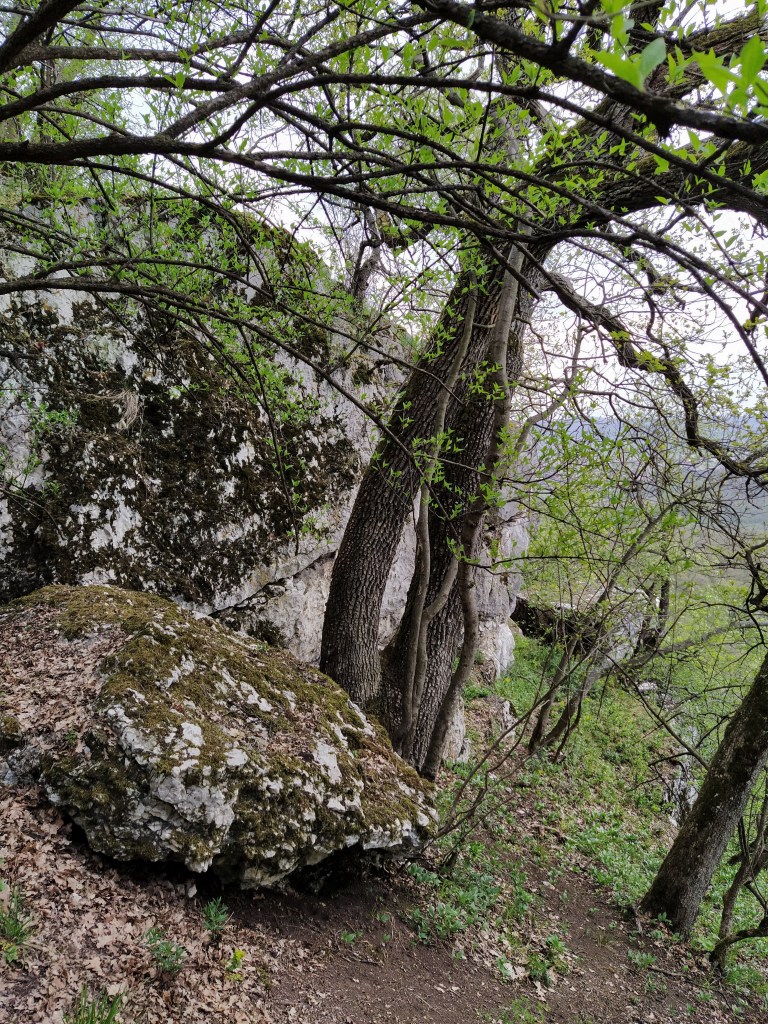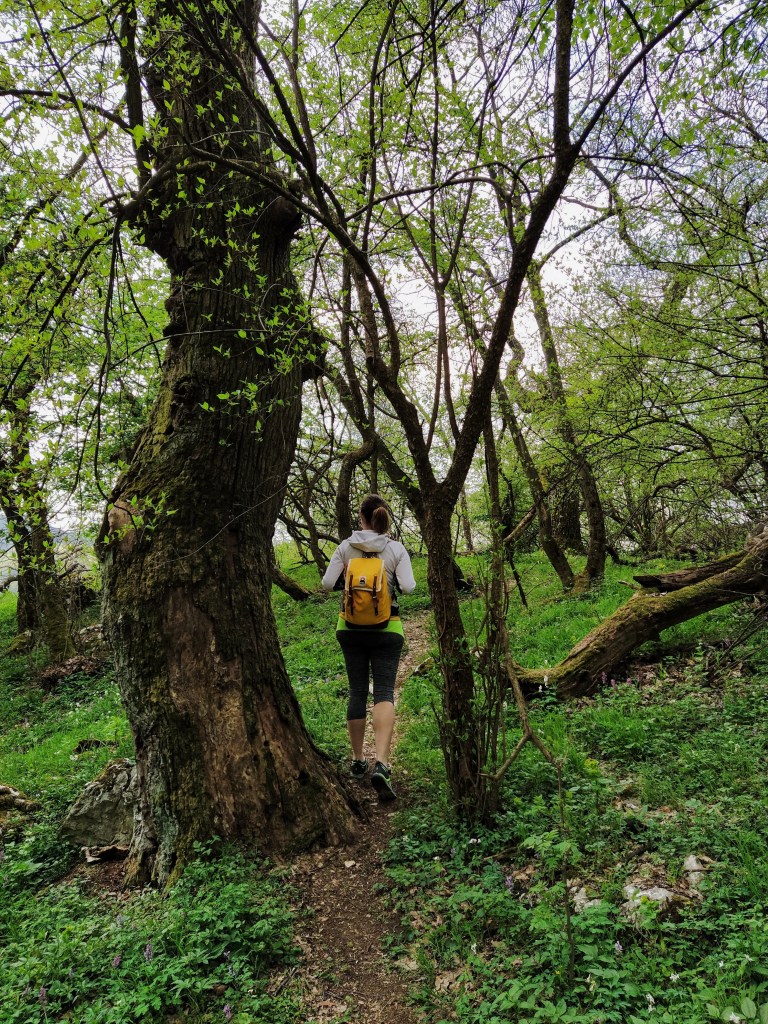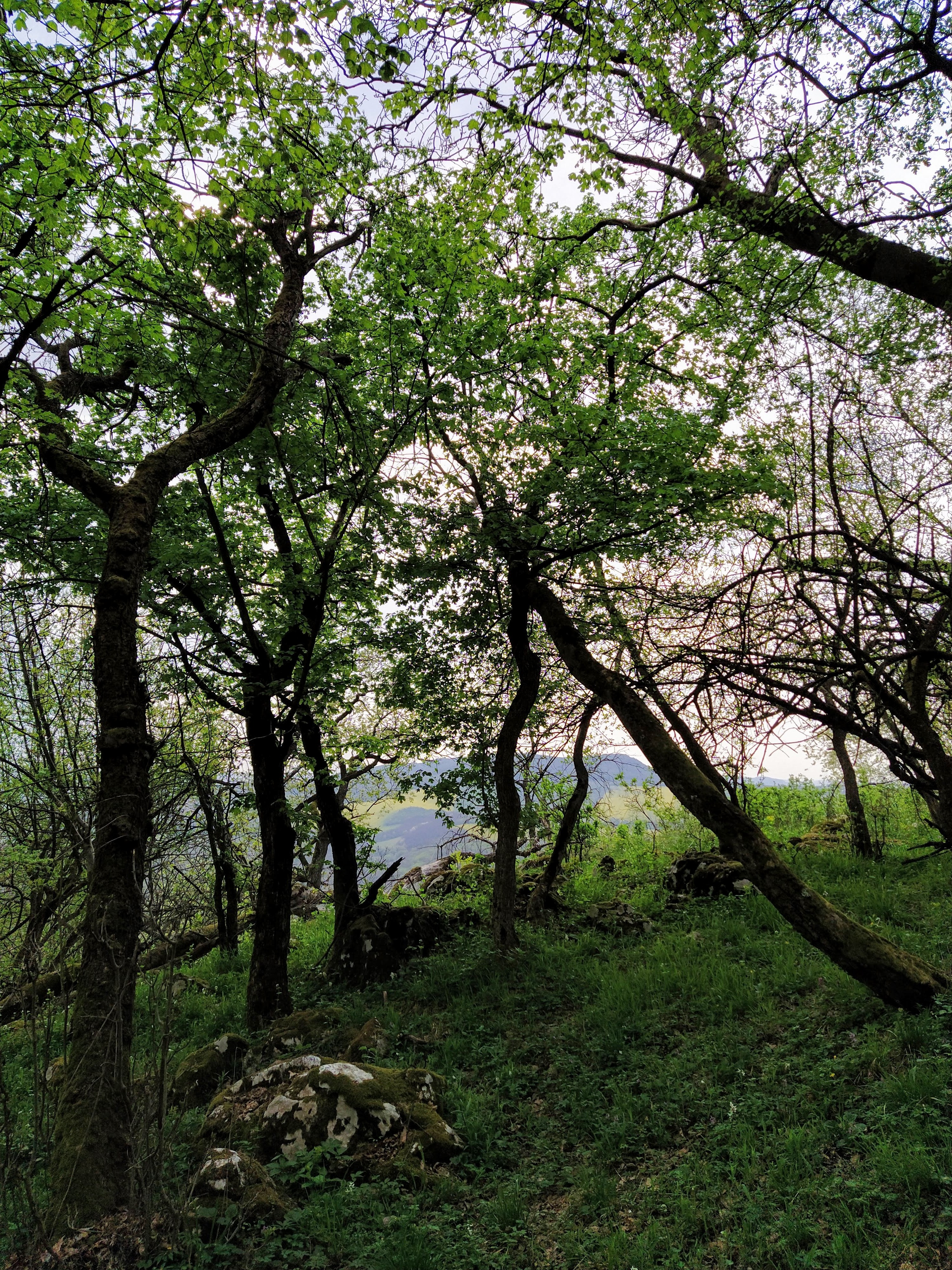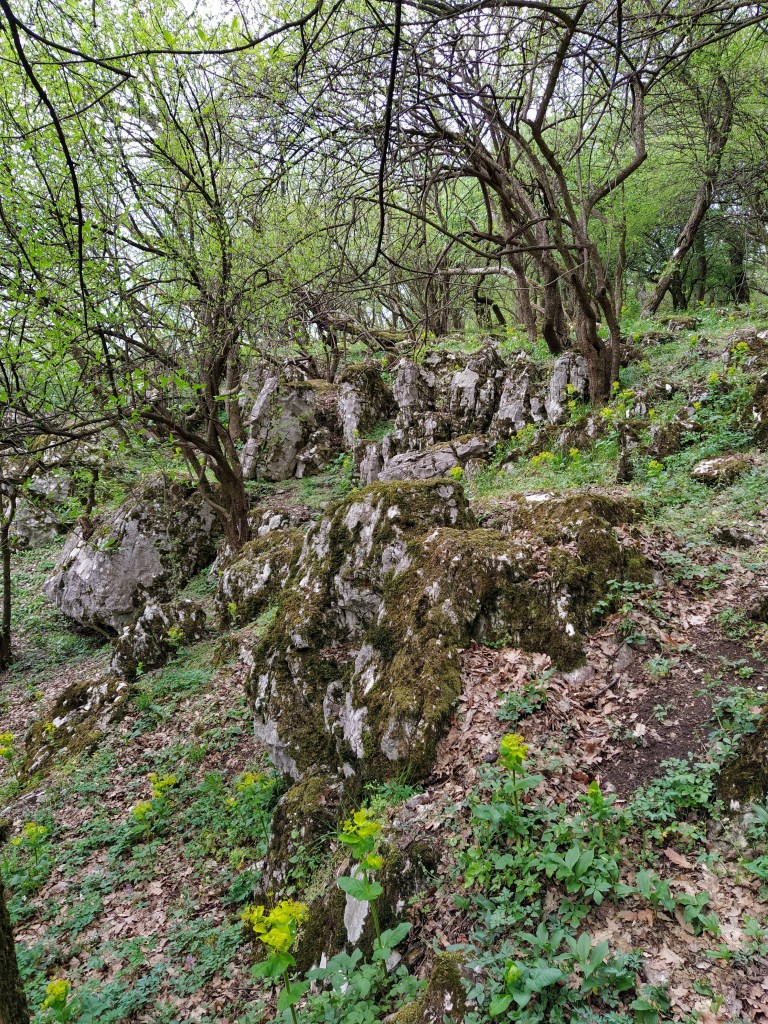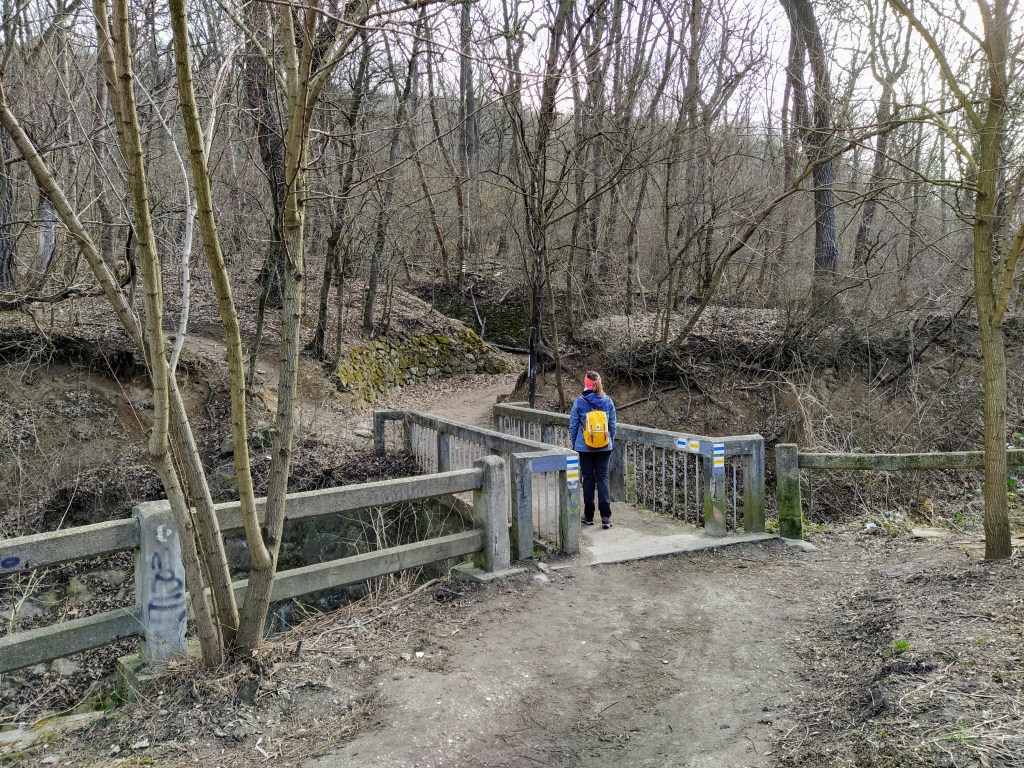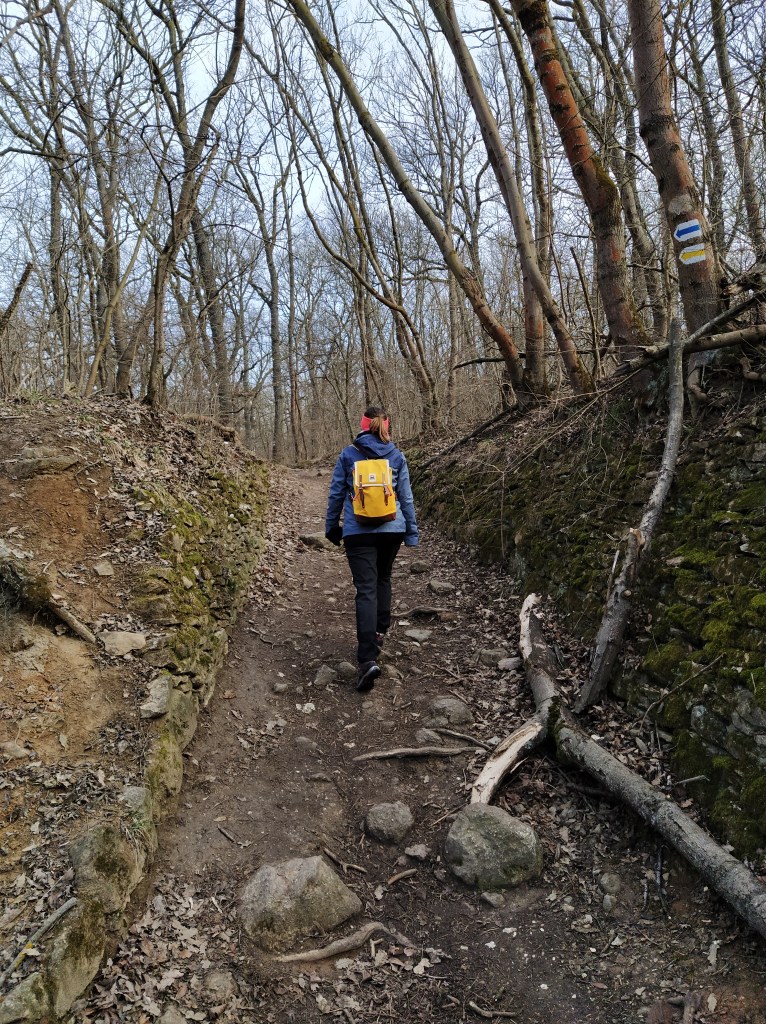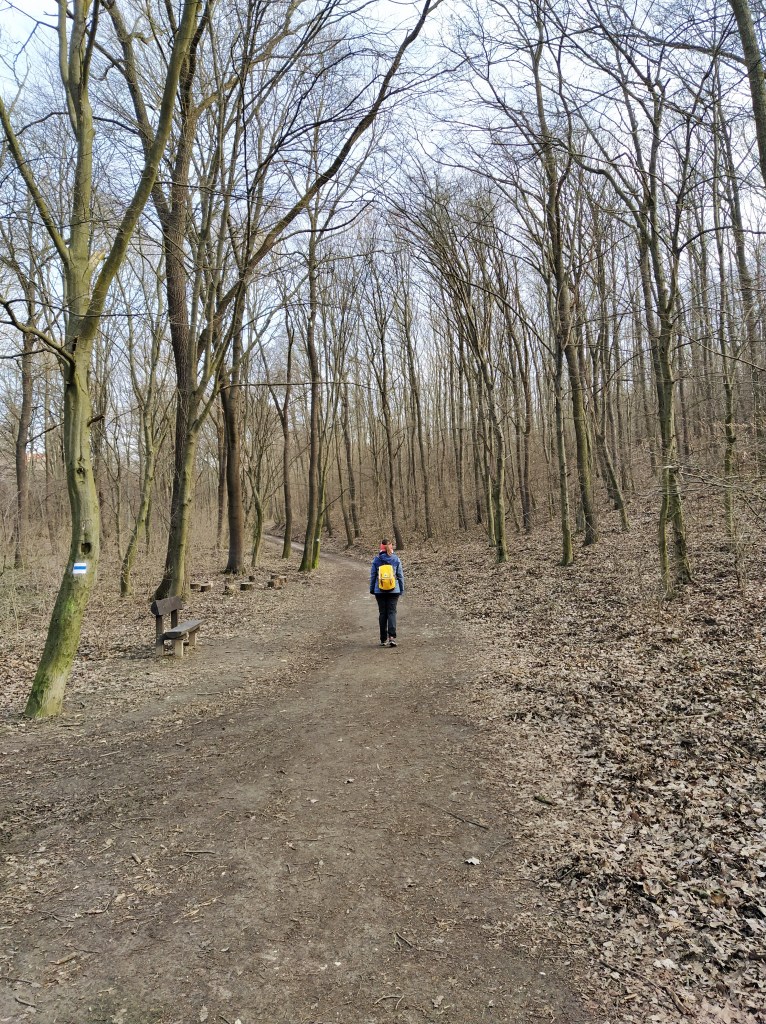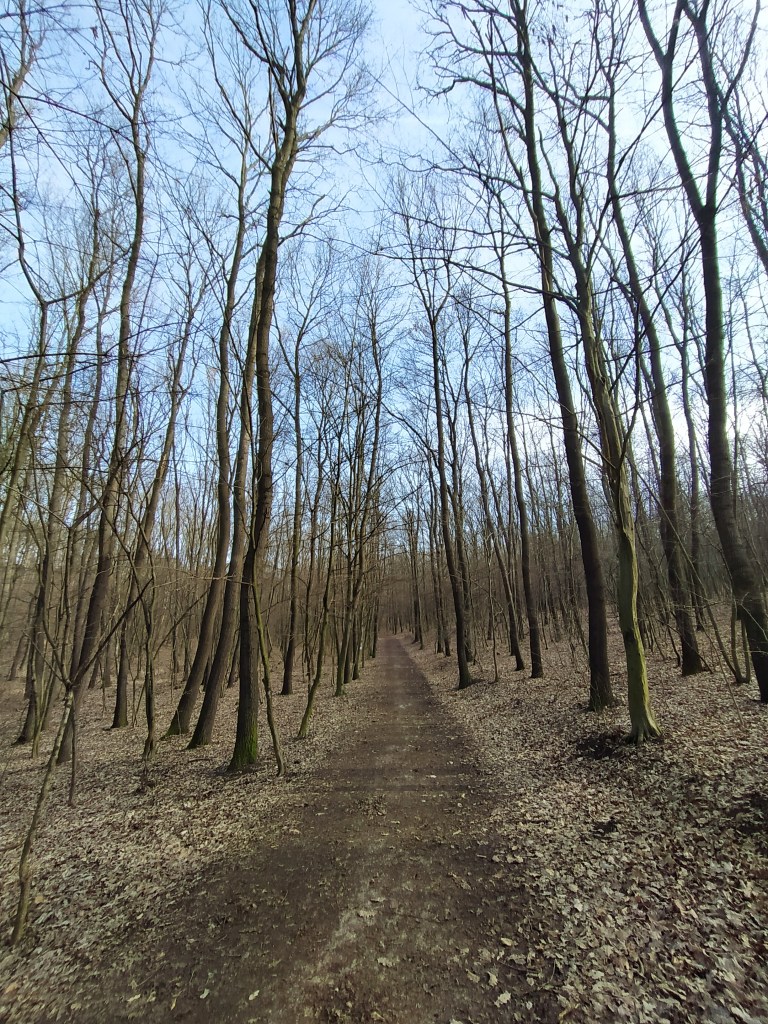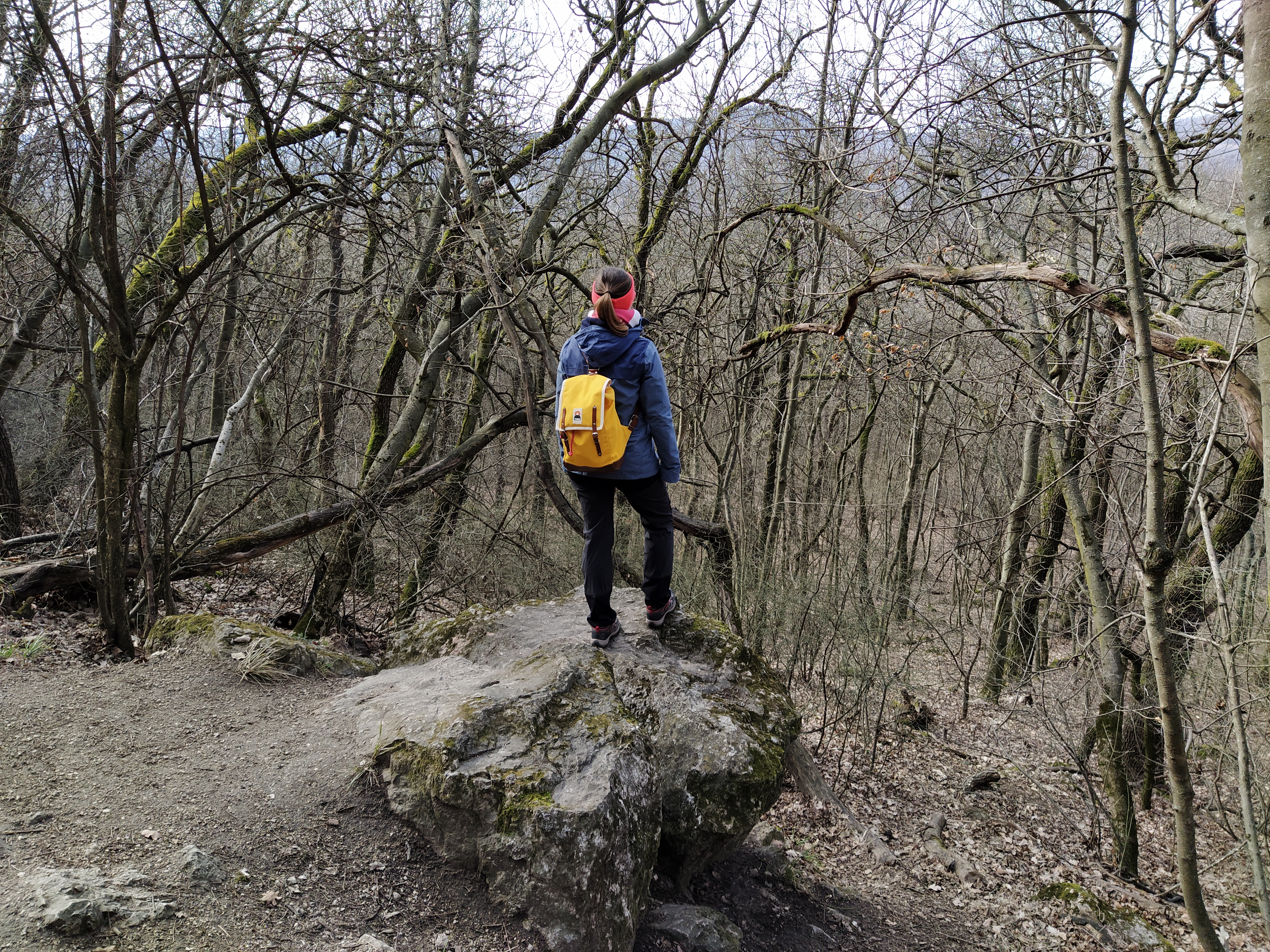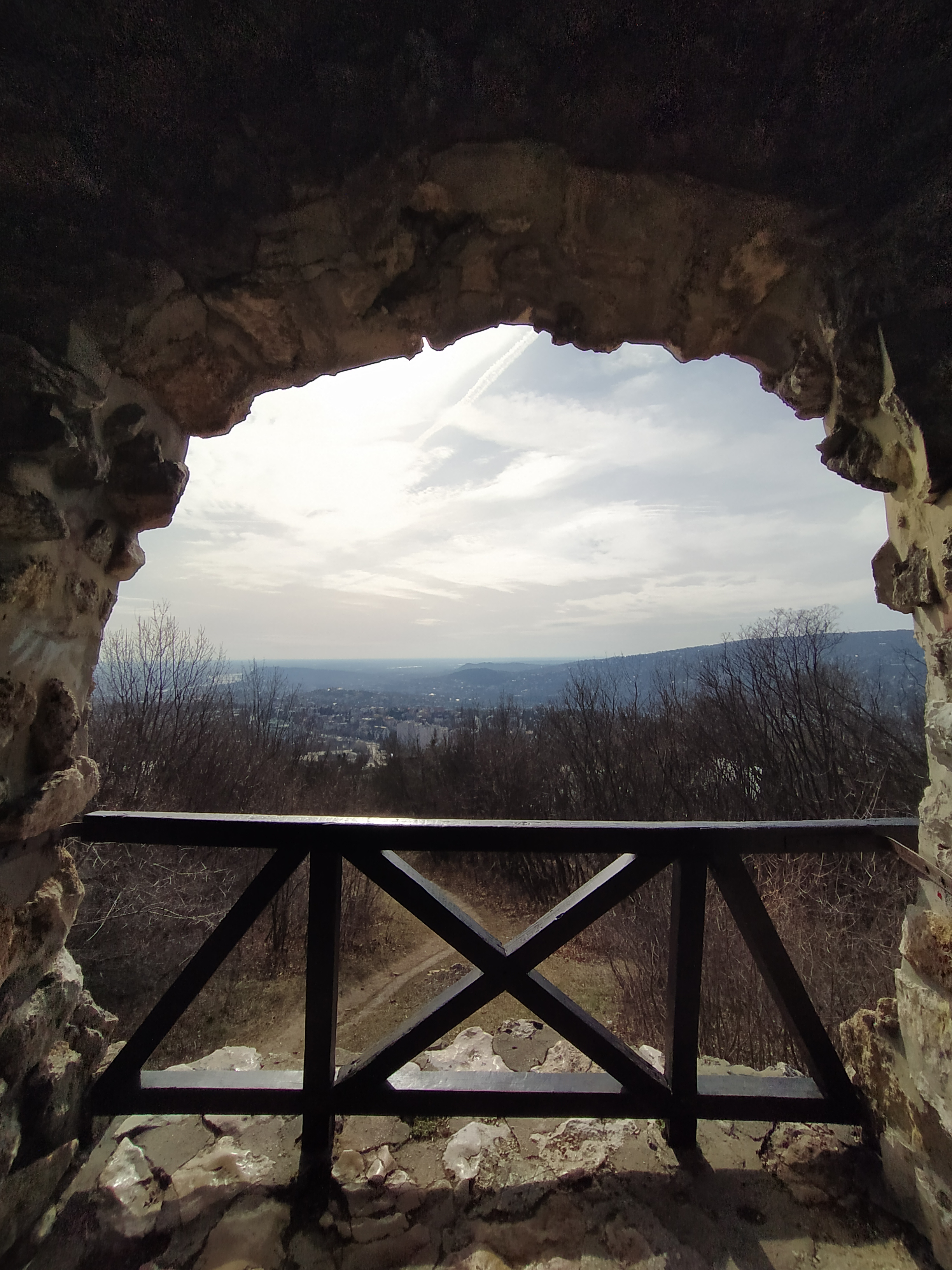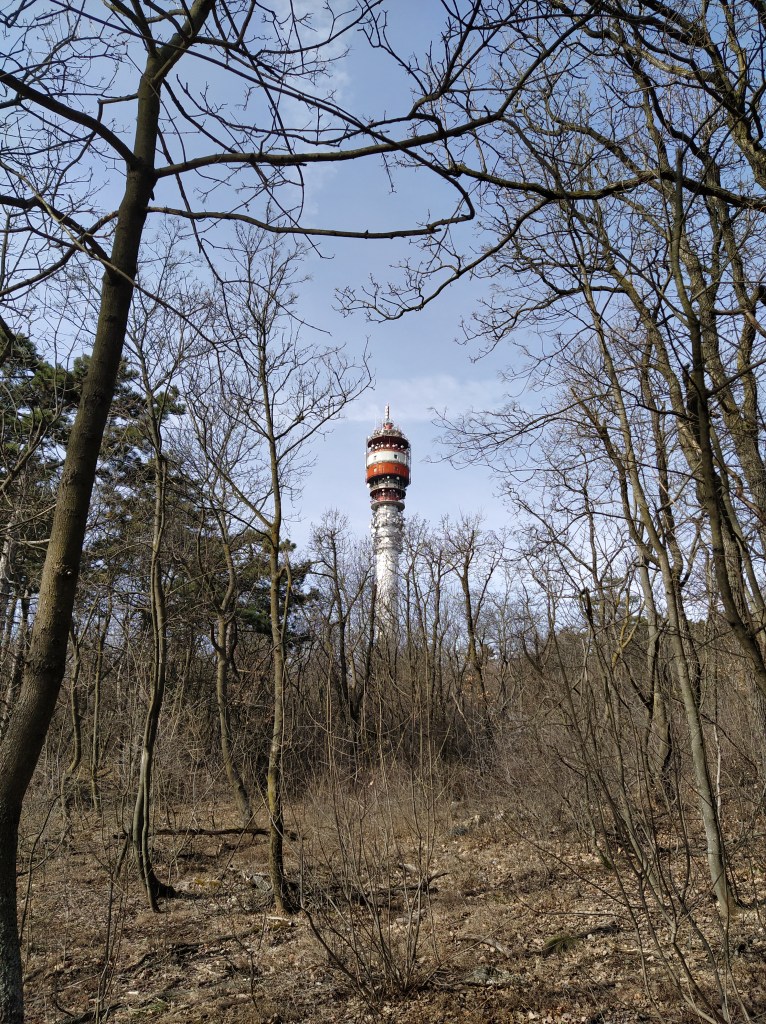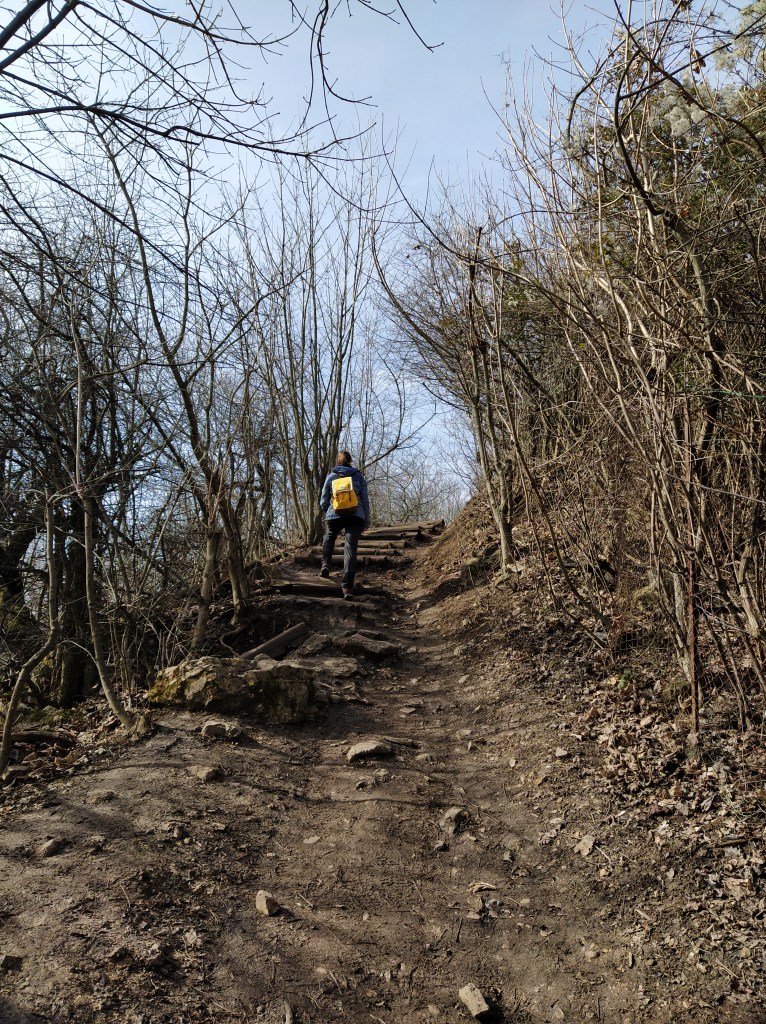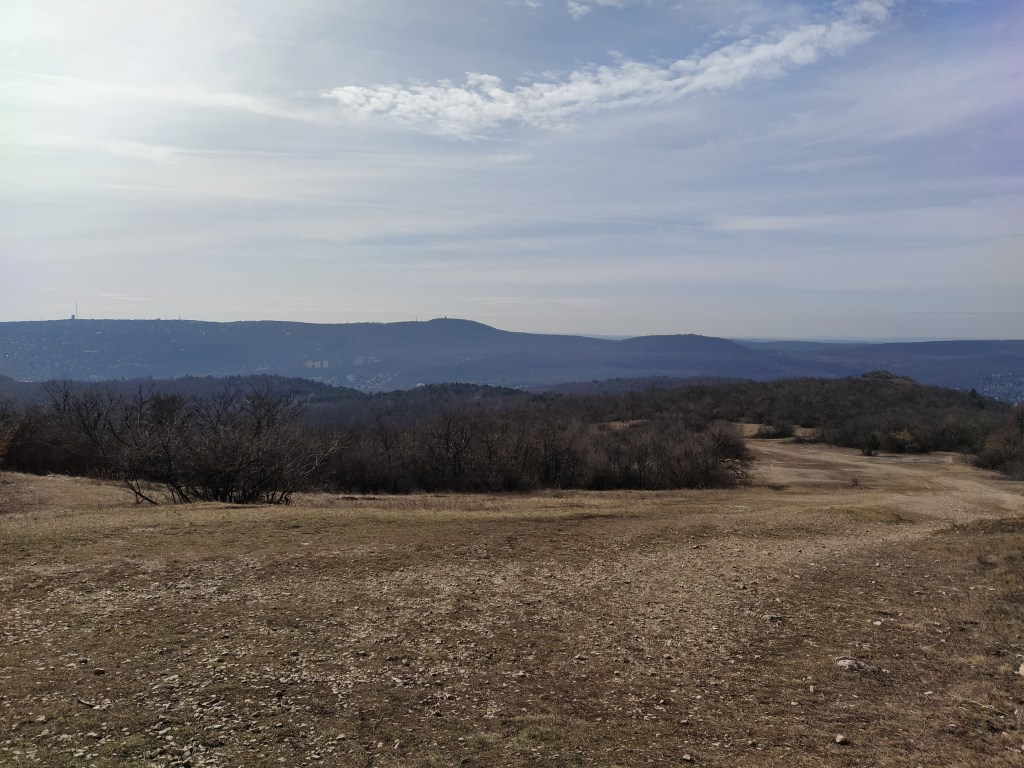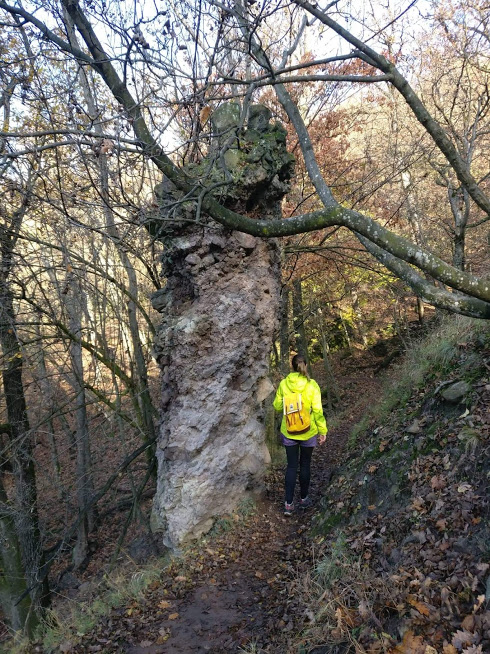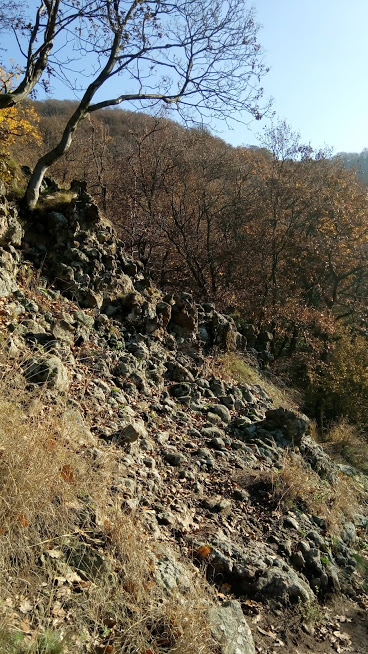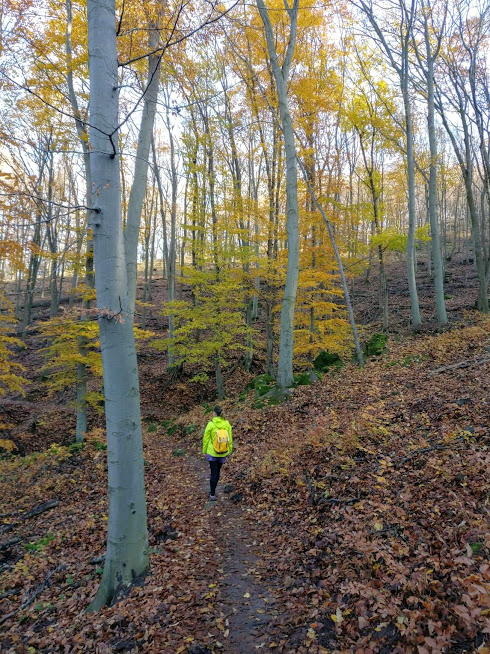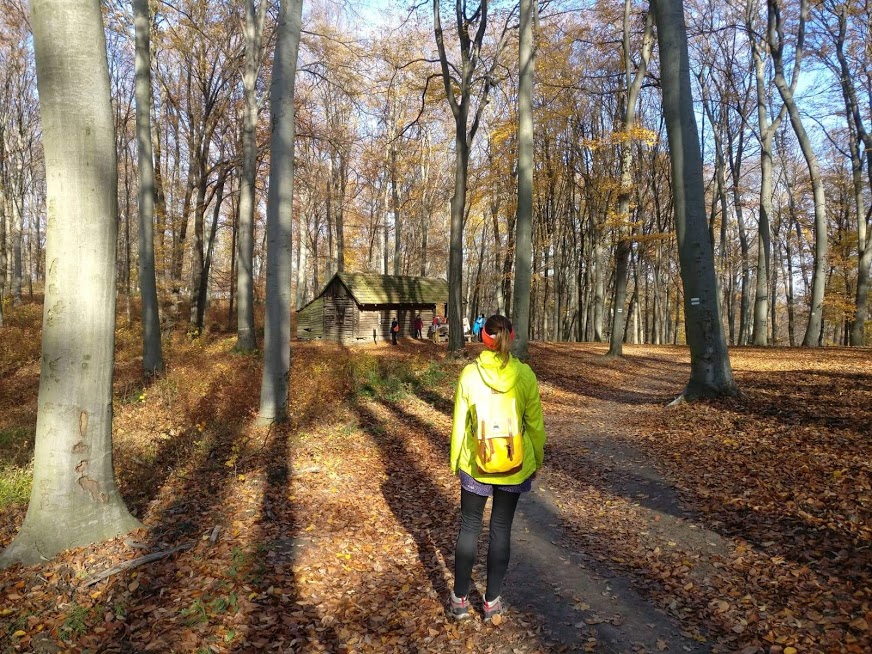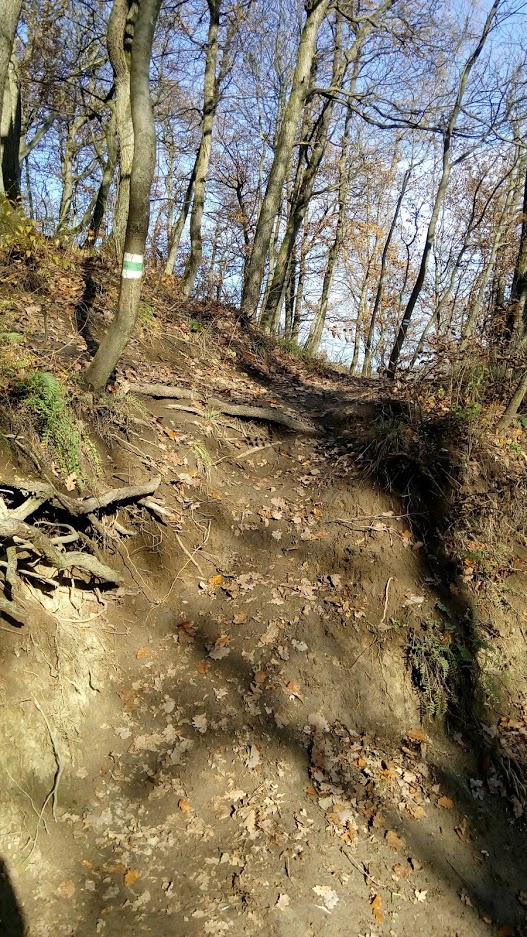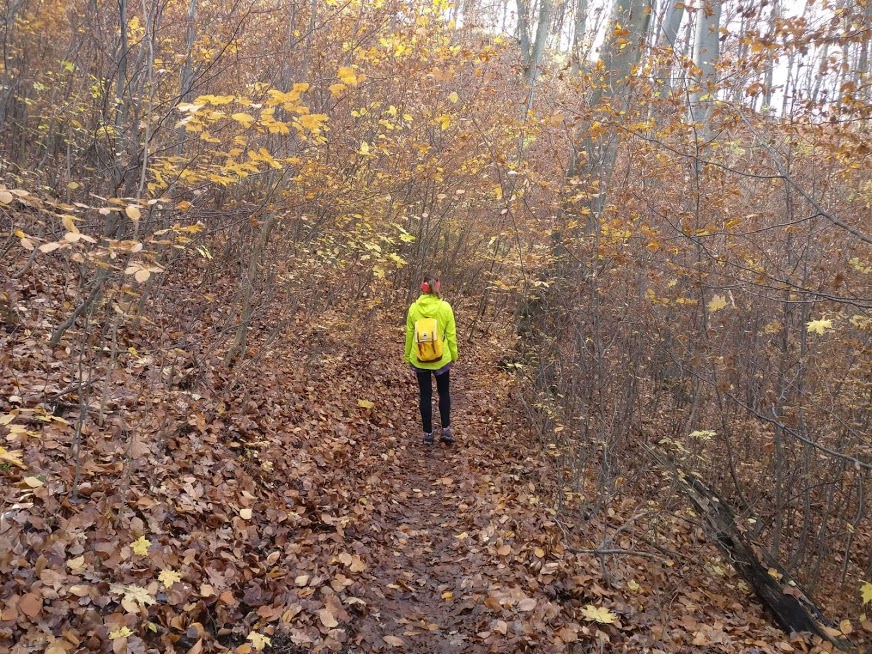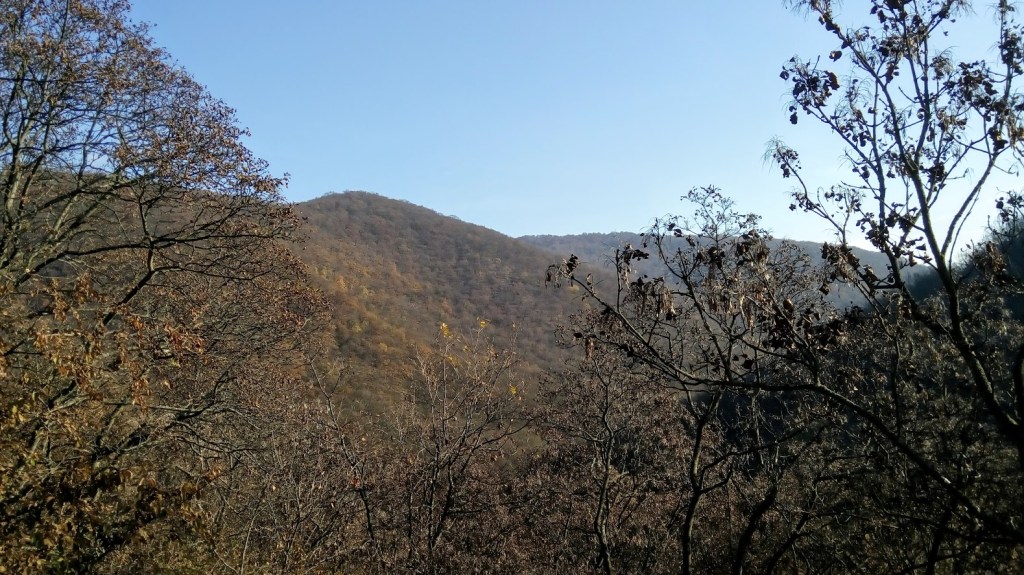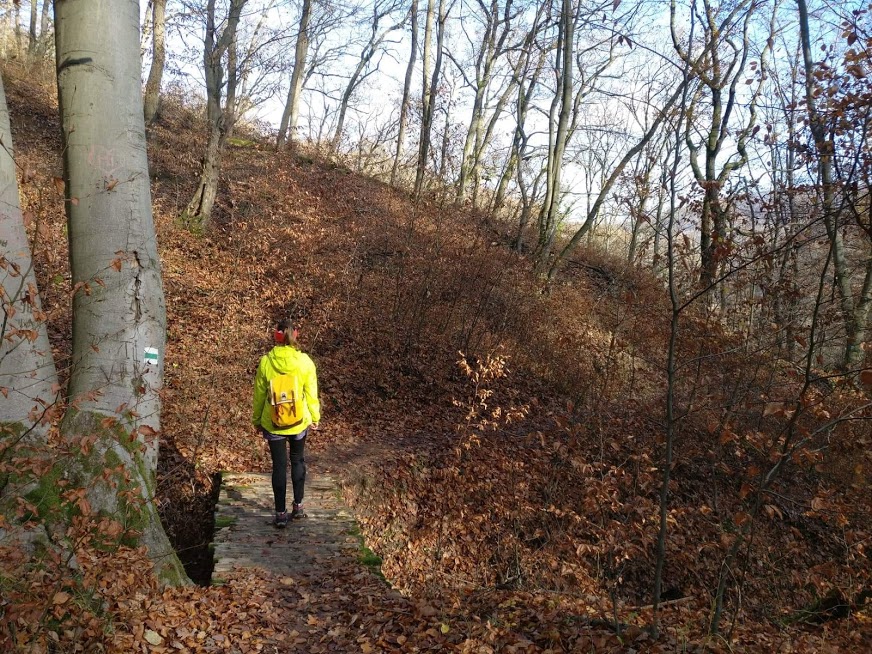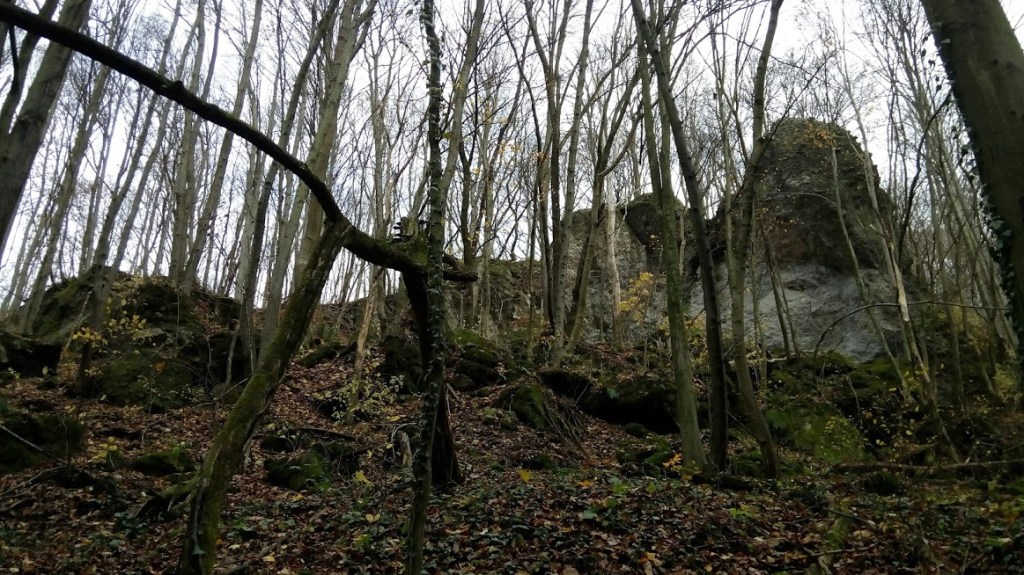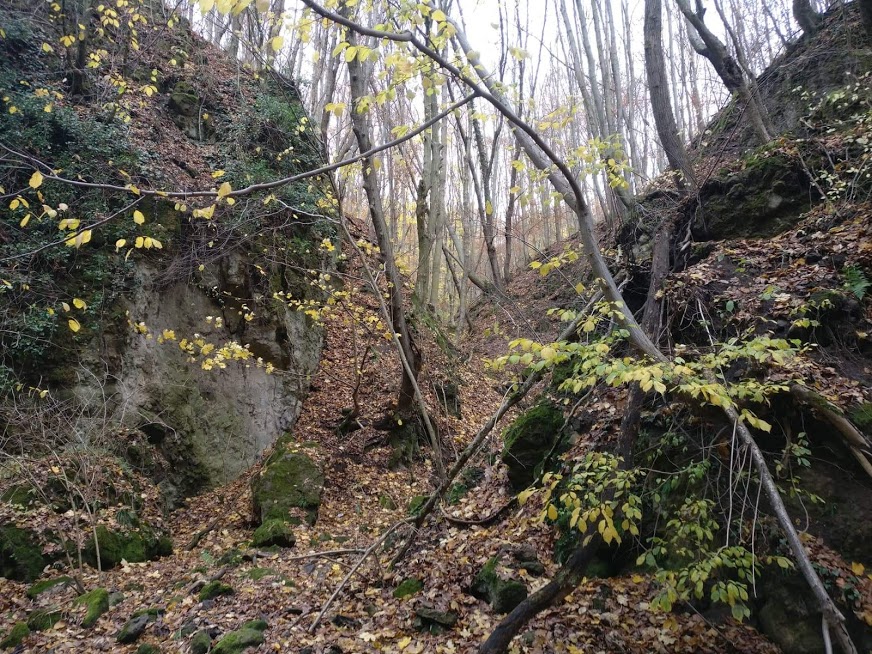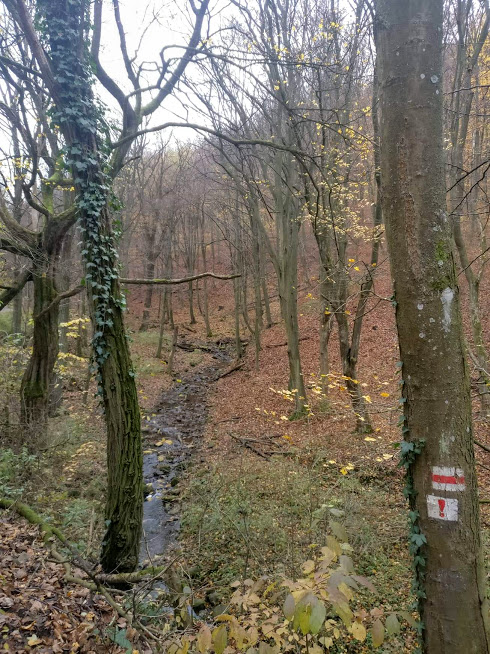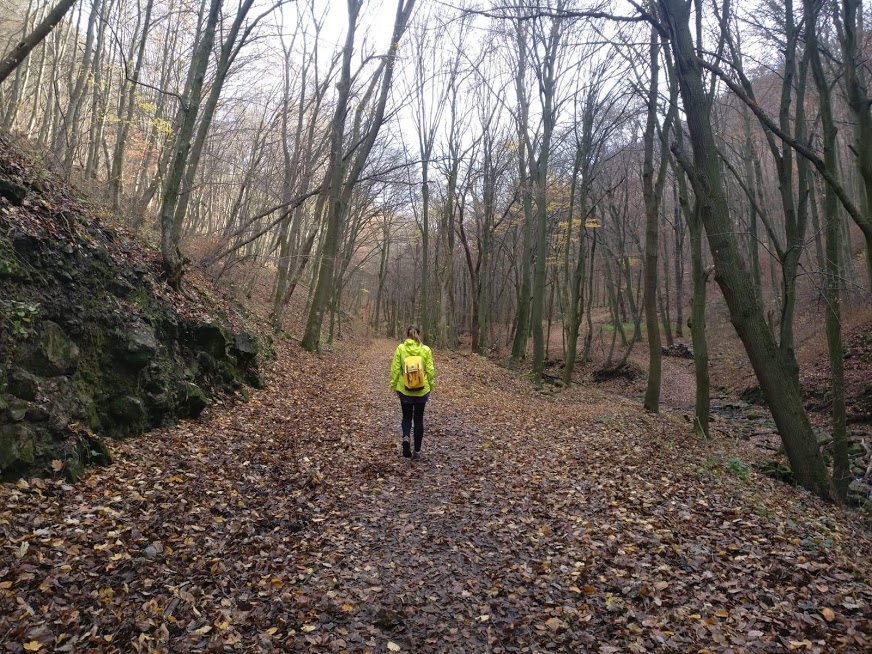
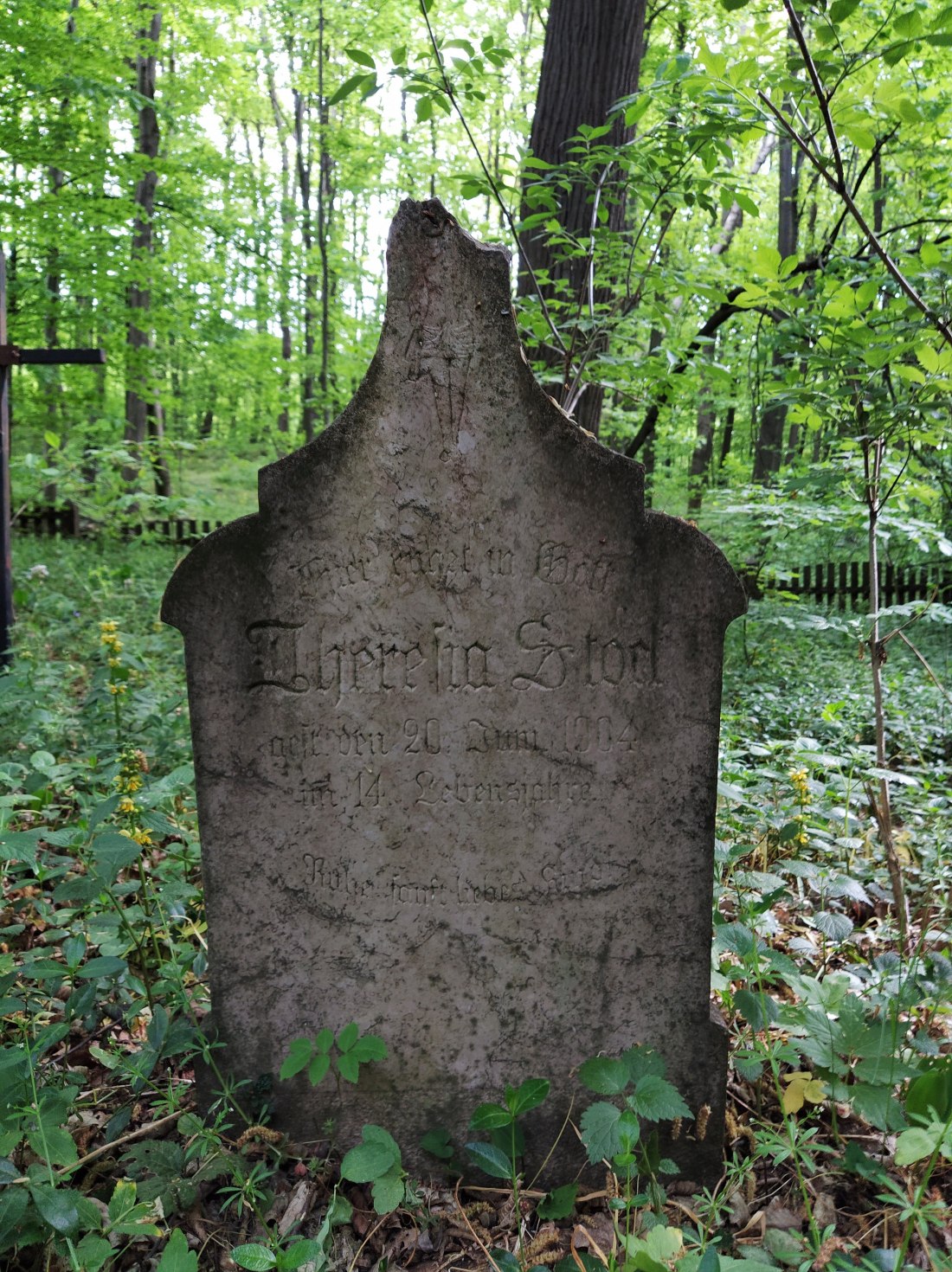
Abandoned graveyard in the forest

On the trail of long lost villages, lookouts, a forest cemetery and a castle ruin, all these during a  roundtrip in the Vértes mountain.

Details of the walk:

Distance: 15.6 kilometres
Route: https://out.ac/ykbRP
How to get there: By public transport: Bus nr 767 from Budapest or from Tatabánya
By car: Parking at Bika Csárda

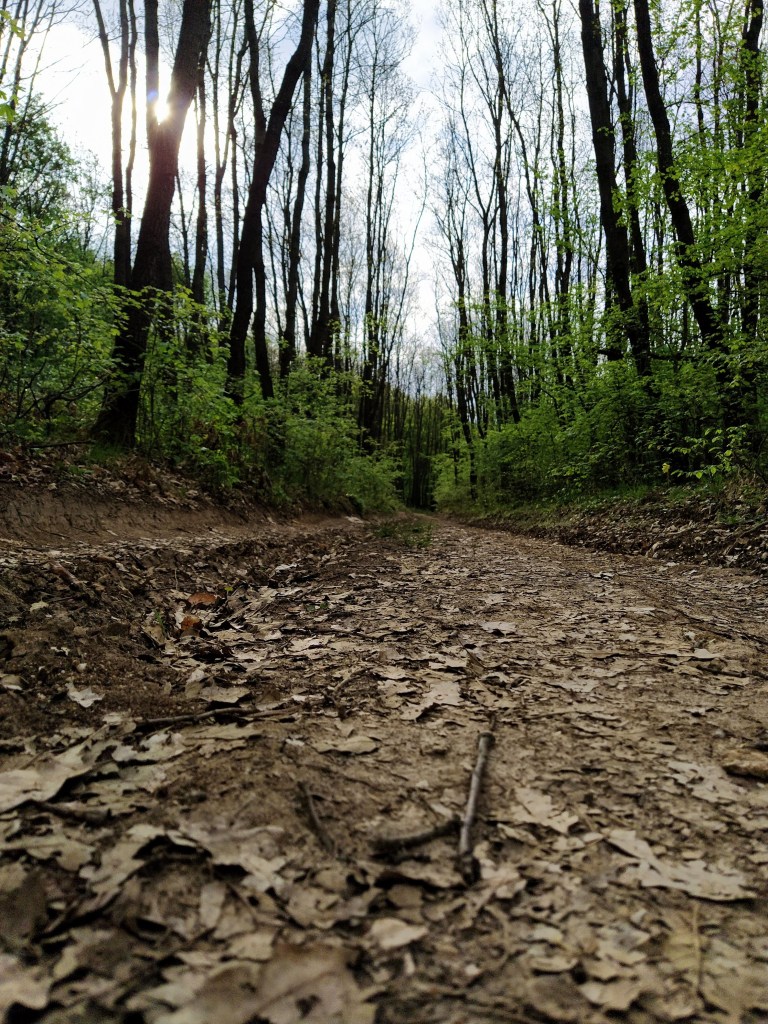
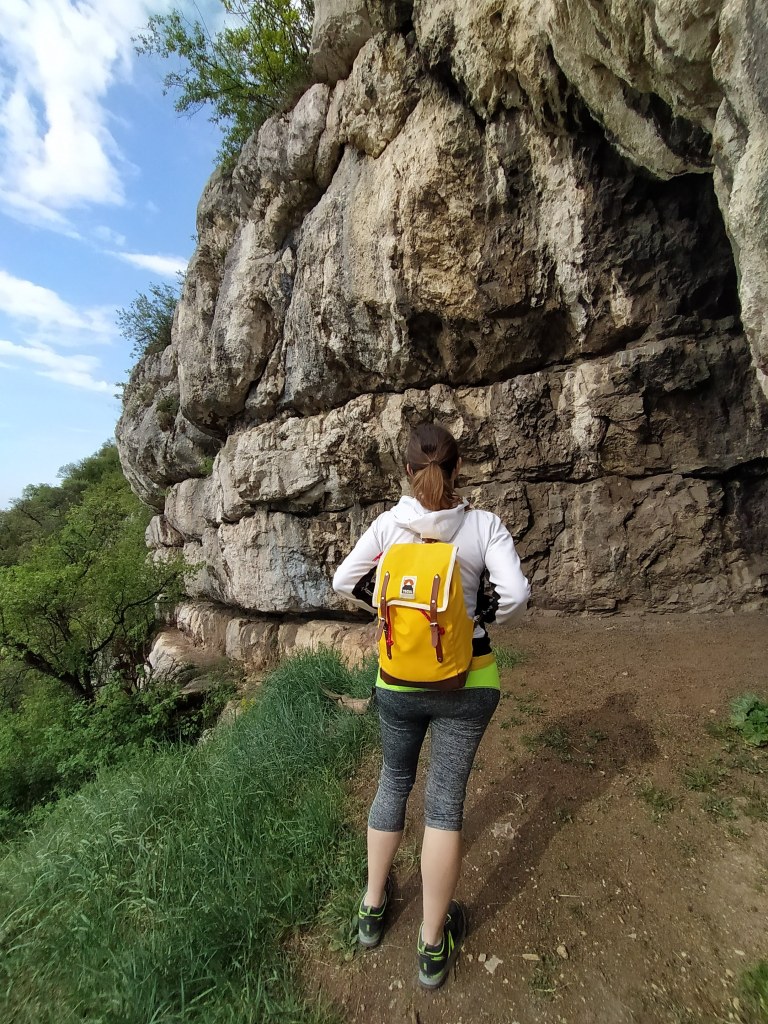
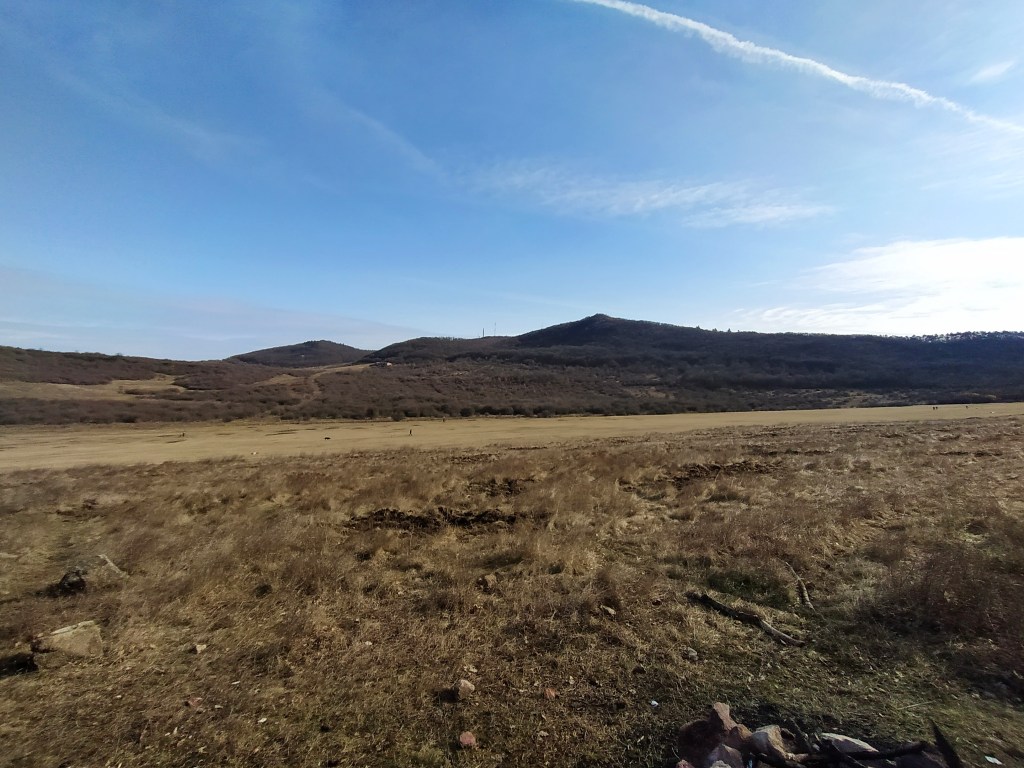
On a spring weekend we ventured a little further from the capital to do a hike on one of the classic routes of the Vértes mountain.The starting and end point of the tour was an abandoned restaurant by the side of the road outside of Tatabánya.
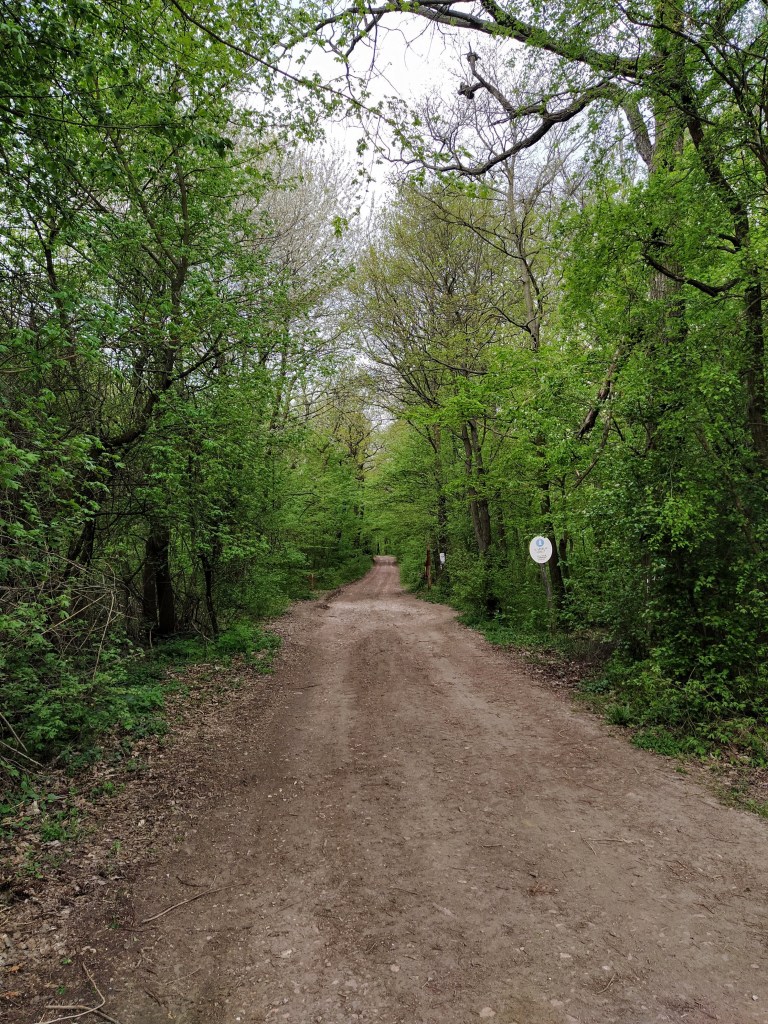
After walking up a bit on the blue + road and reached the scarse houses of Csákányospuszta, we turned at an ancient willow-tree with a huge trunk. I wonder what kind of things it saw during its long lifetime. The path leads through meadows and passes the ruins of a temple. In the middle age, a small village used to be here but the ruins are the only sign of it today.
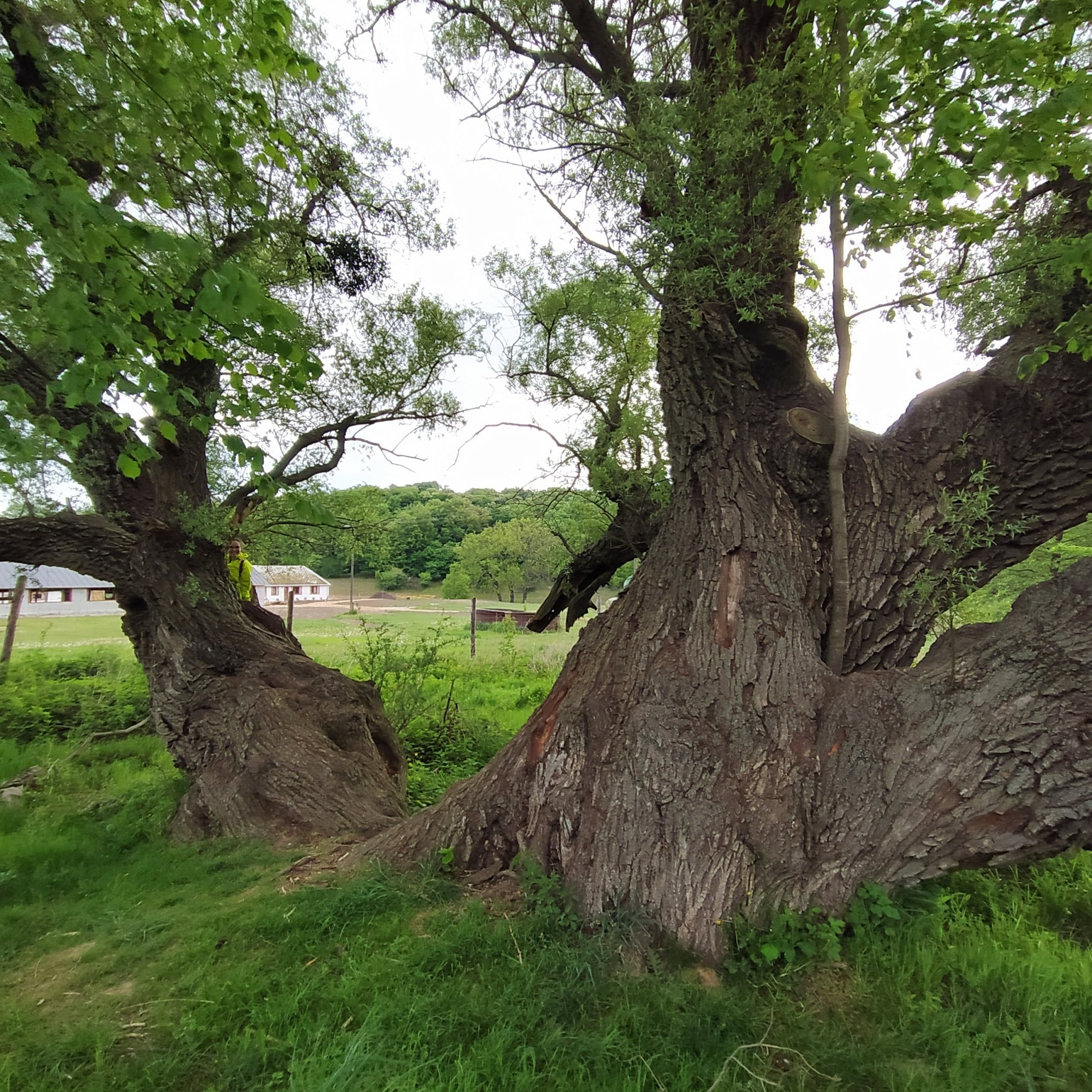
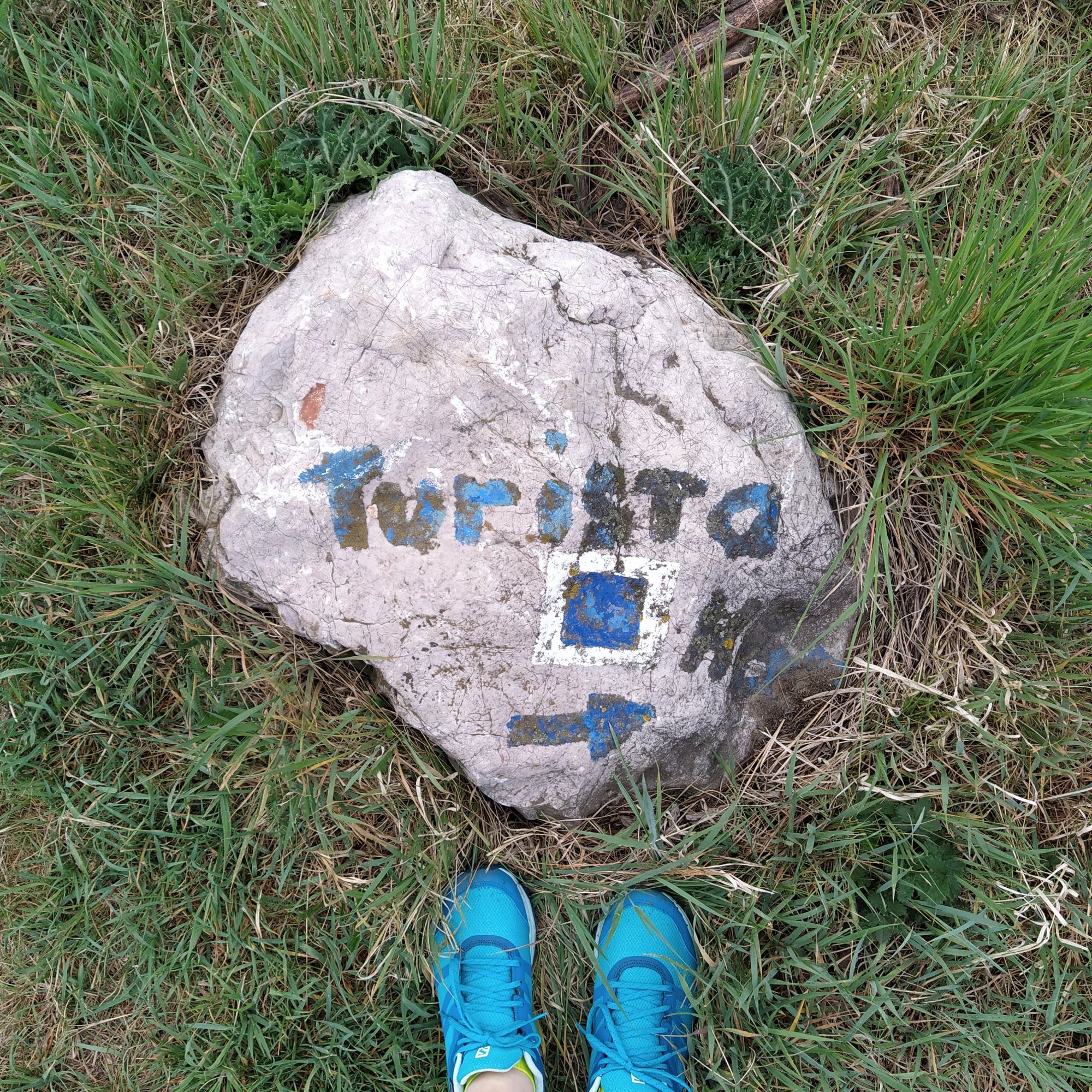
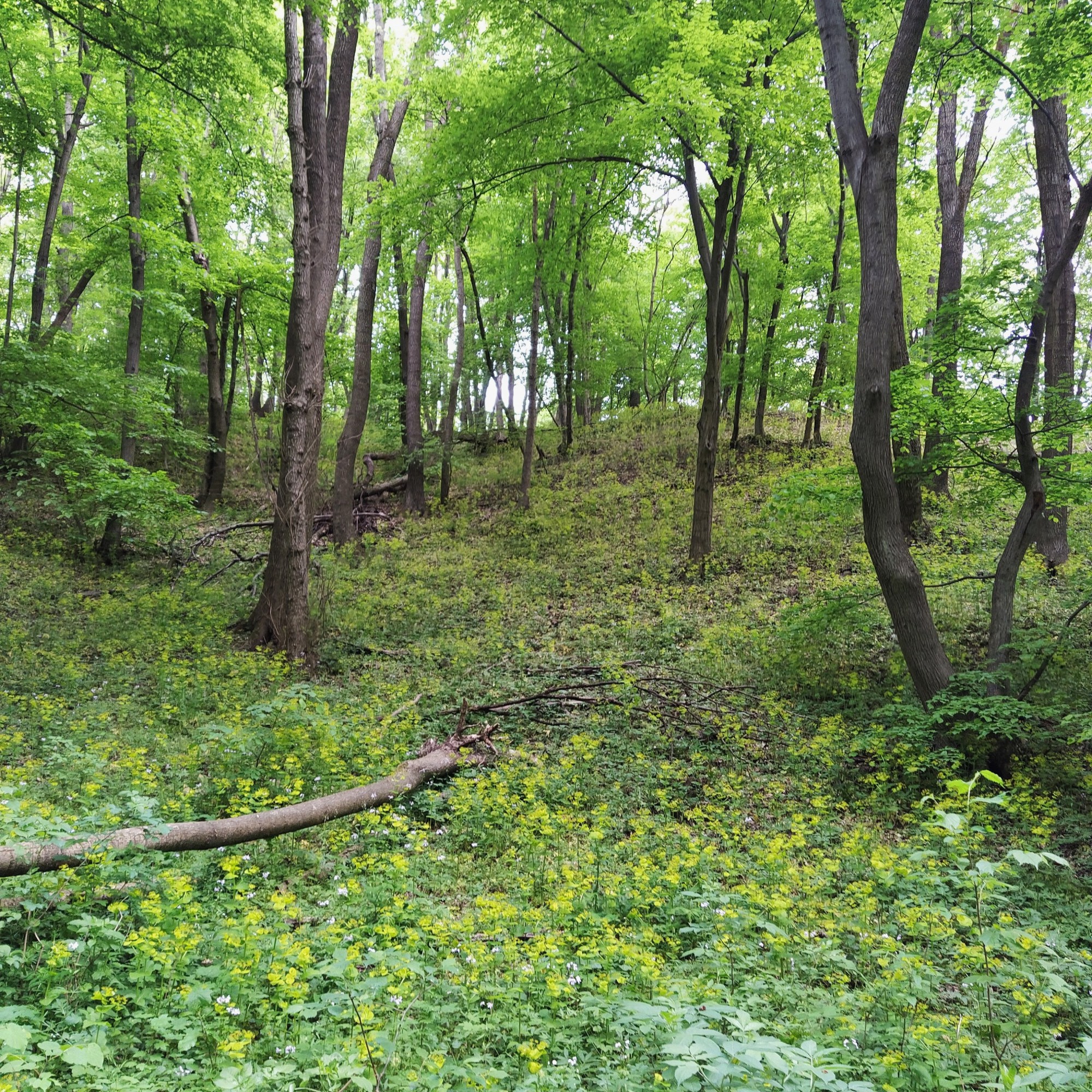
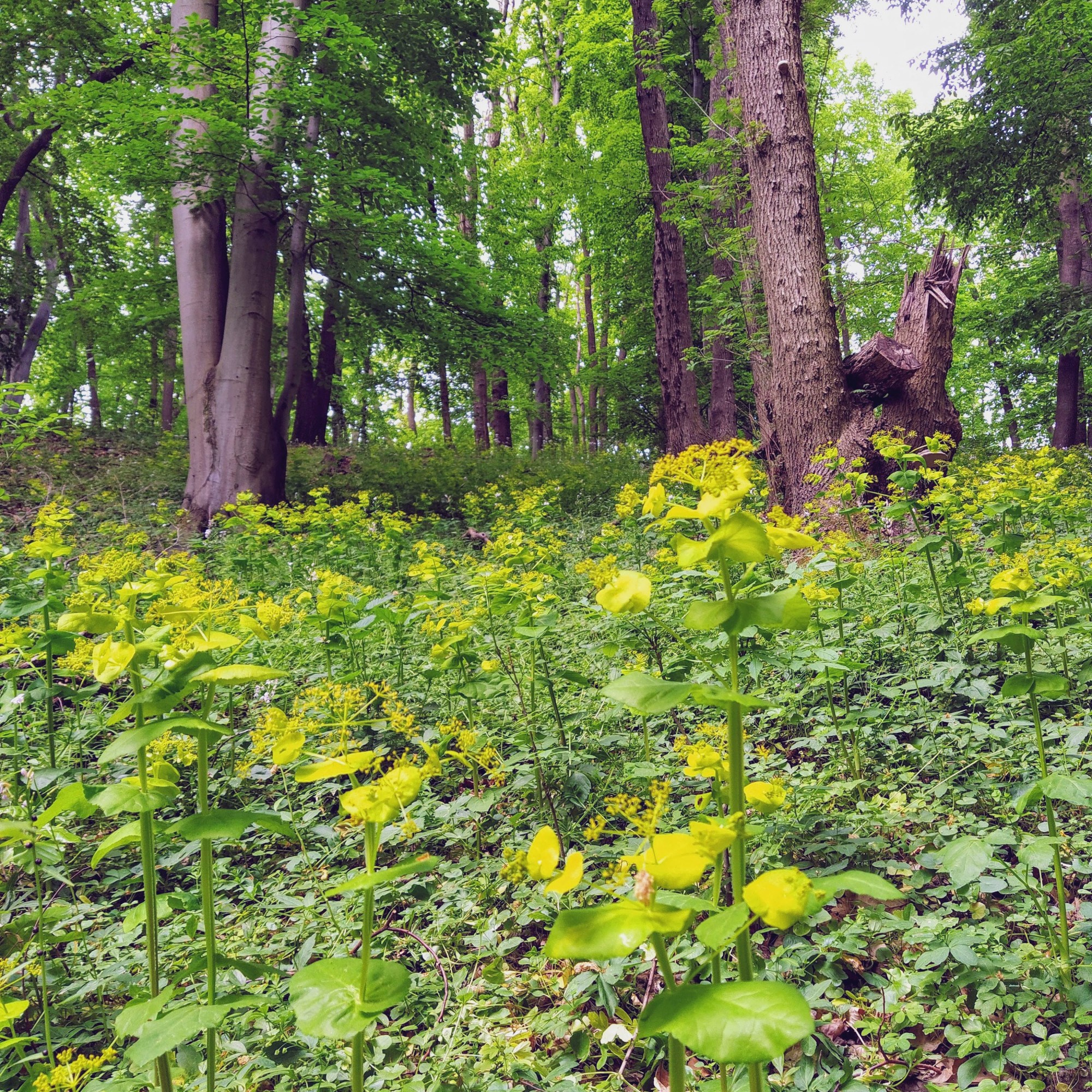
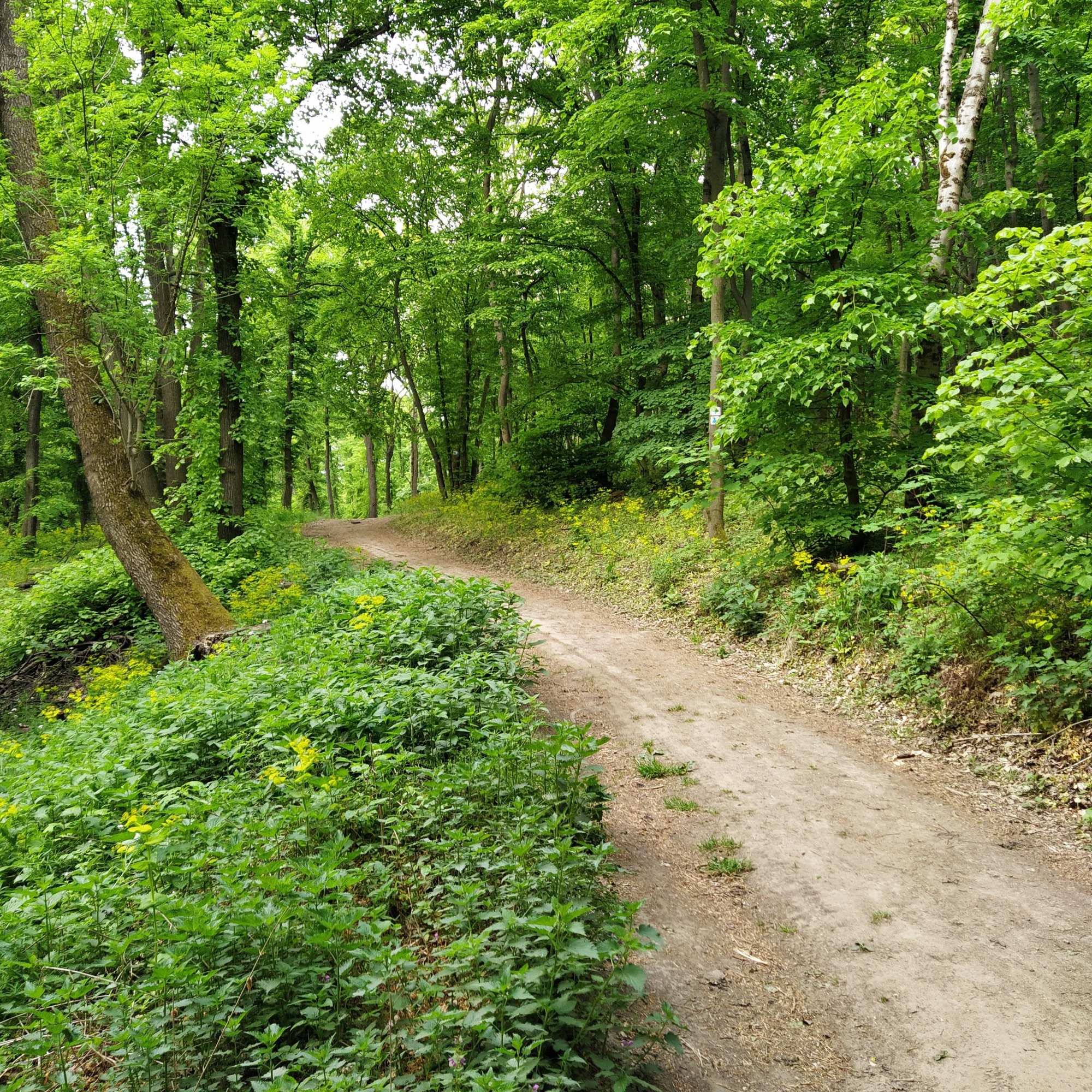
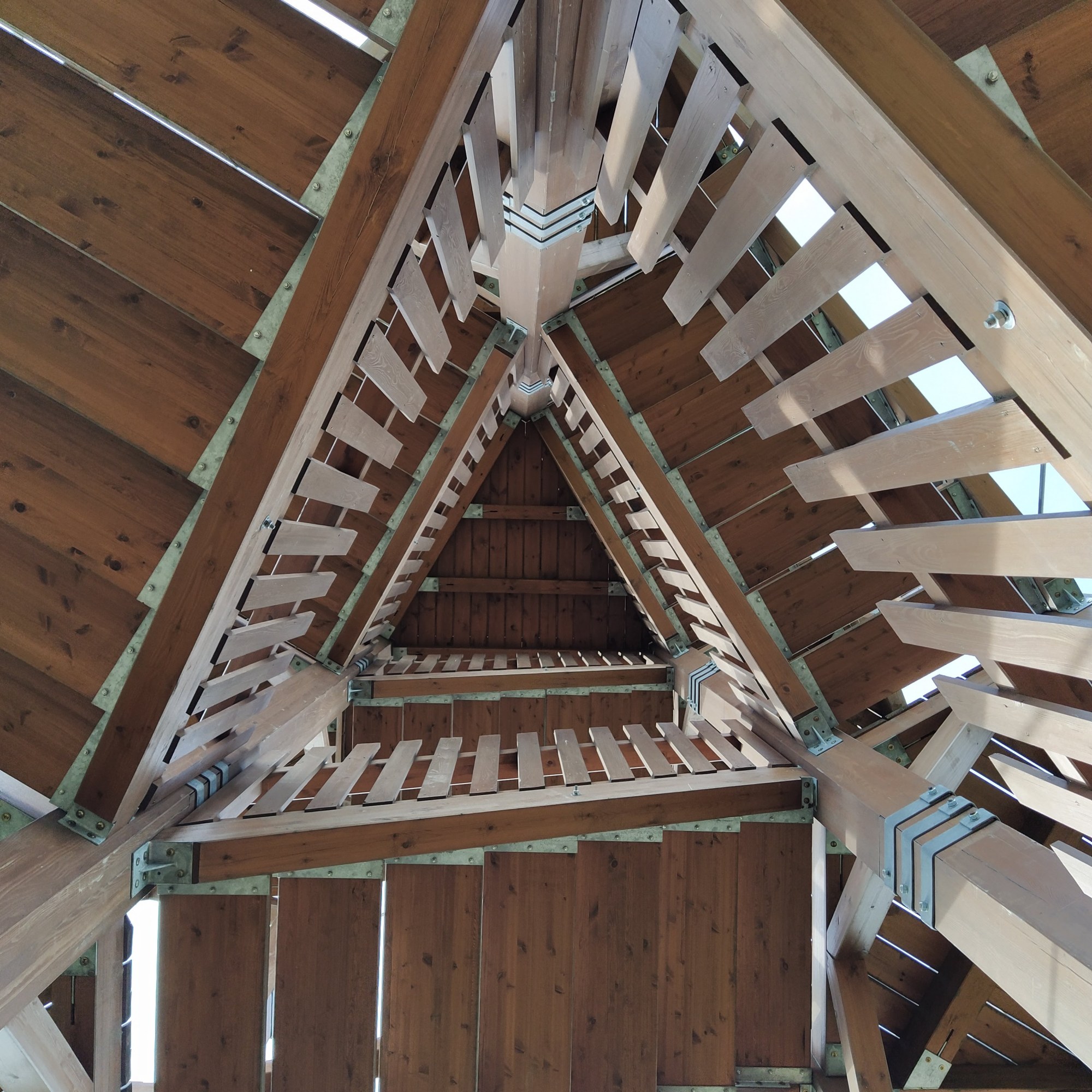
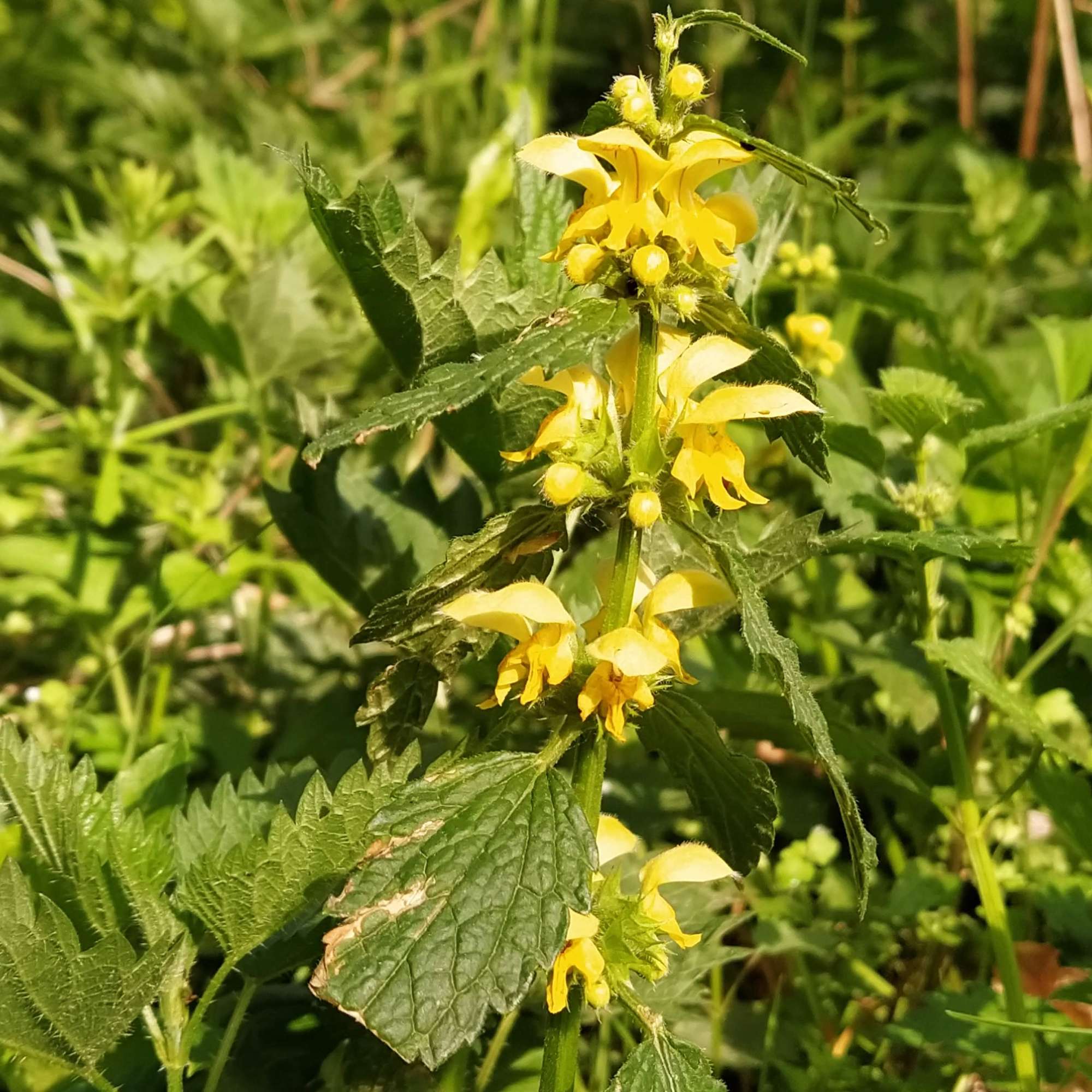
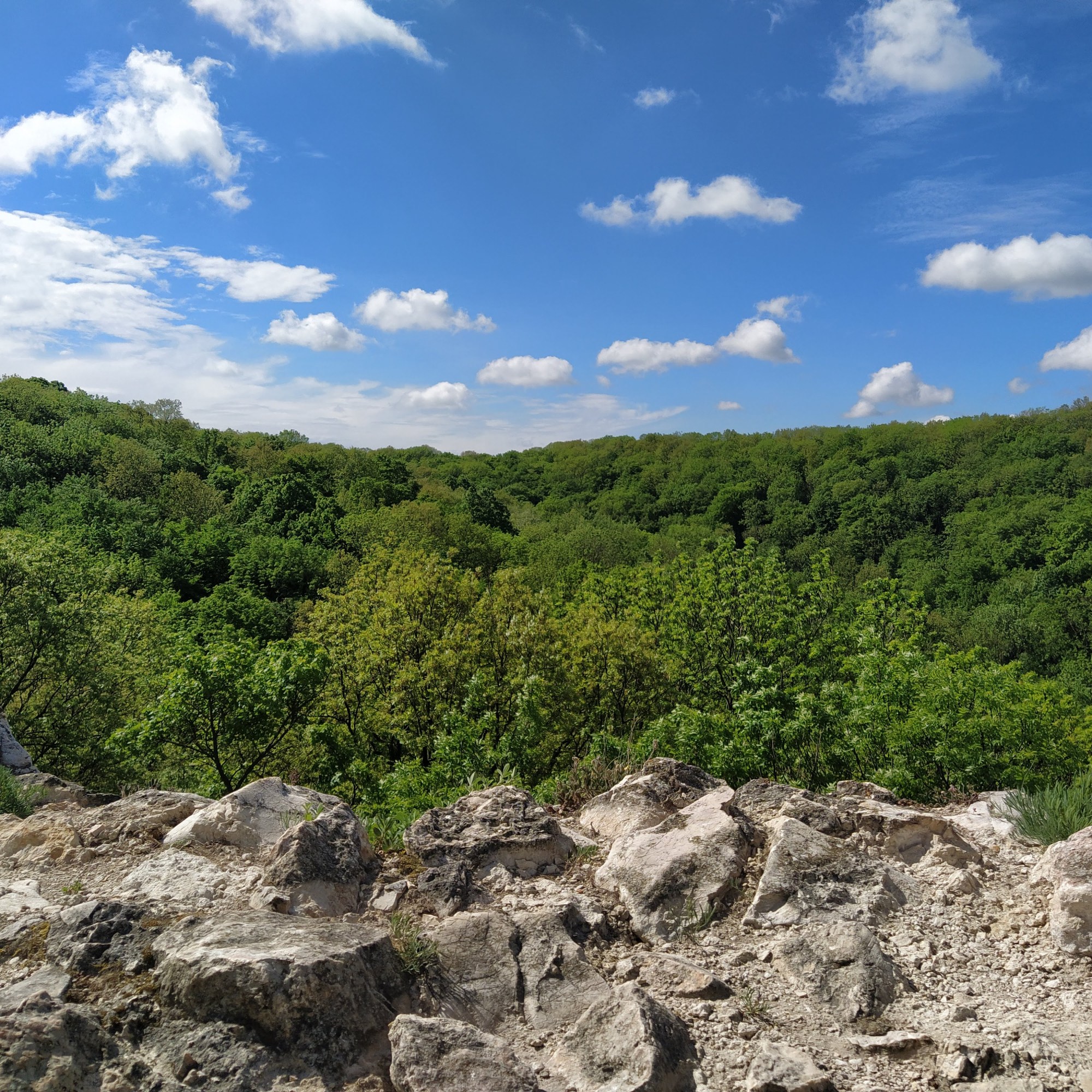
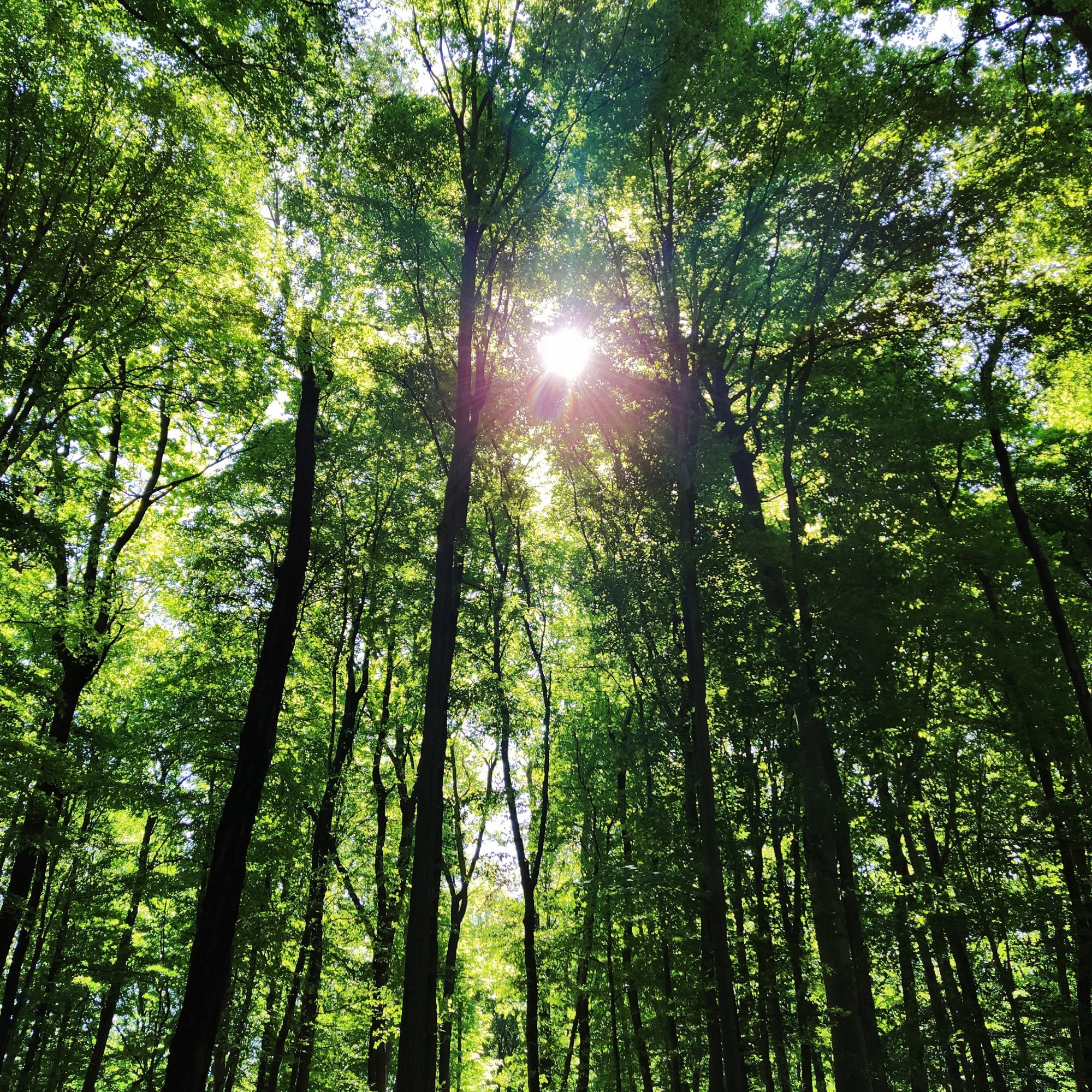
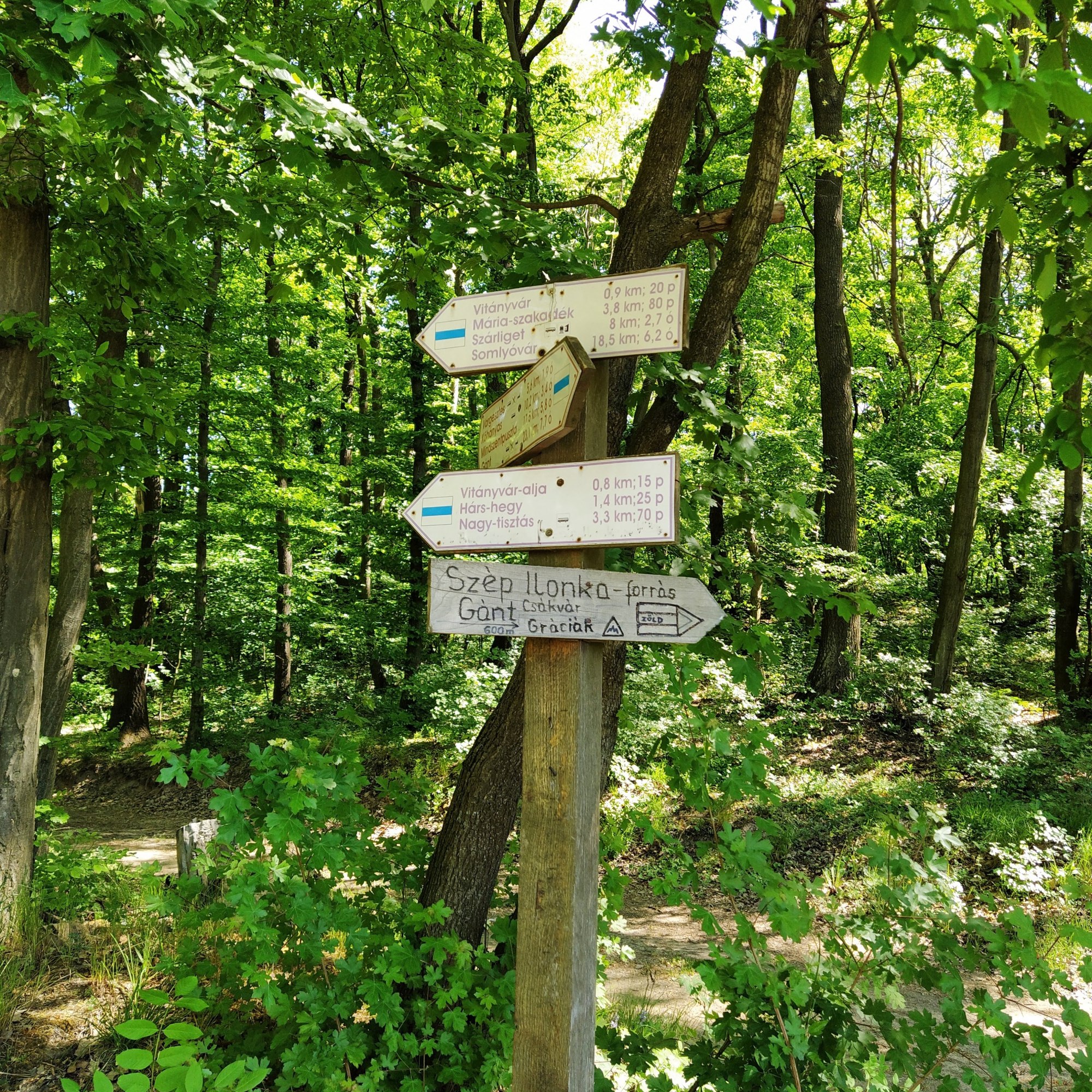
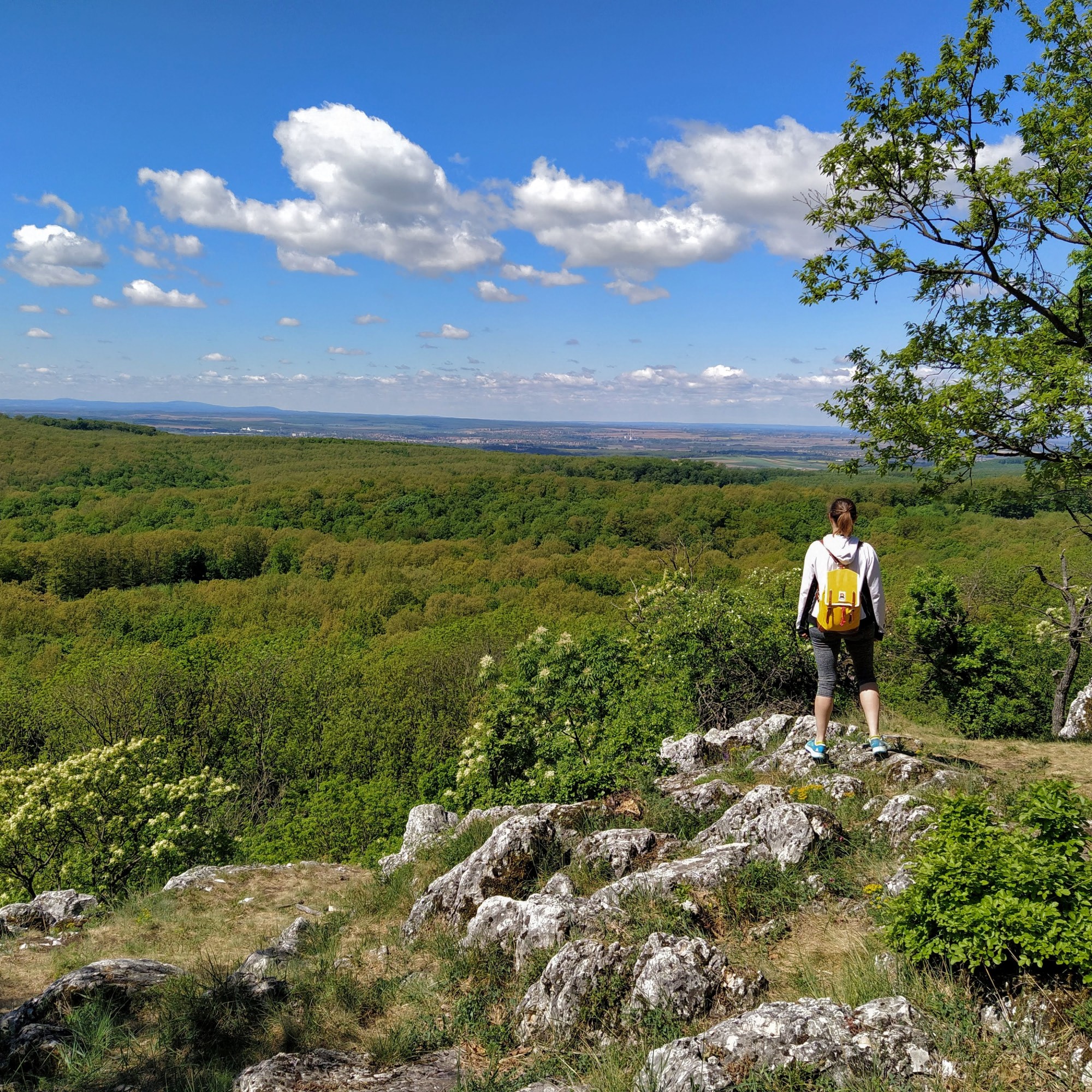
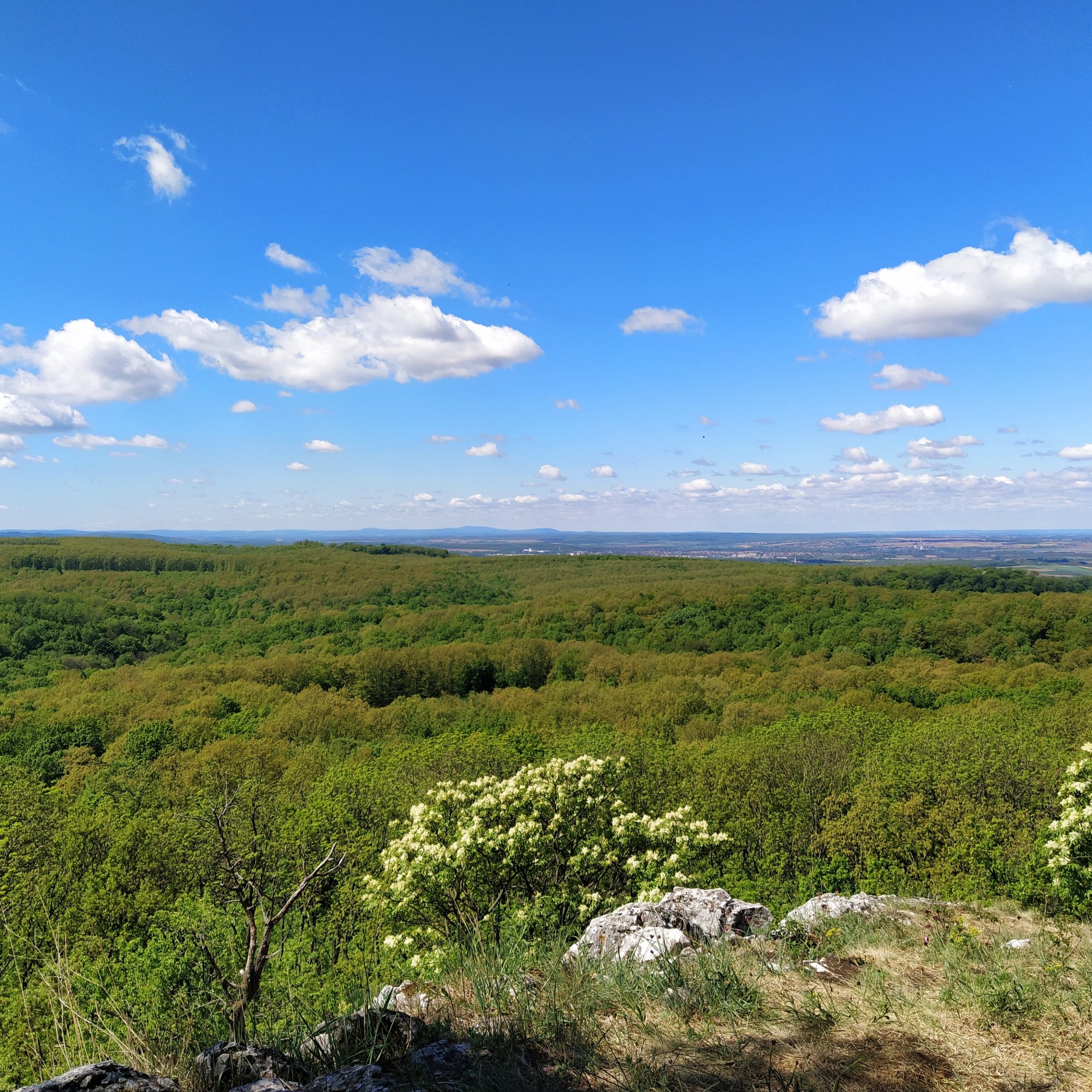
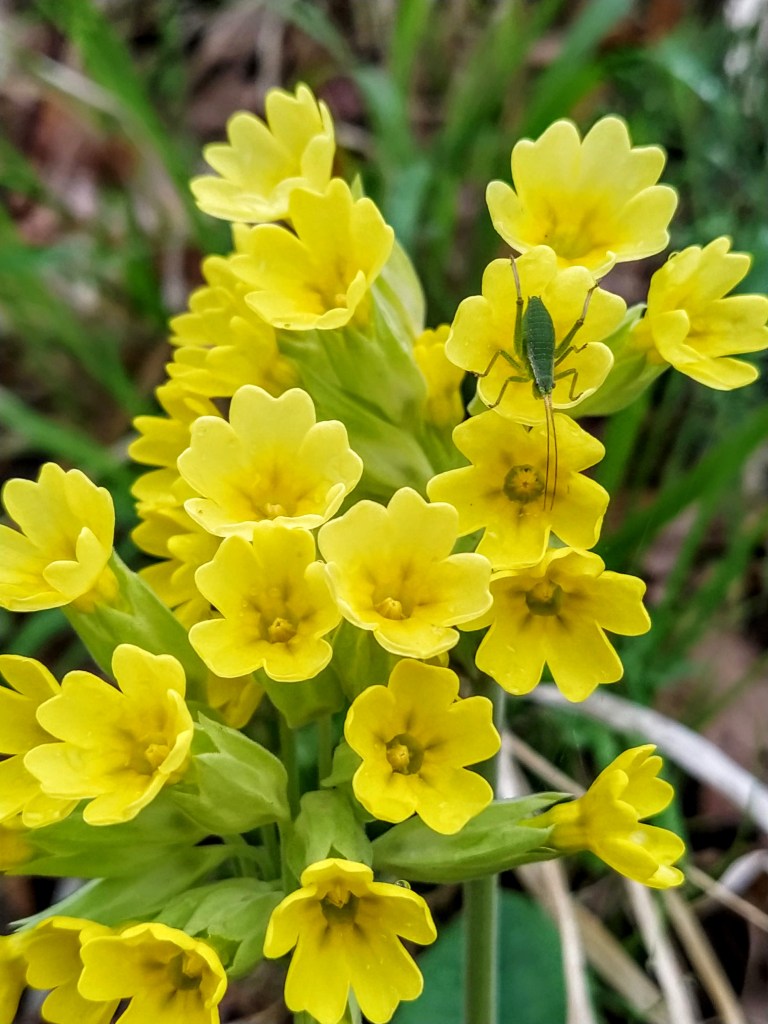
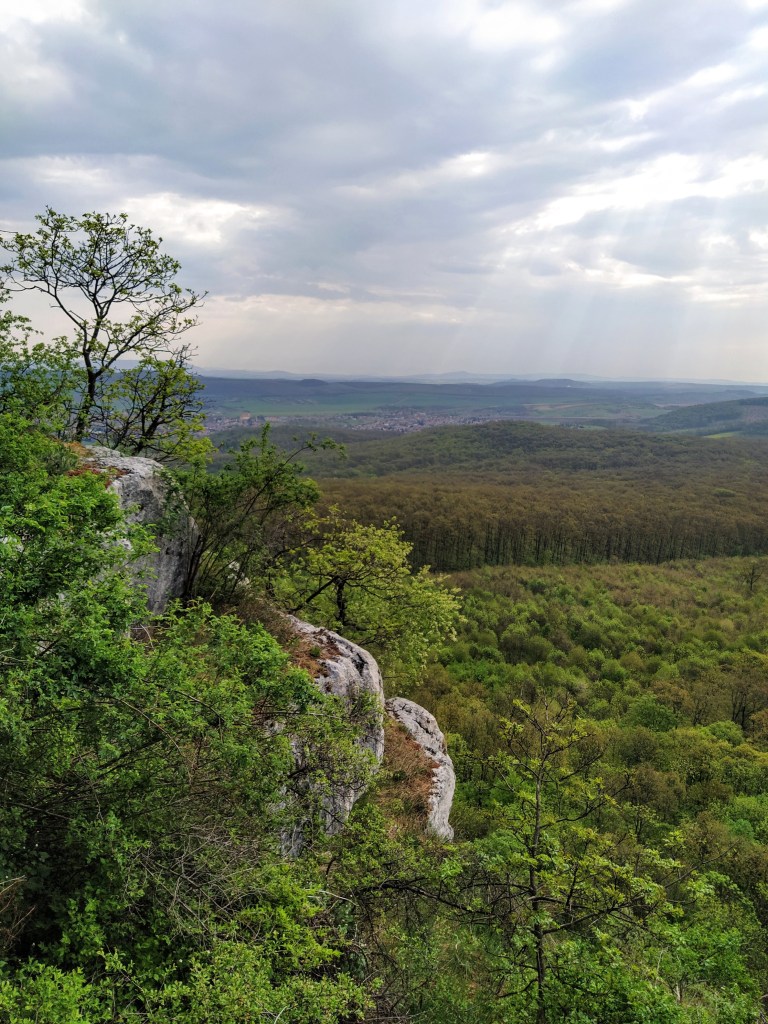
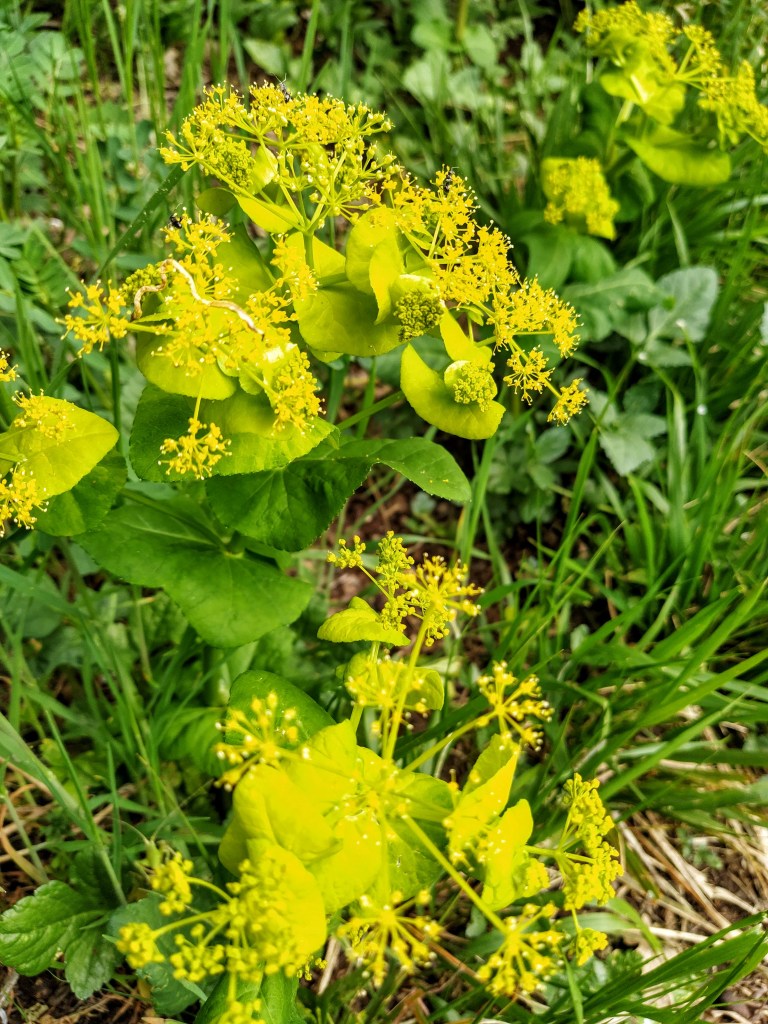
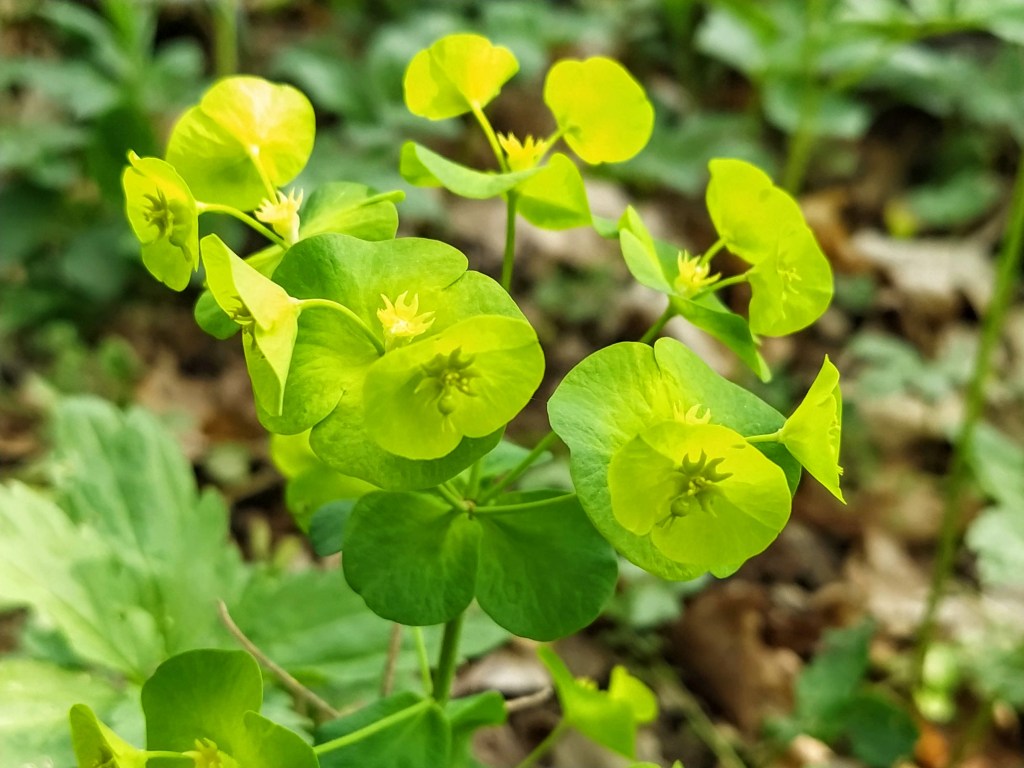
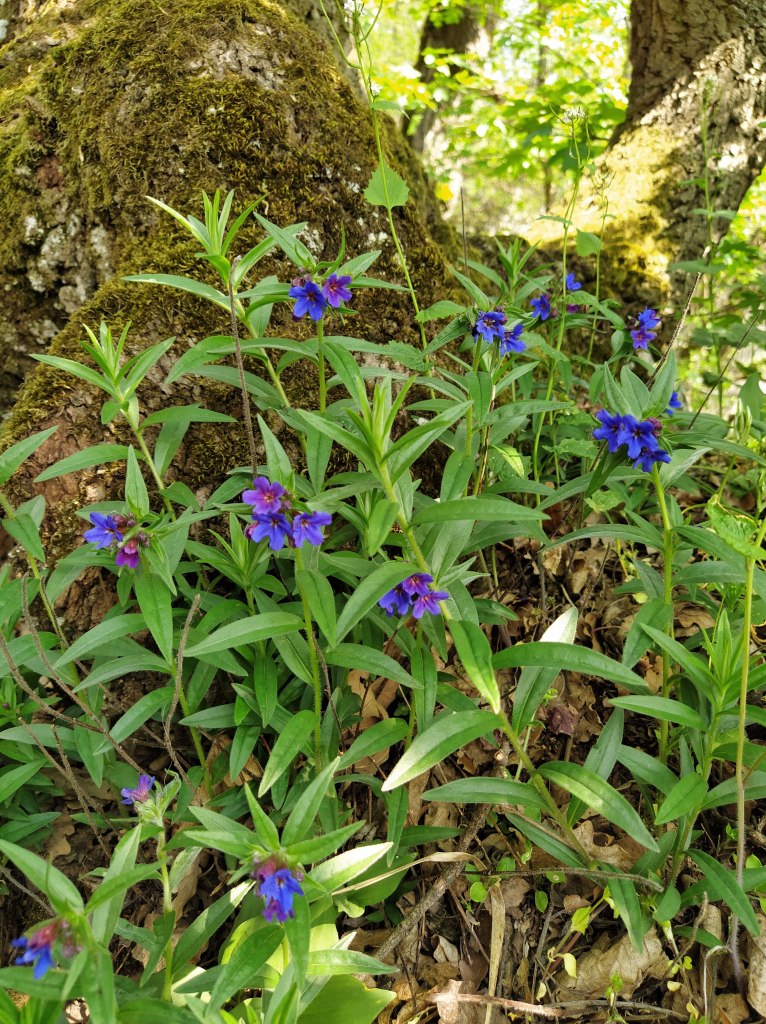
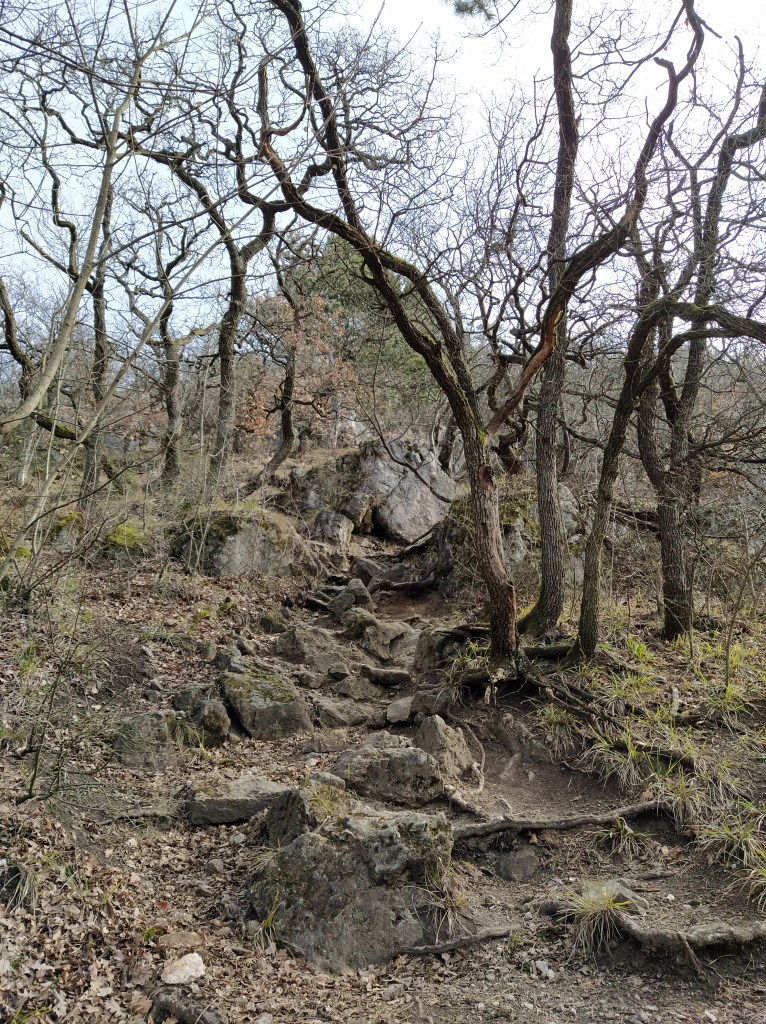
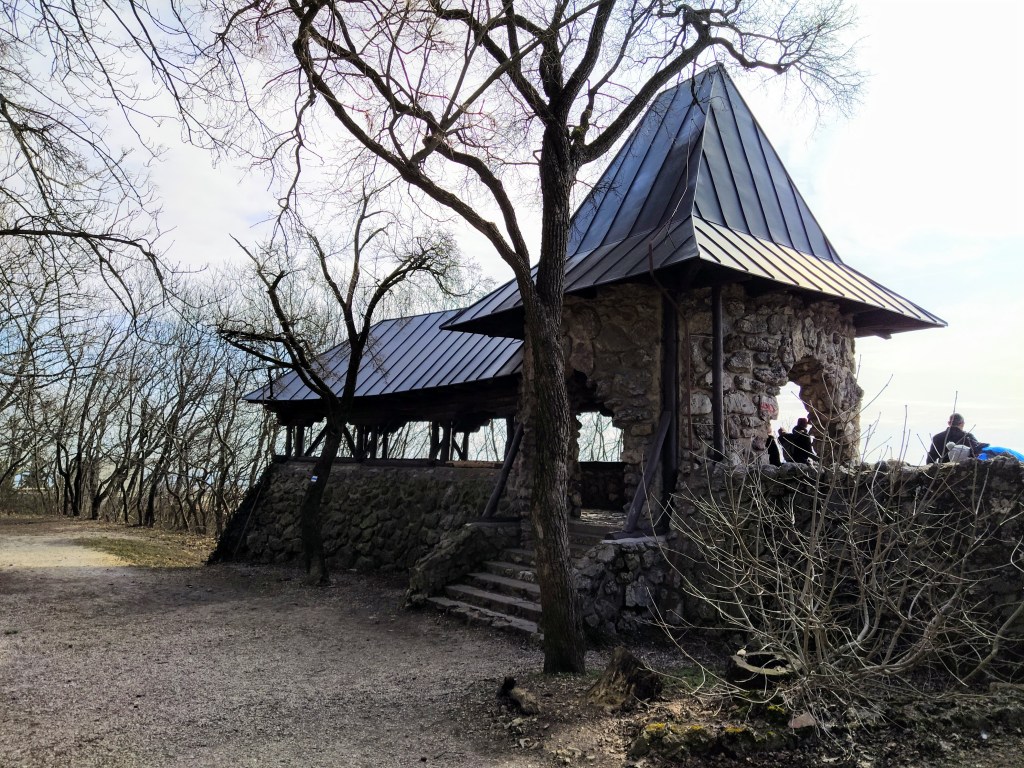
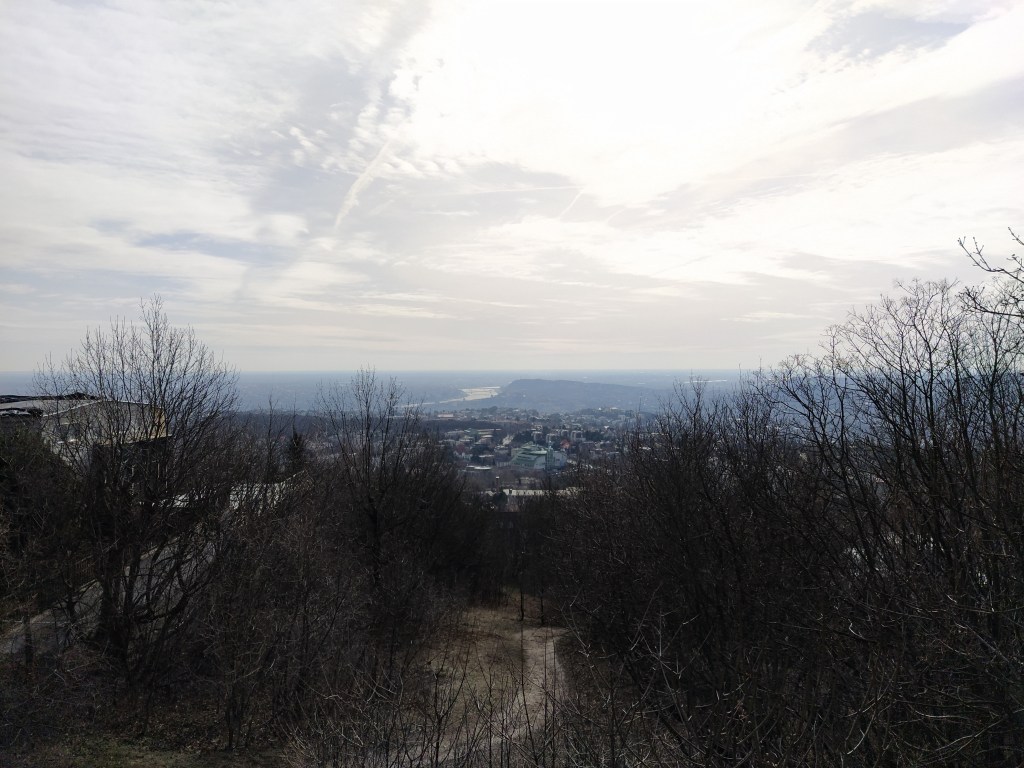
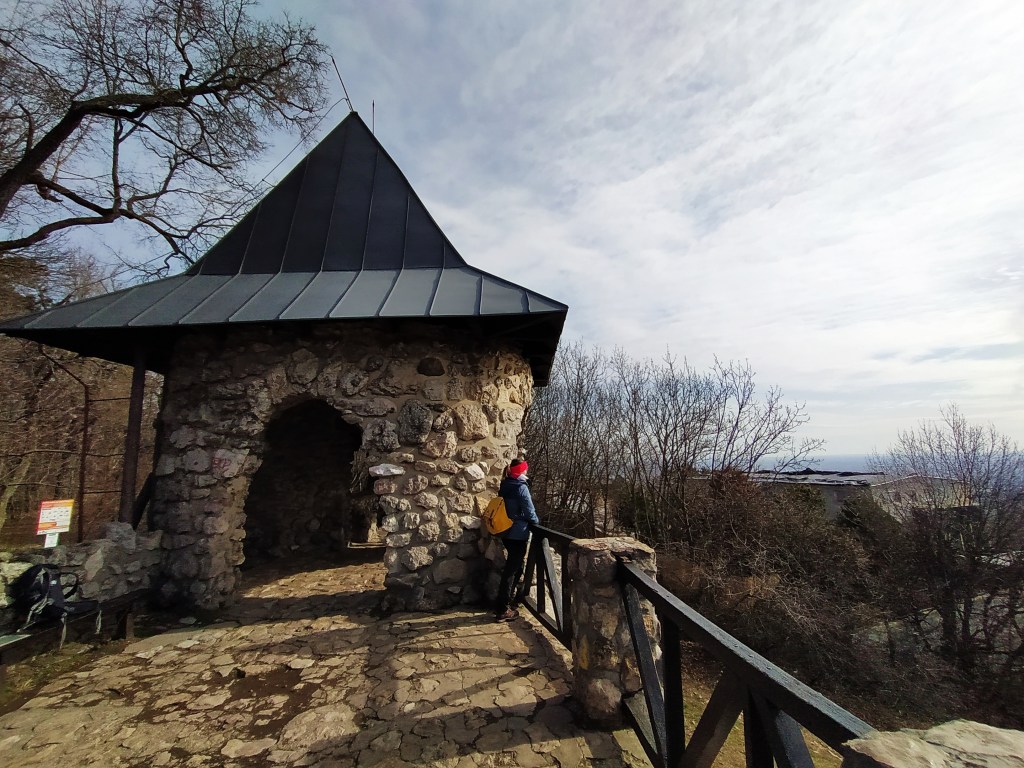
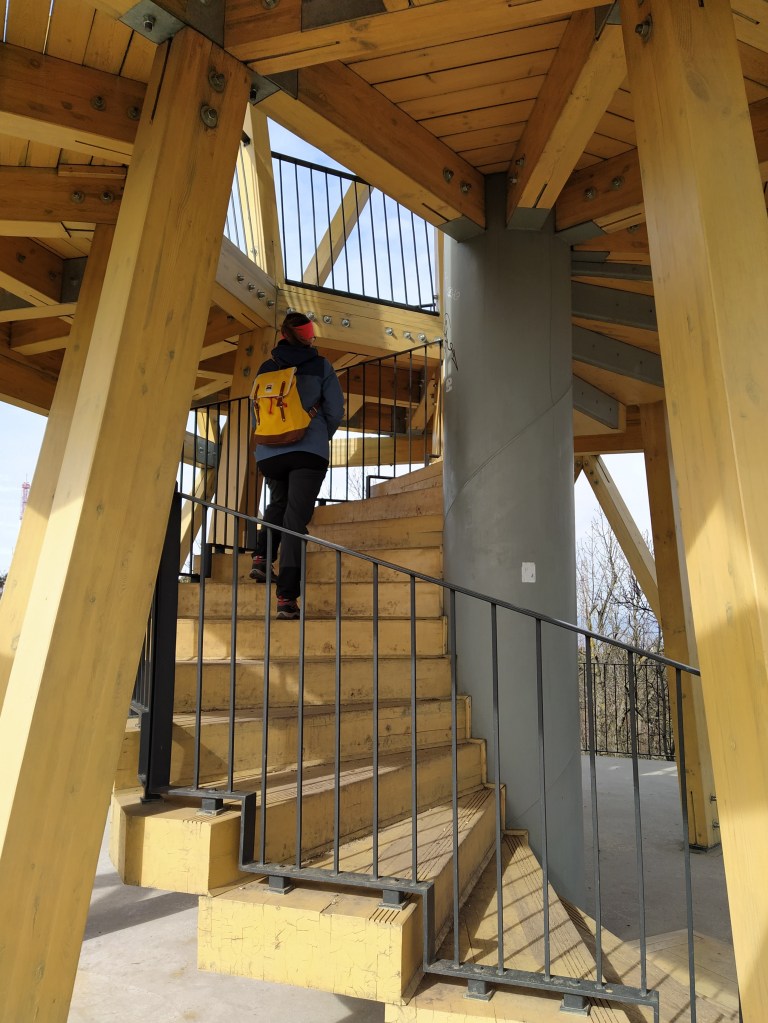
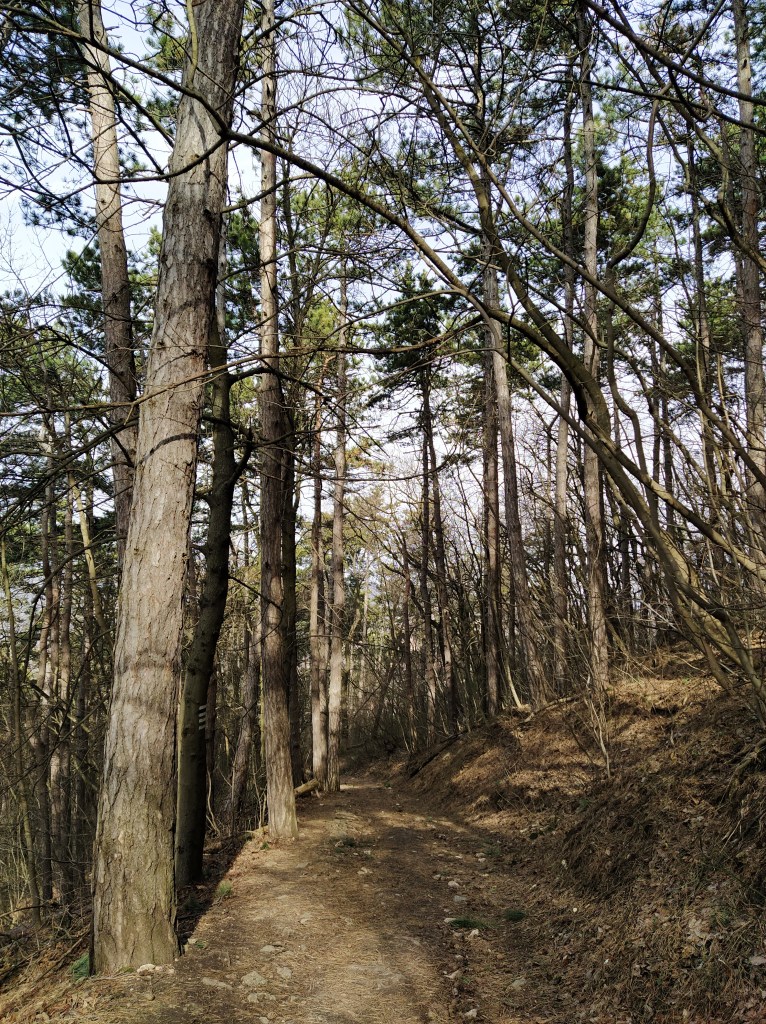
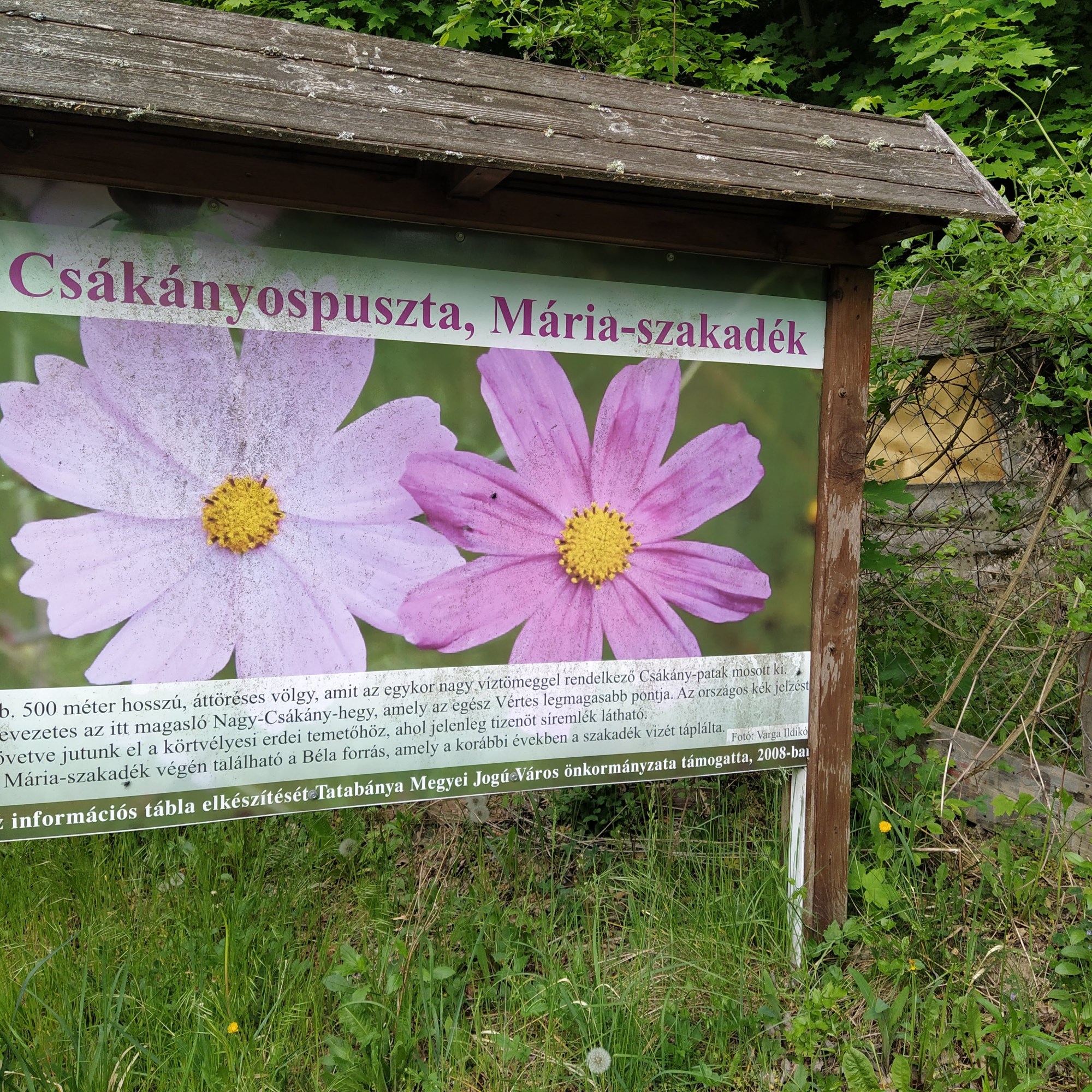
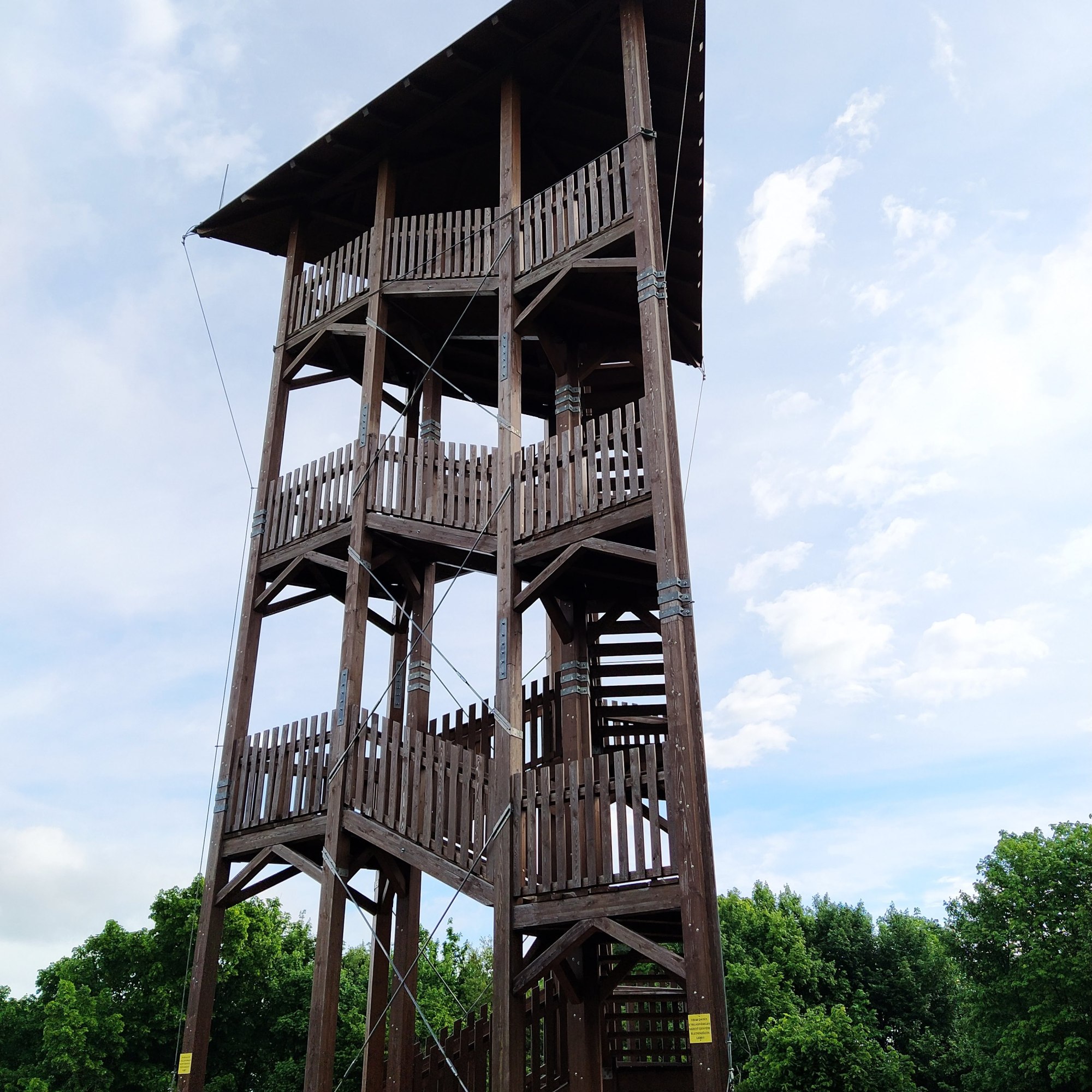
We reached the side of the forest at a tourist house, where a sign shows that the Mária Gully is close by. Our route would circle back to the gully, so we started to hike up to reach the lookout tower. The valley reminded me of a natural temple as we strolled under the dome canopy of the trees and the forest floor was carpeted with hundreds of yellow flowers.The rise up to the Kis-Kopasz-hegy (Smaller Bald Mountain if I was to translate it word by word, but who comes up with these names?) was relatively short but quite steep. All this trudging uphill better make my backside fabulous or I will be pissed.
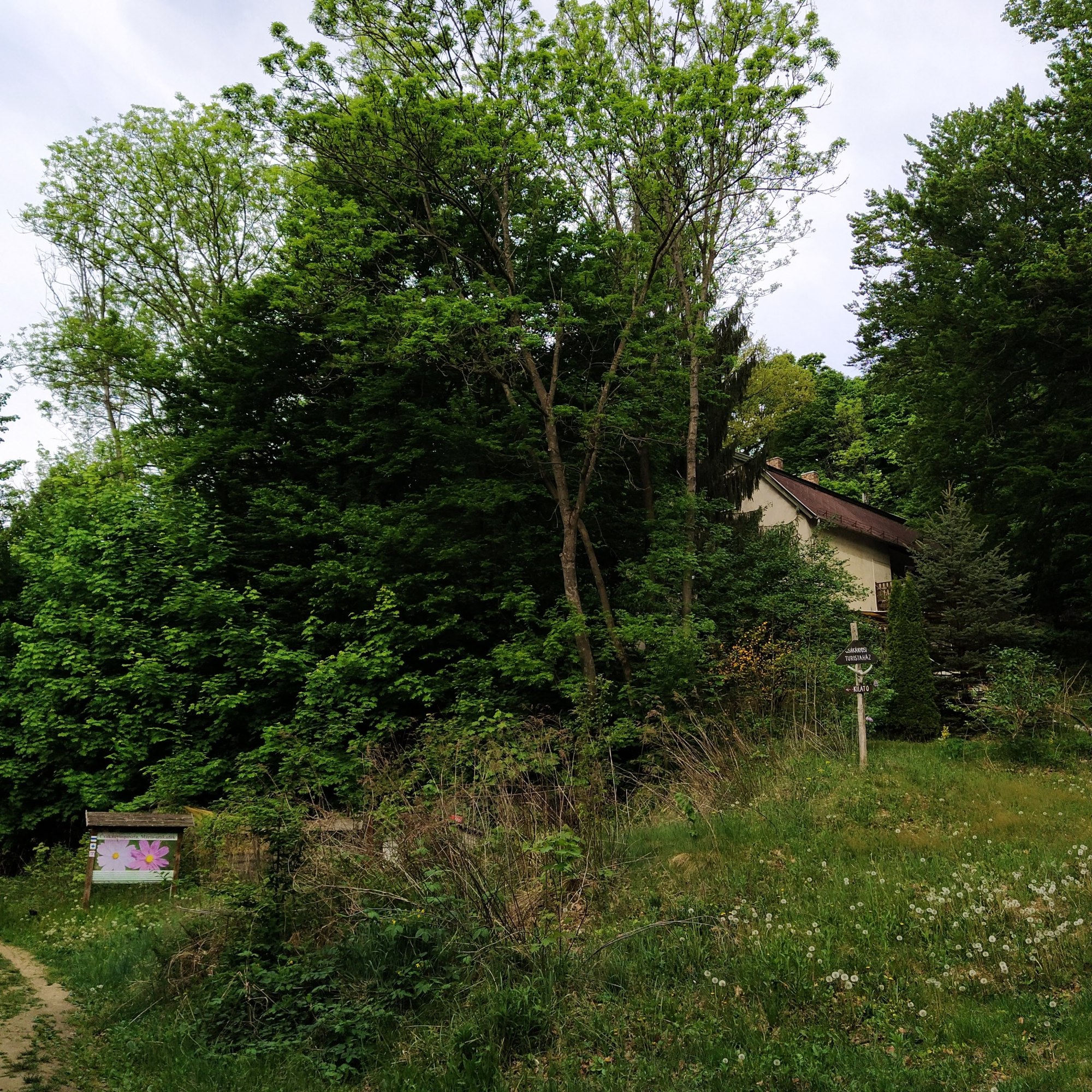
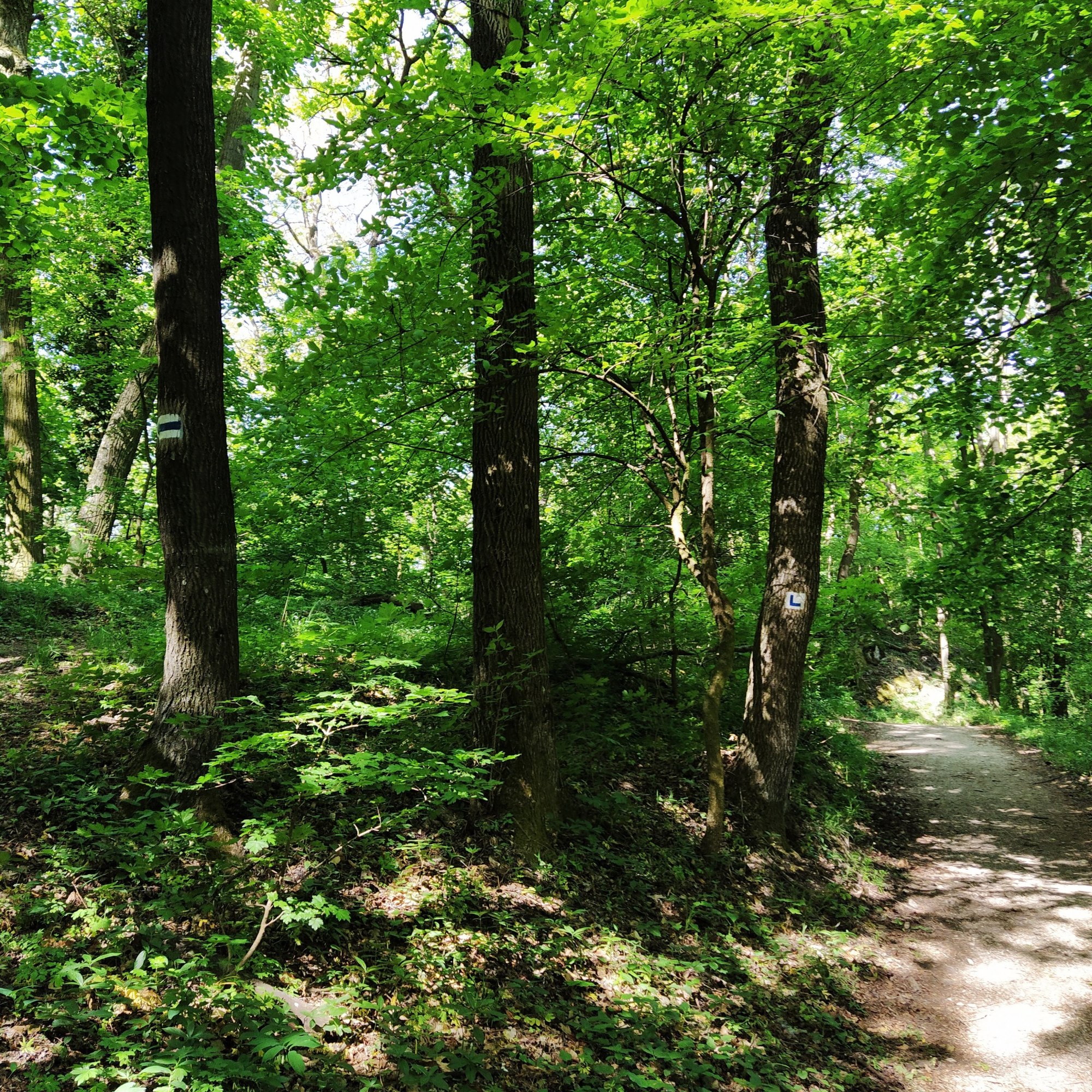
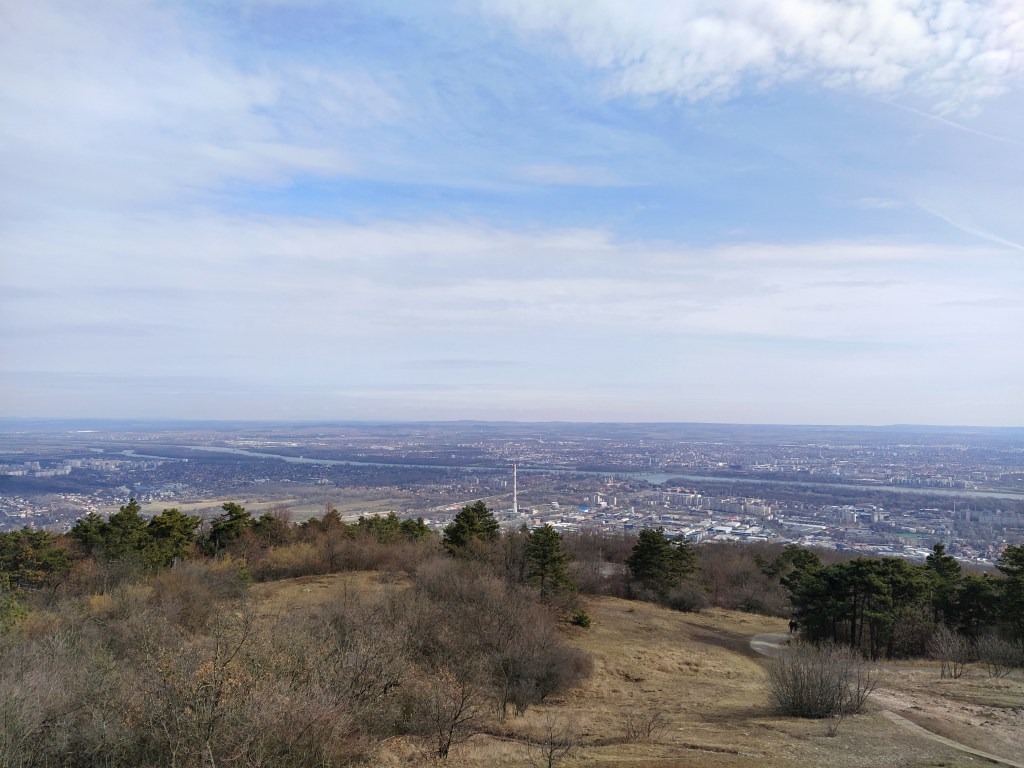
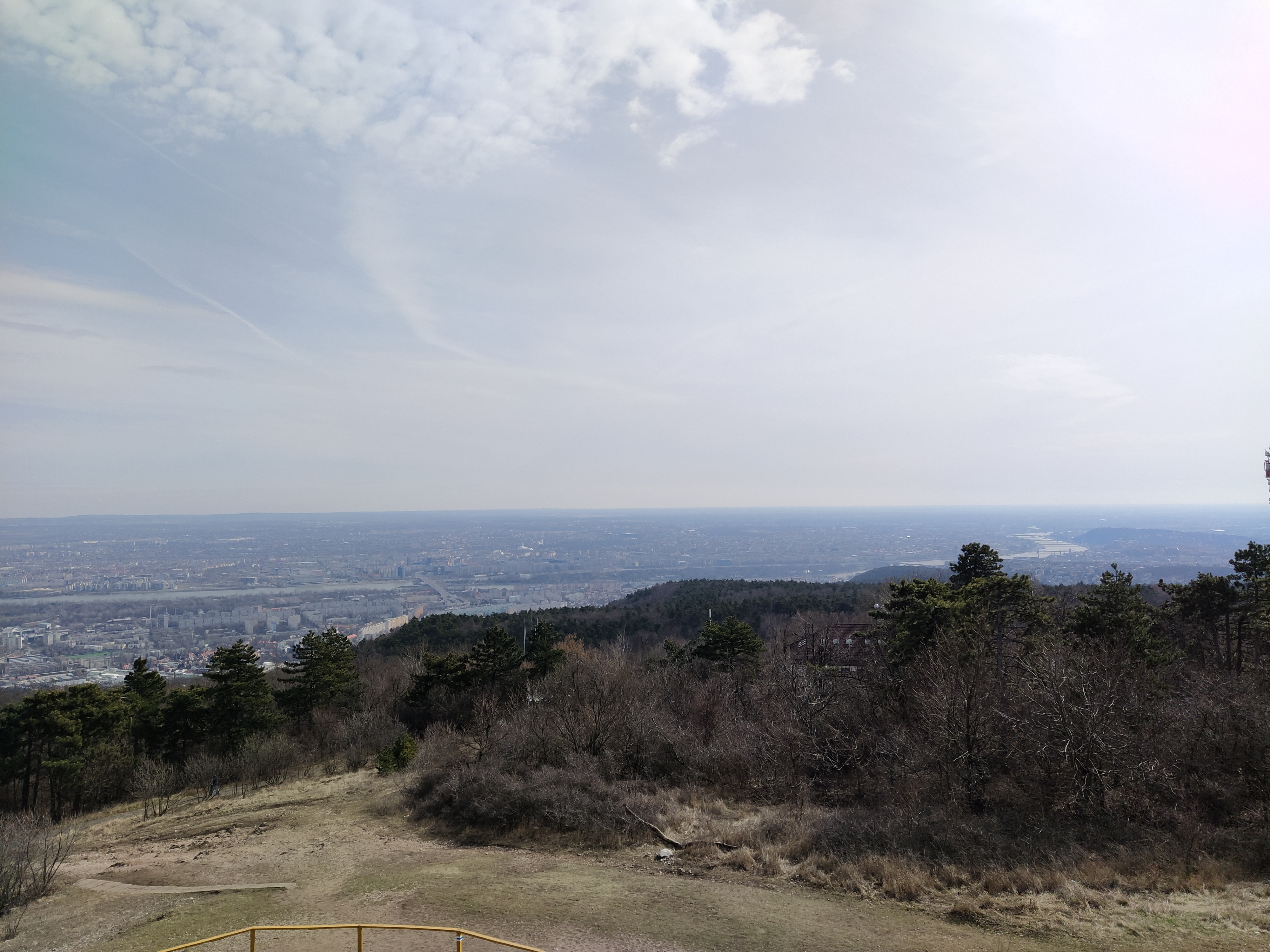
Up until this point we followed the blue + path, however to get to the the lookout tower we did a small detour on the blue triangle.
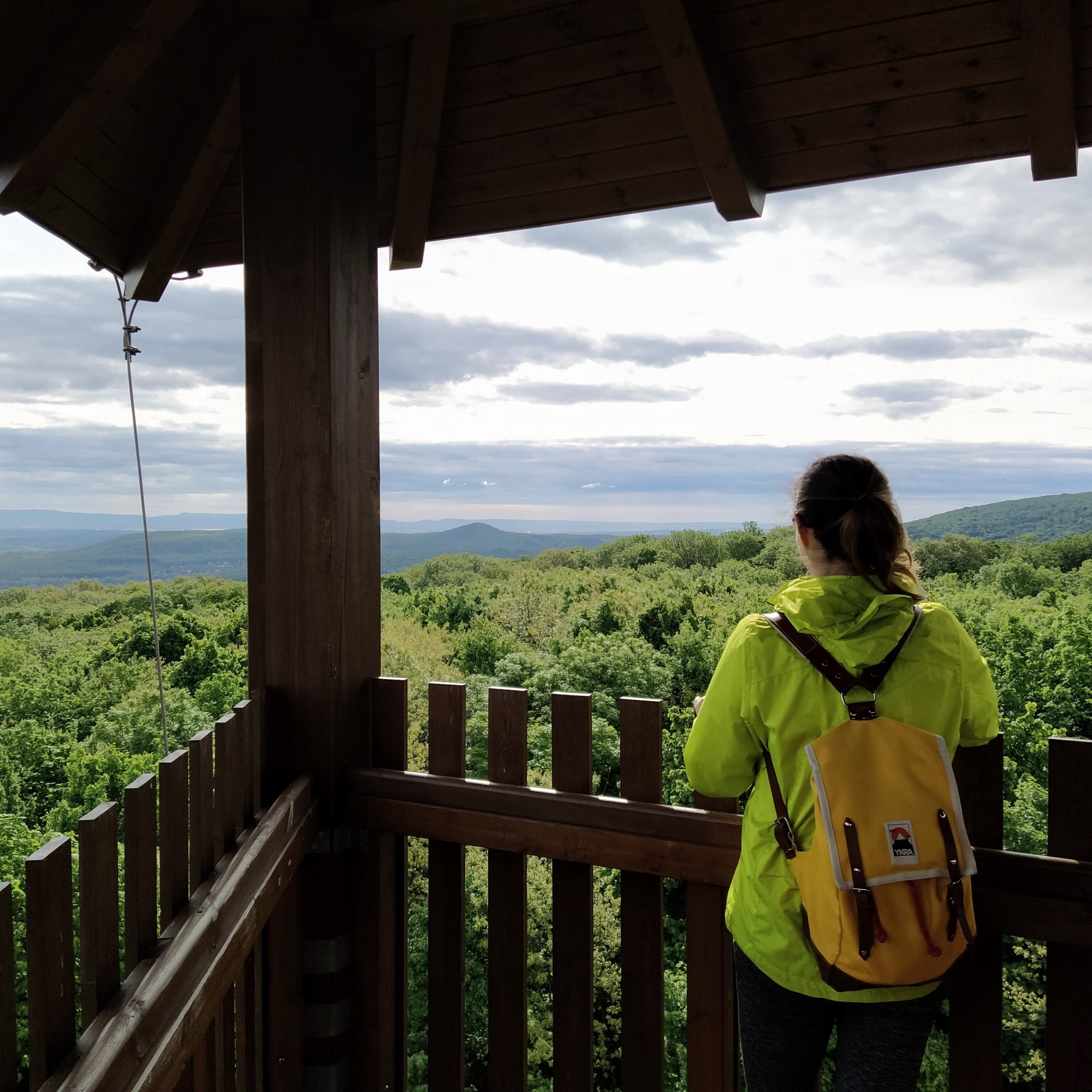
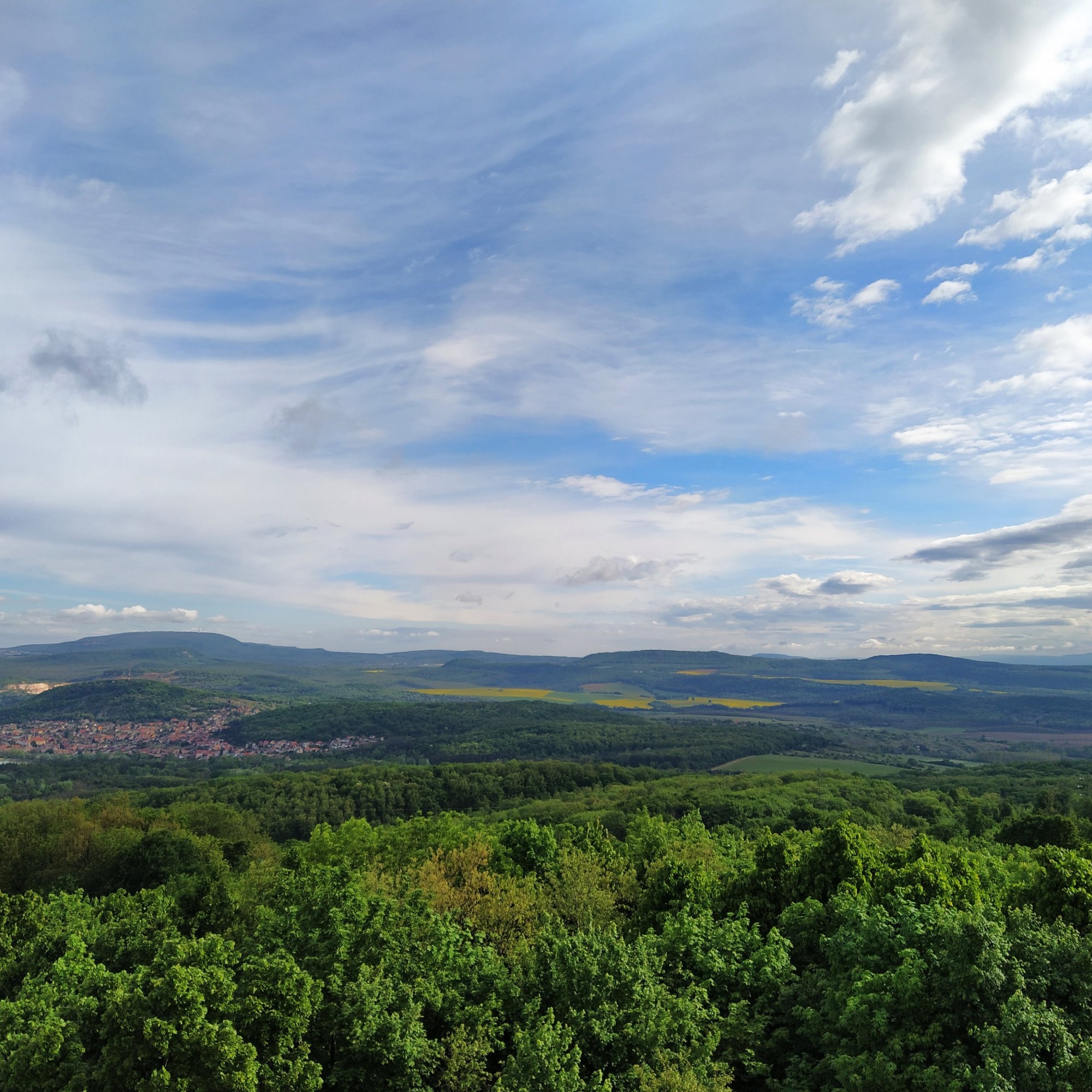
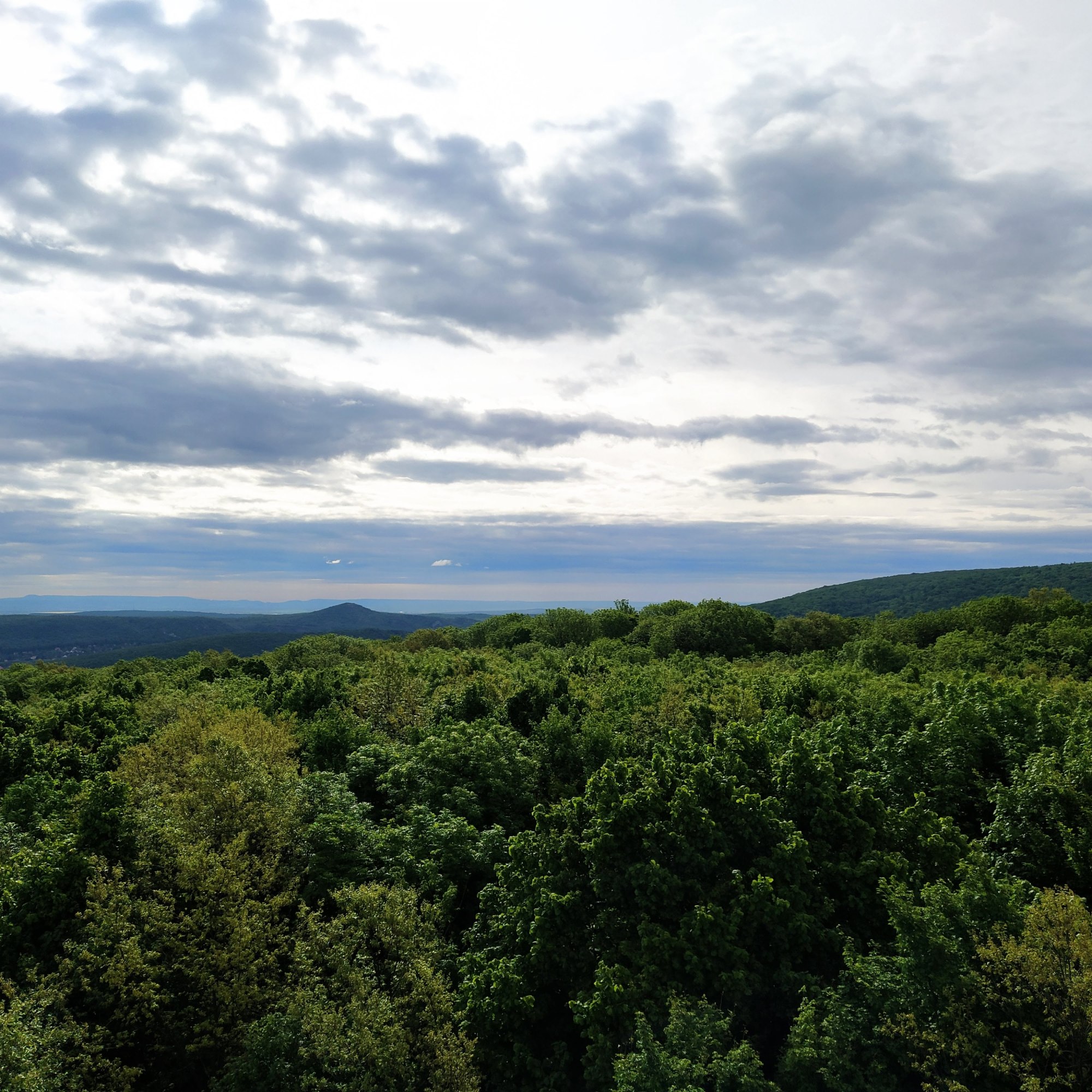
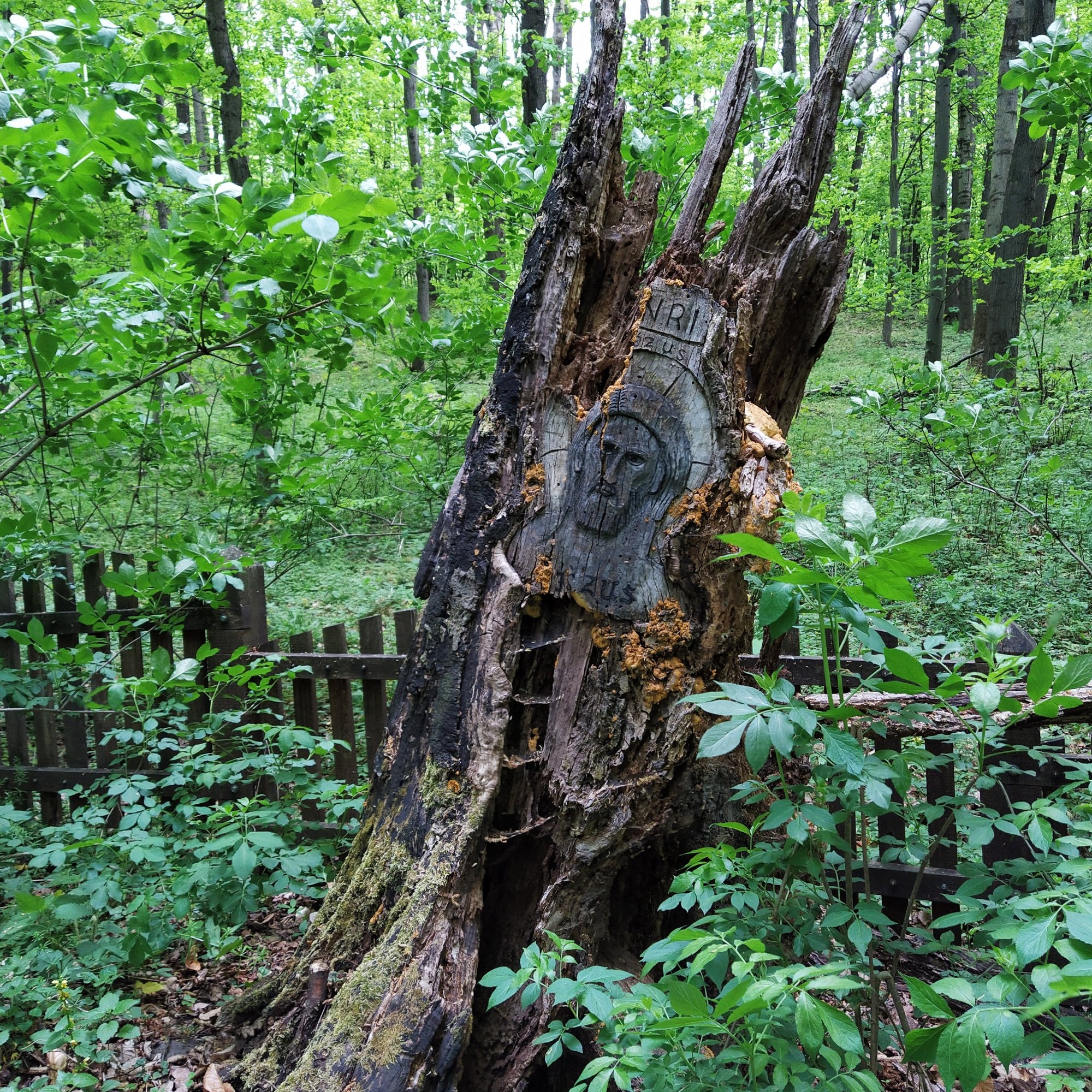
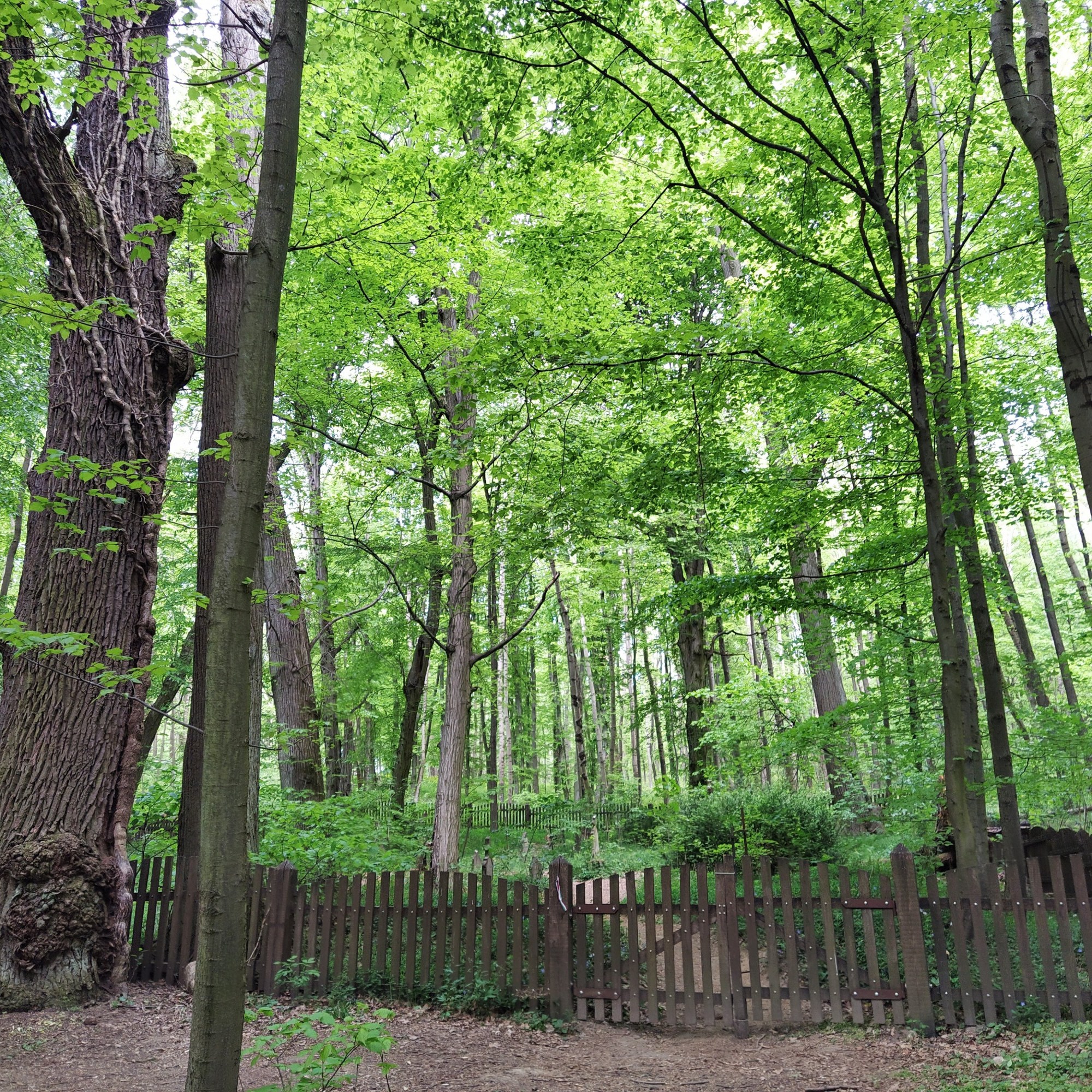
Filled up with the beautiful panorama, we carried on to our next destination, a forest cemetery that once belonged to the village of Körtvélyes. The light was filtered by the leaves giving a soft, green hue to the tiny graveyard. What a final resting place for those few souls, they became one with nature again. Seeing this cemetery was a unique experience, a little enchanted spot: mystical, utterly calm but with the feeling of decay.
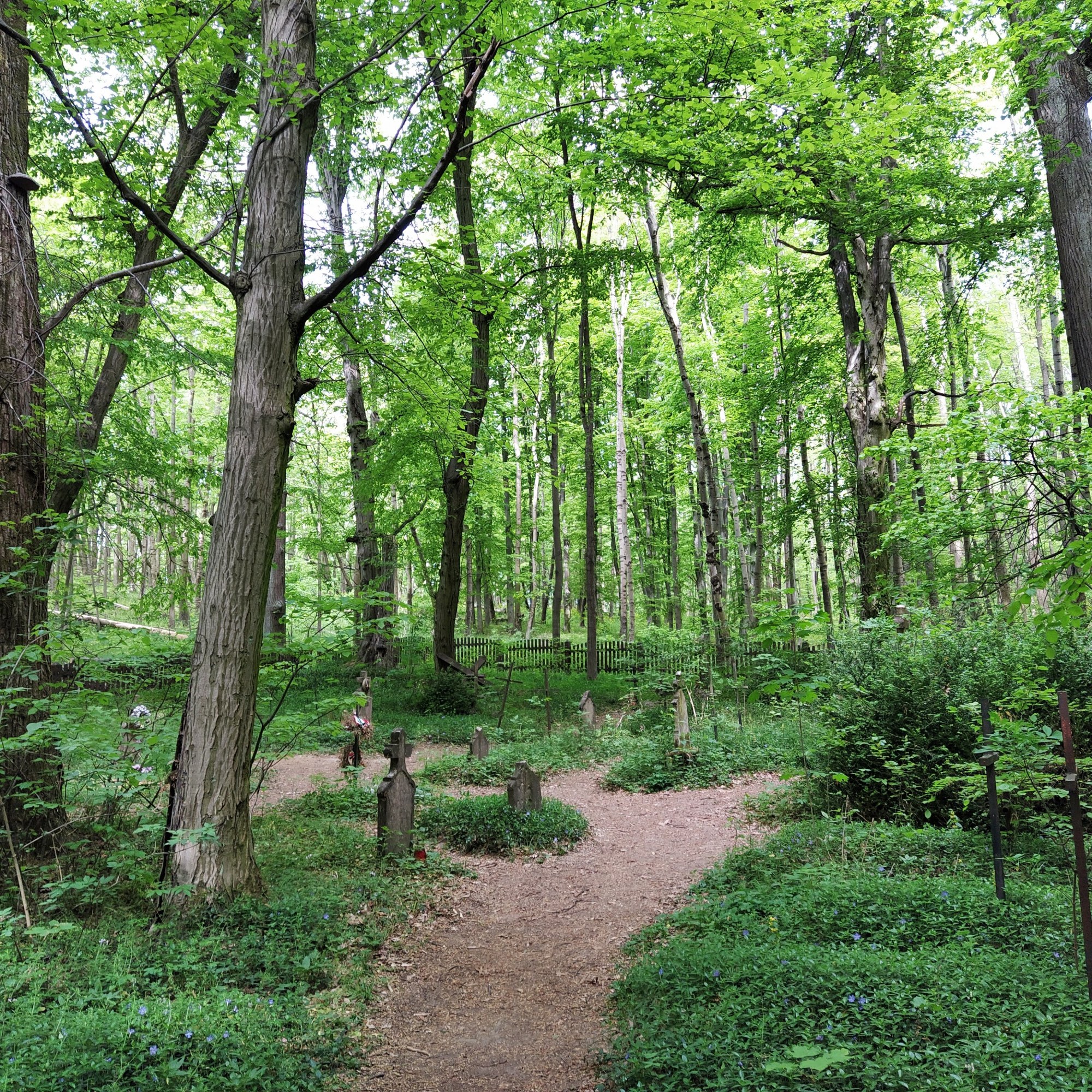
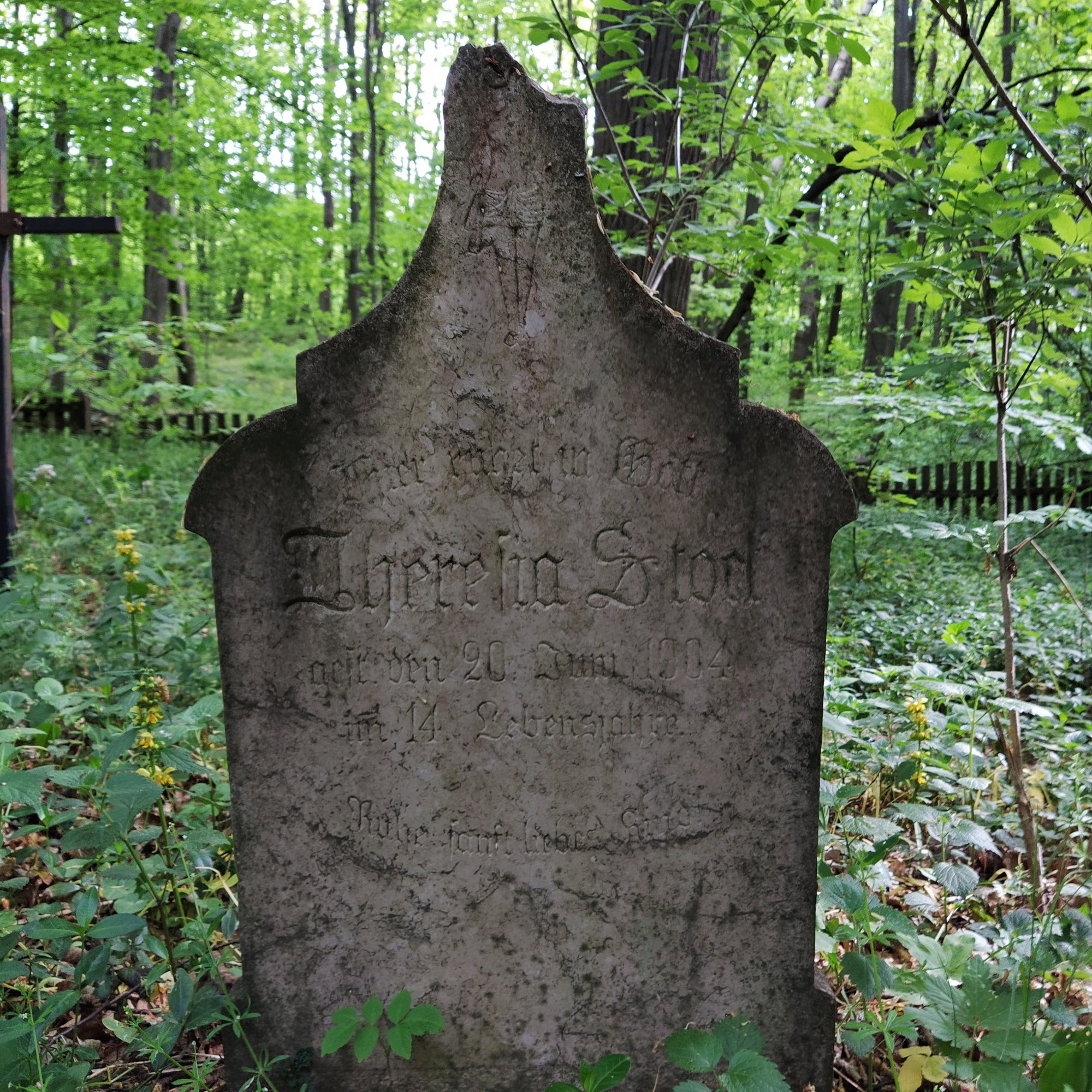
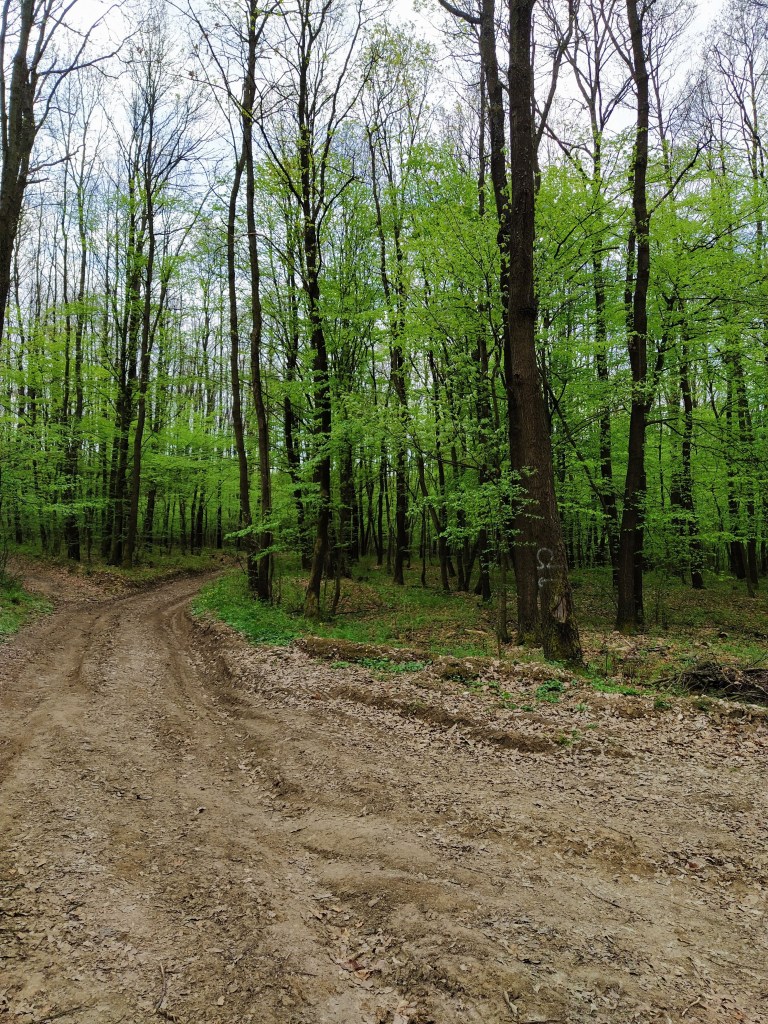
Next, we reached a T-shaped junction and turned right on the blue trail. The next part was quite depressing, the forest is ravaged by logging, whole patches were cut clear, other parts on the verge of being cut down. I felt sad, angry and helpless. Why is mankind is so intent on destroying?
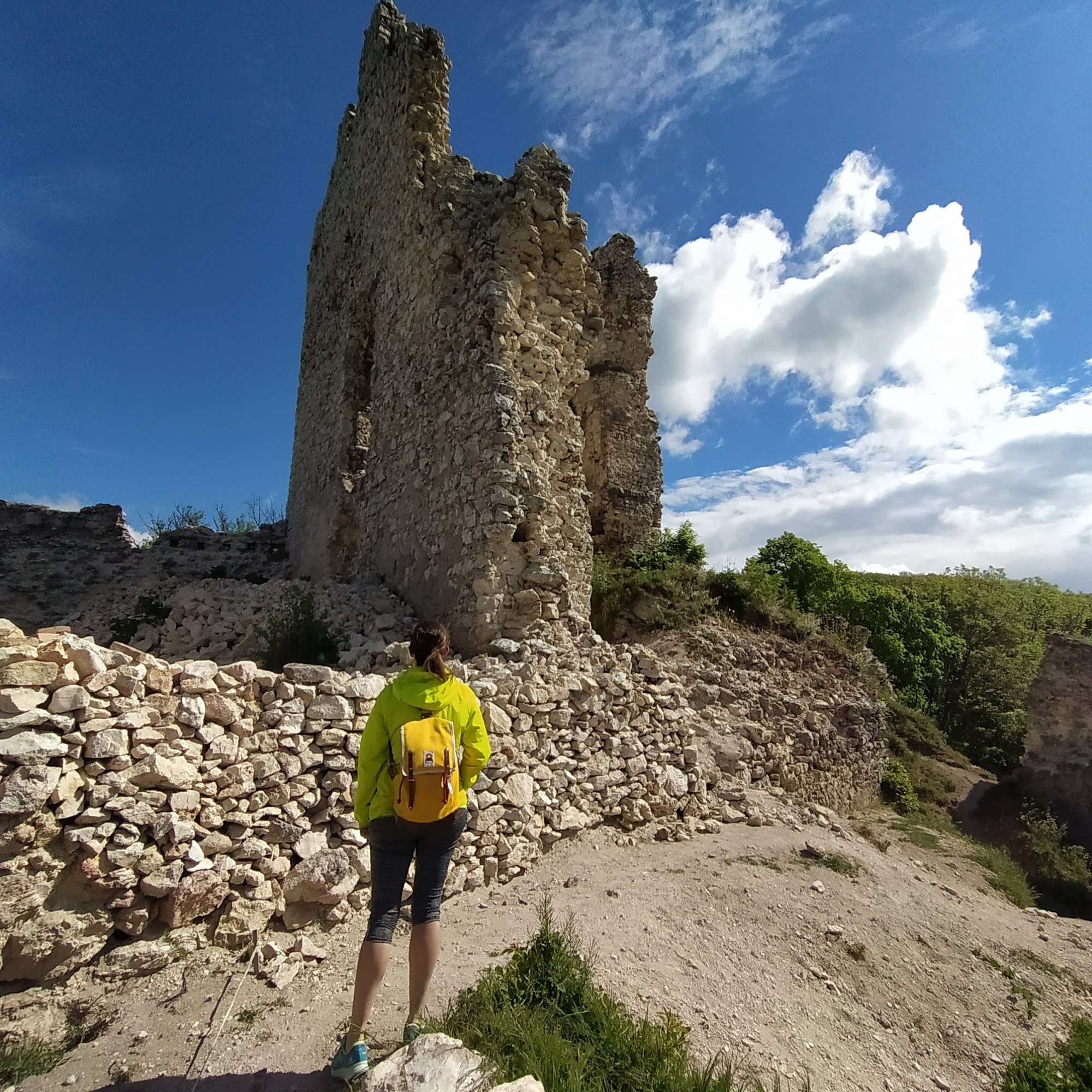
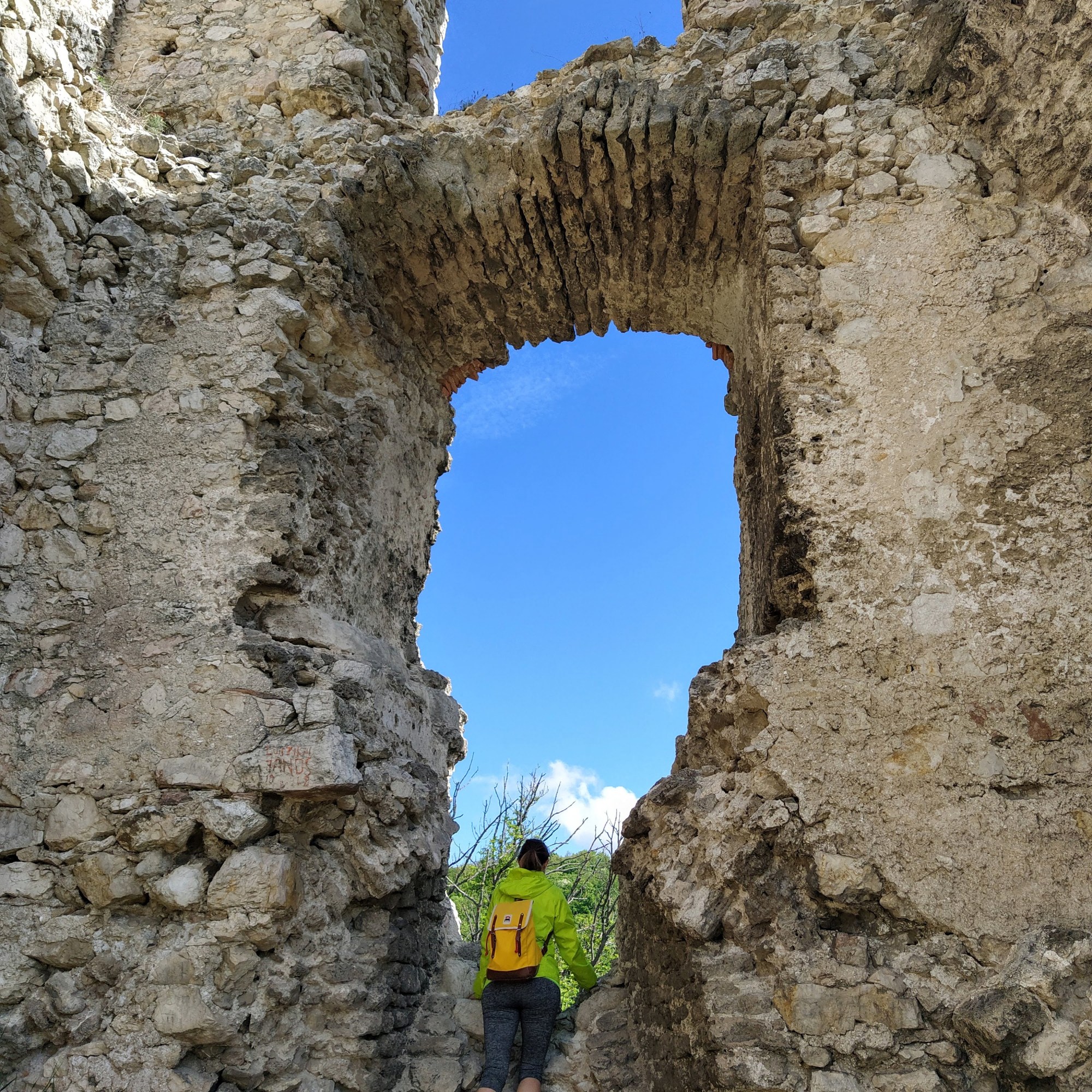
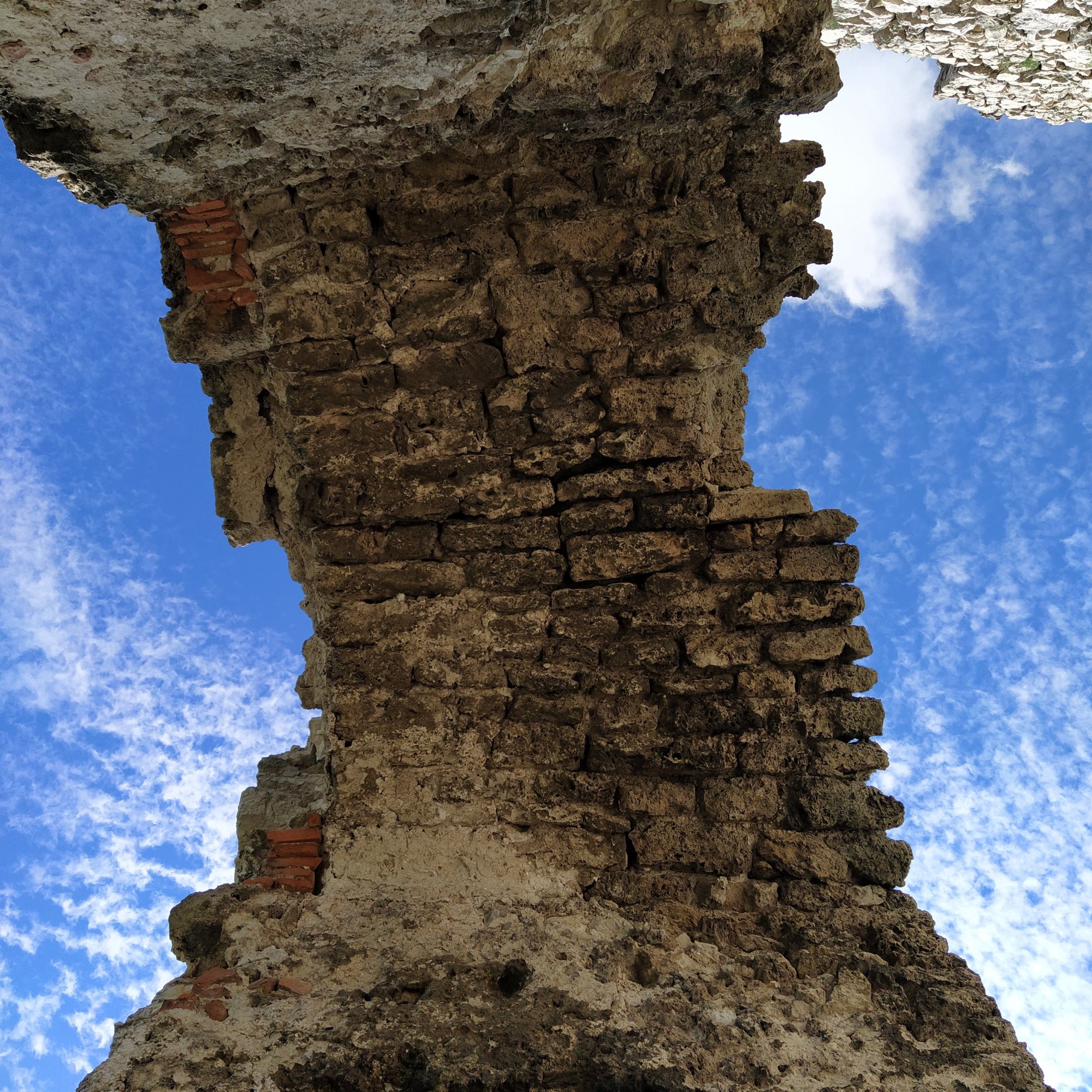
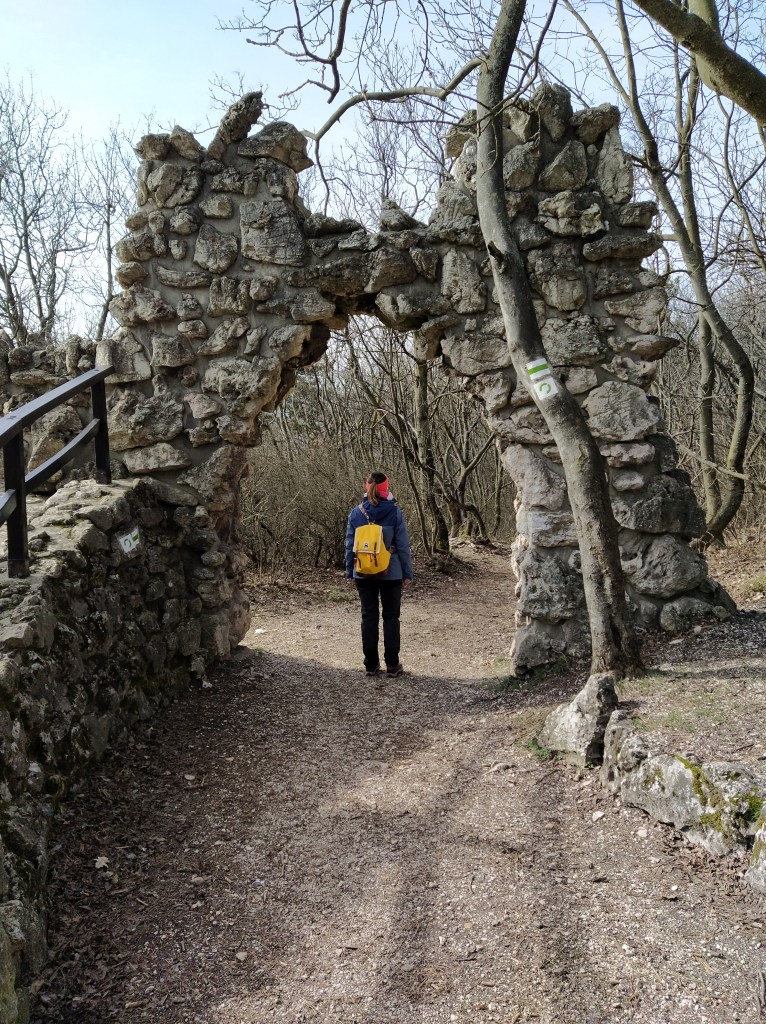
We slowly left behind the devastation on our way to the ruins of Vitány castle. Presumably it was built in the 13th century, during the Turk invasion it bounced between the Hungarians and Ottomans, finally in 1598, the Hungarians blew it up so it wouldn’t end up in Turkish hands. Then the rocks of the fortress were taken and re-used by the locals, despite it’s troubled history, today it still cuts an imposing figure, the sand coloured blocks contrasting nicely with the blue sky. 
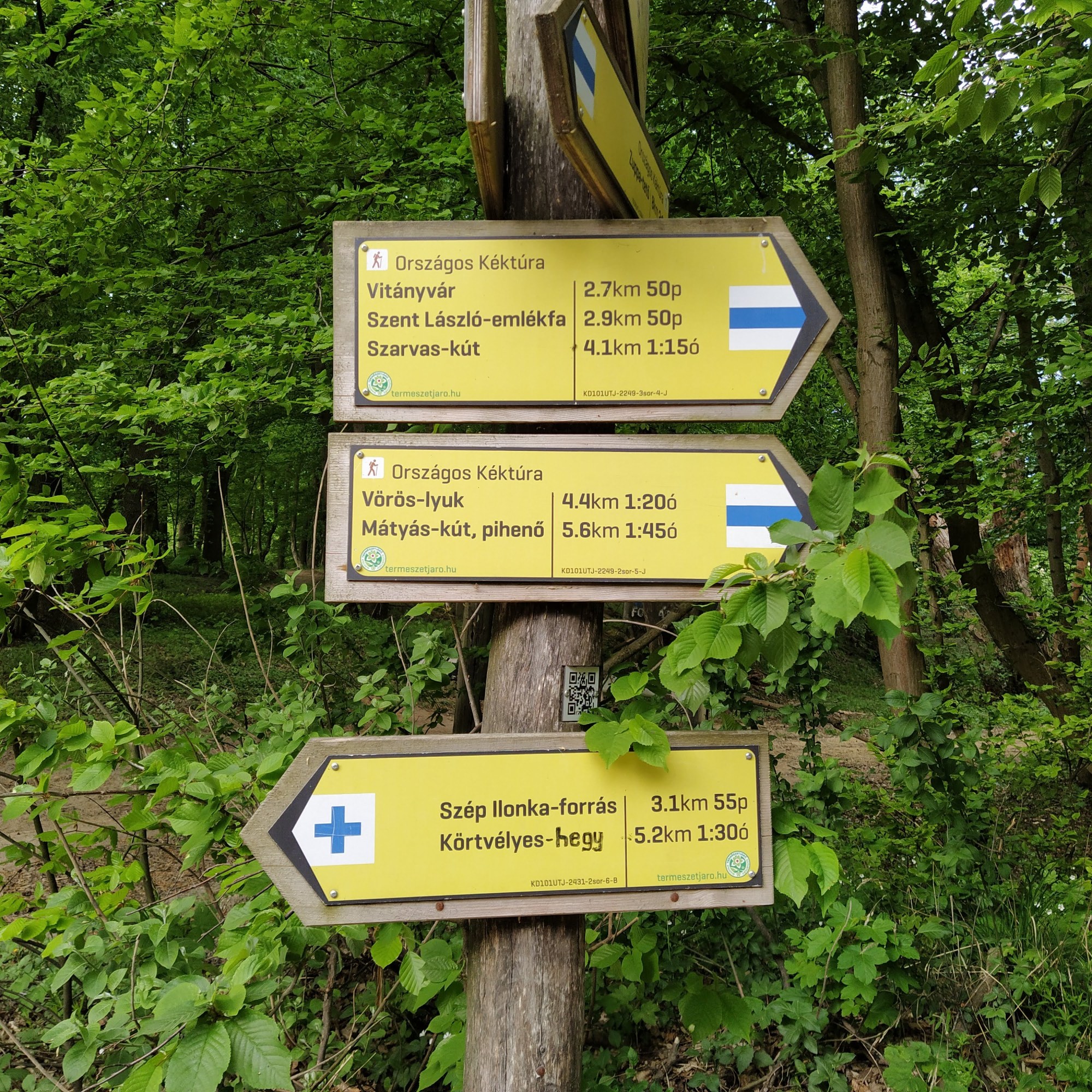
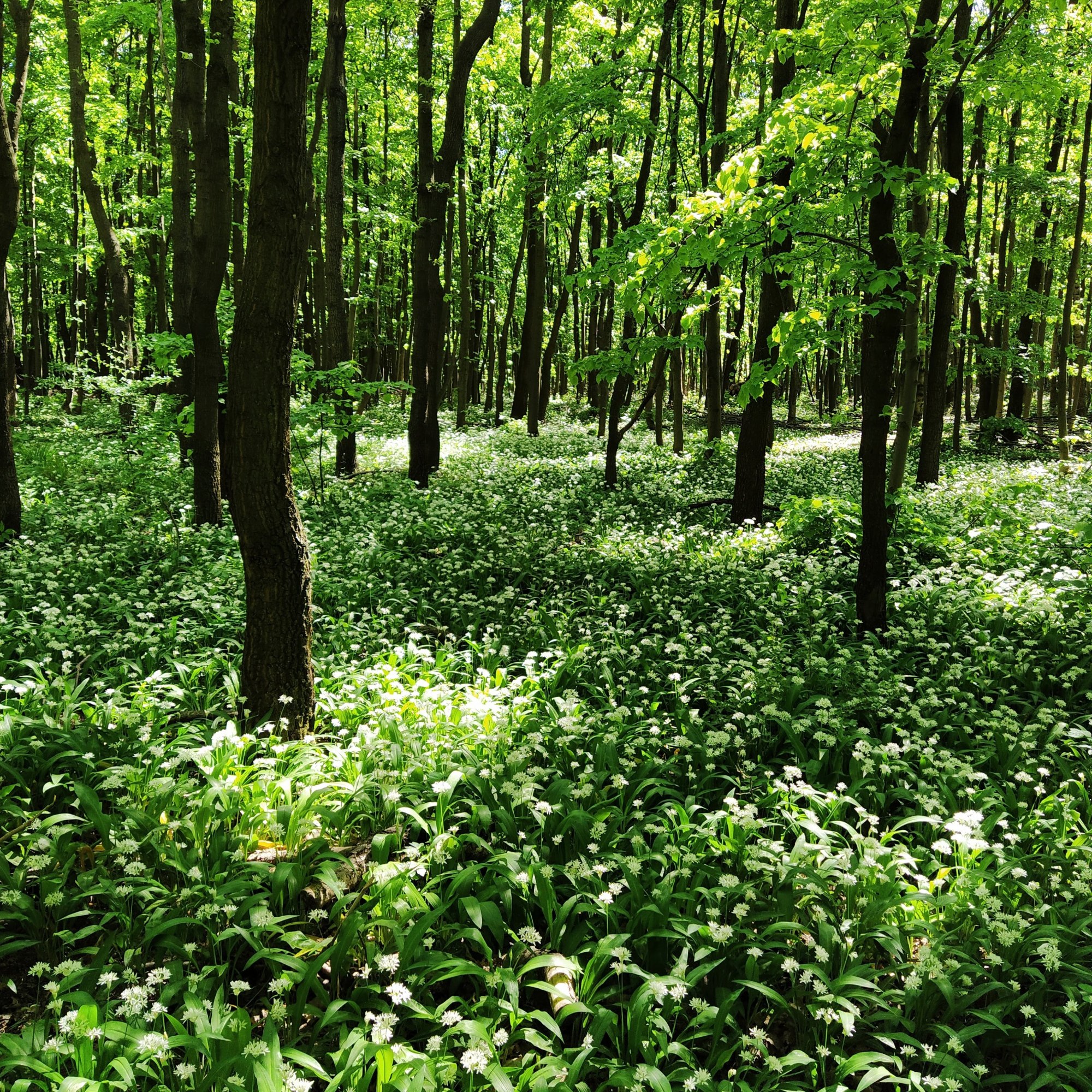
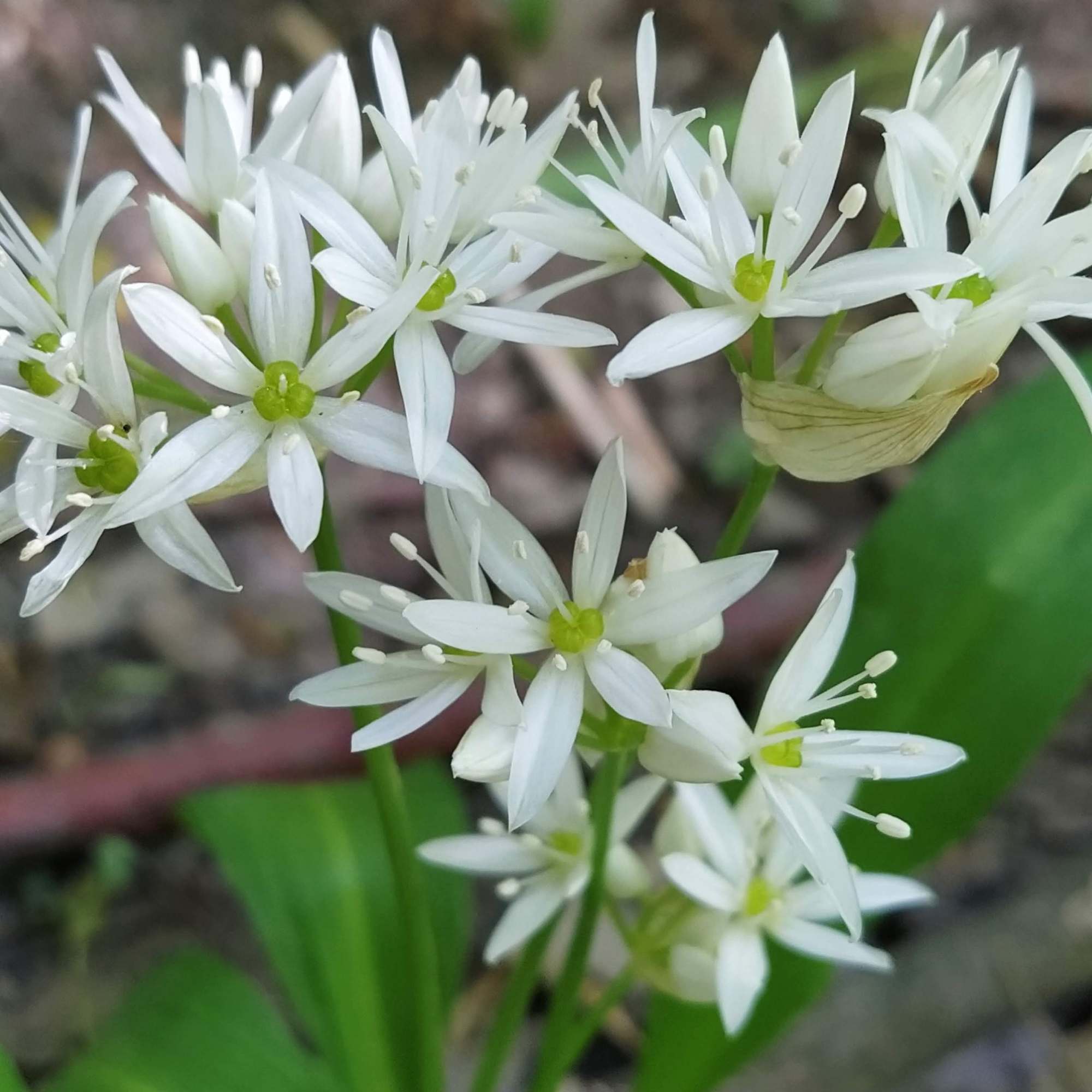
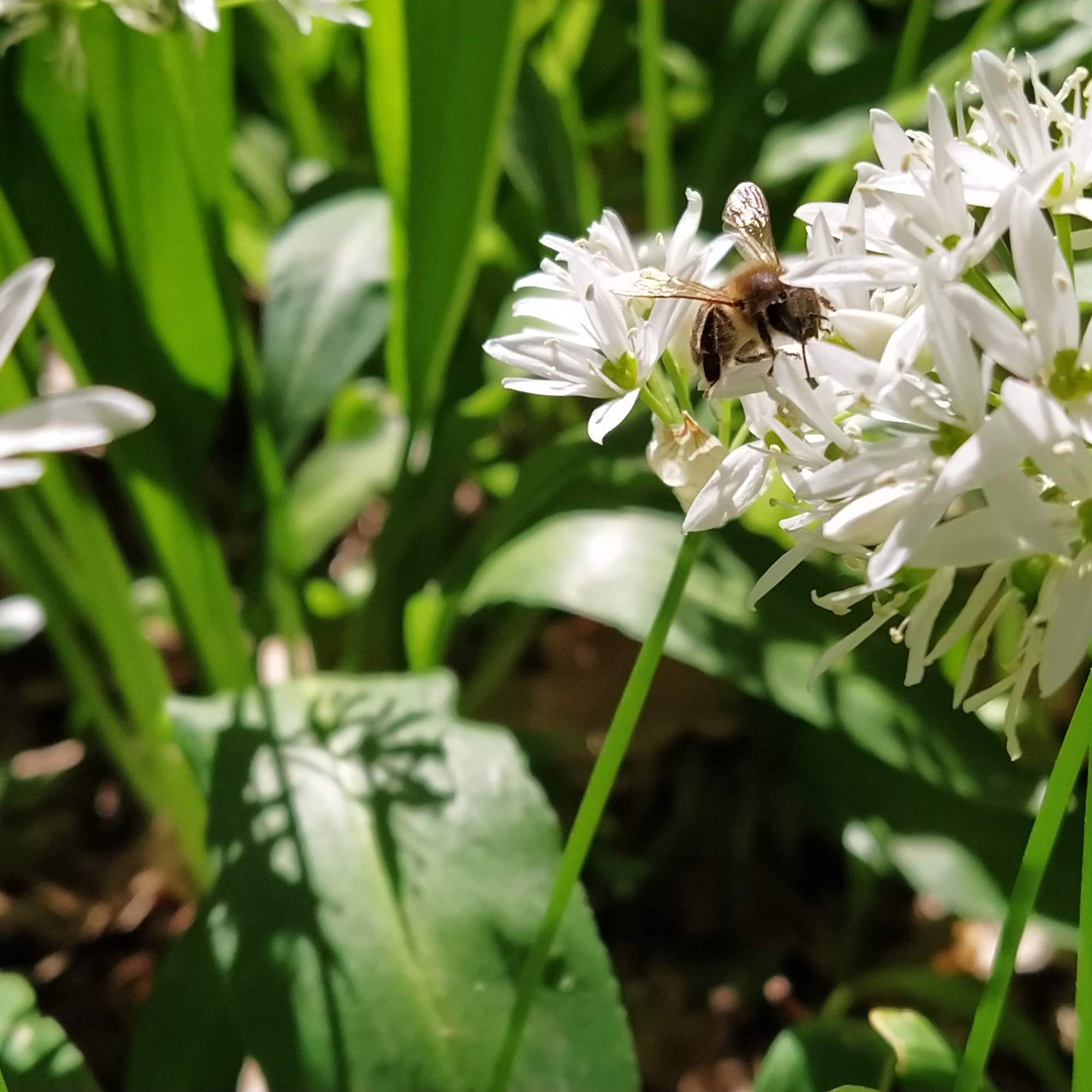
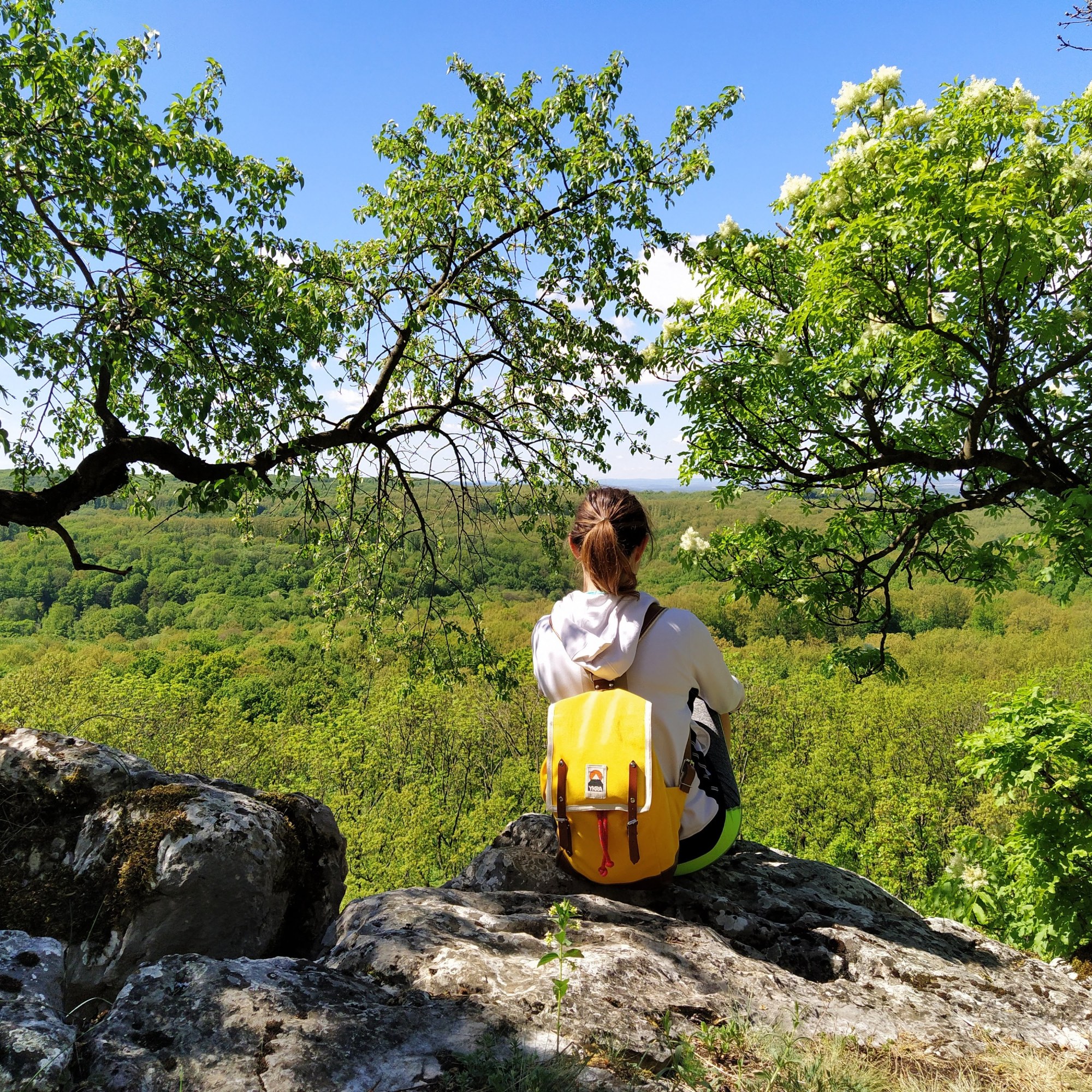
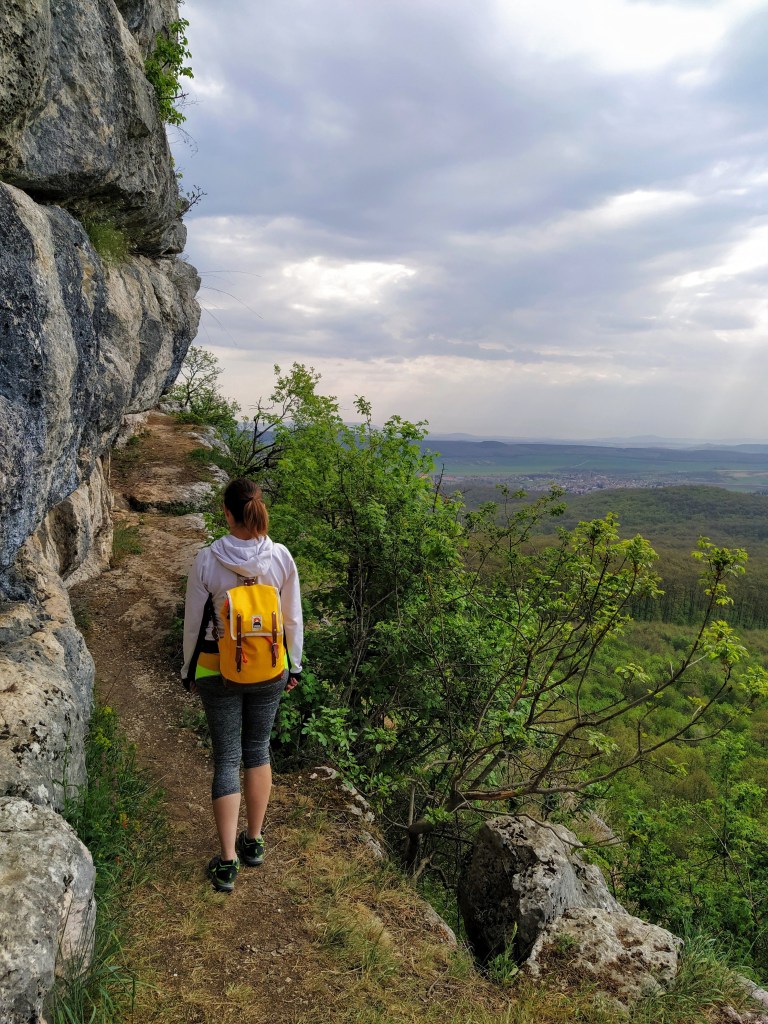
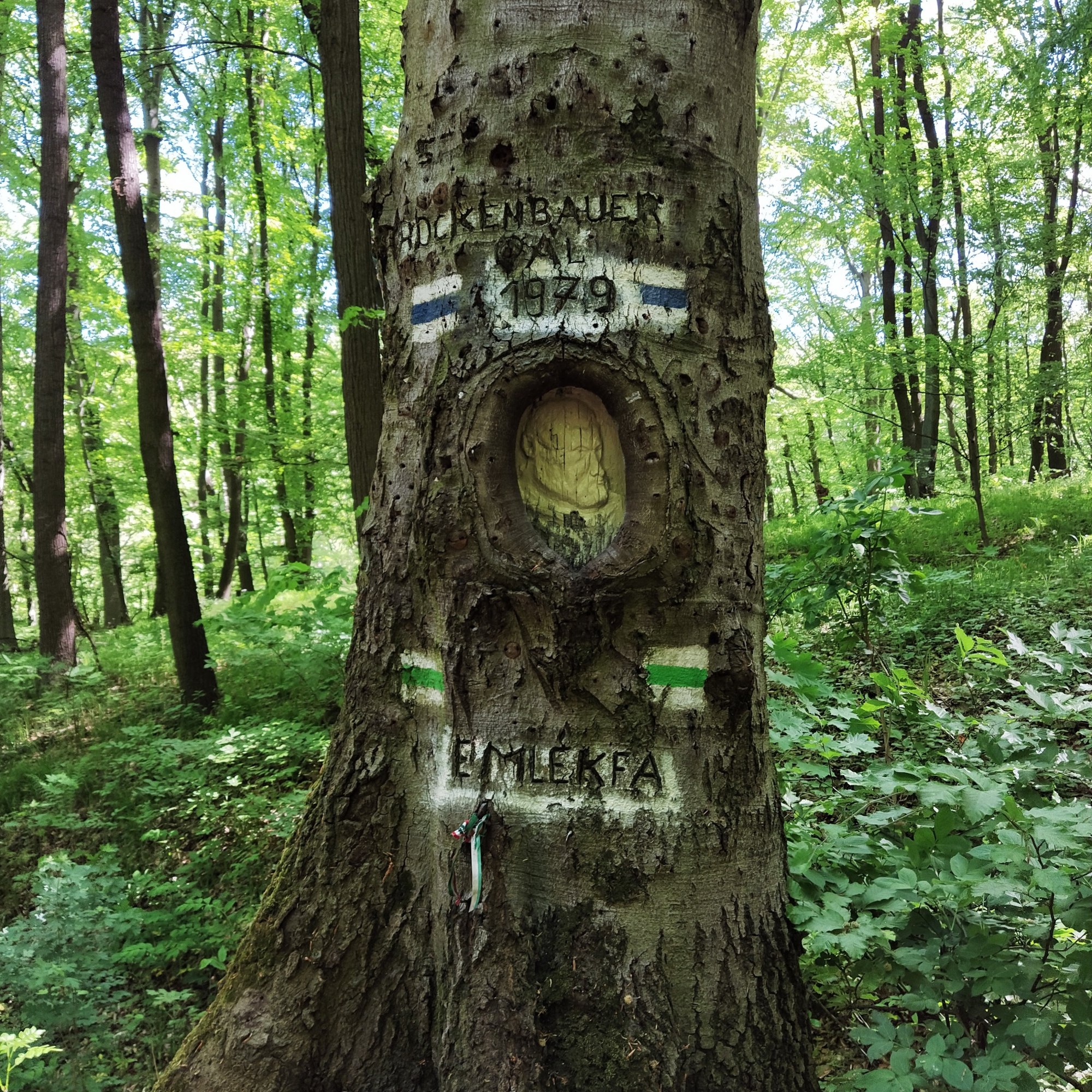
We descended into the valley, the trees along the path were decorated by someone with artistic aspirations, Hungarian crowns and guiding signs were carved into the trees. Shortly after passing the Rockenbauer memory tree (the founding figure of nature filming in Hungary ), the green and blue trail splits and we took the green one but only for a short time, then we continued on an unmarked path that leads to the Gráciák Bérce (Crag of the Graces’), rock formations at the edge of the mountain with a wonderful view. I was on the lookout for wild garlic as I read that there’s a large patch somewhere on this trail. I was already preparing myself for disappointment when we spotted the white carpet of the wild garlic flowers. As we got closer, we hit a wall of garlicky perfume, it made my mouth water, but they don’t taste good after blooming so we didn’t pick any, maybe next year.

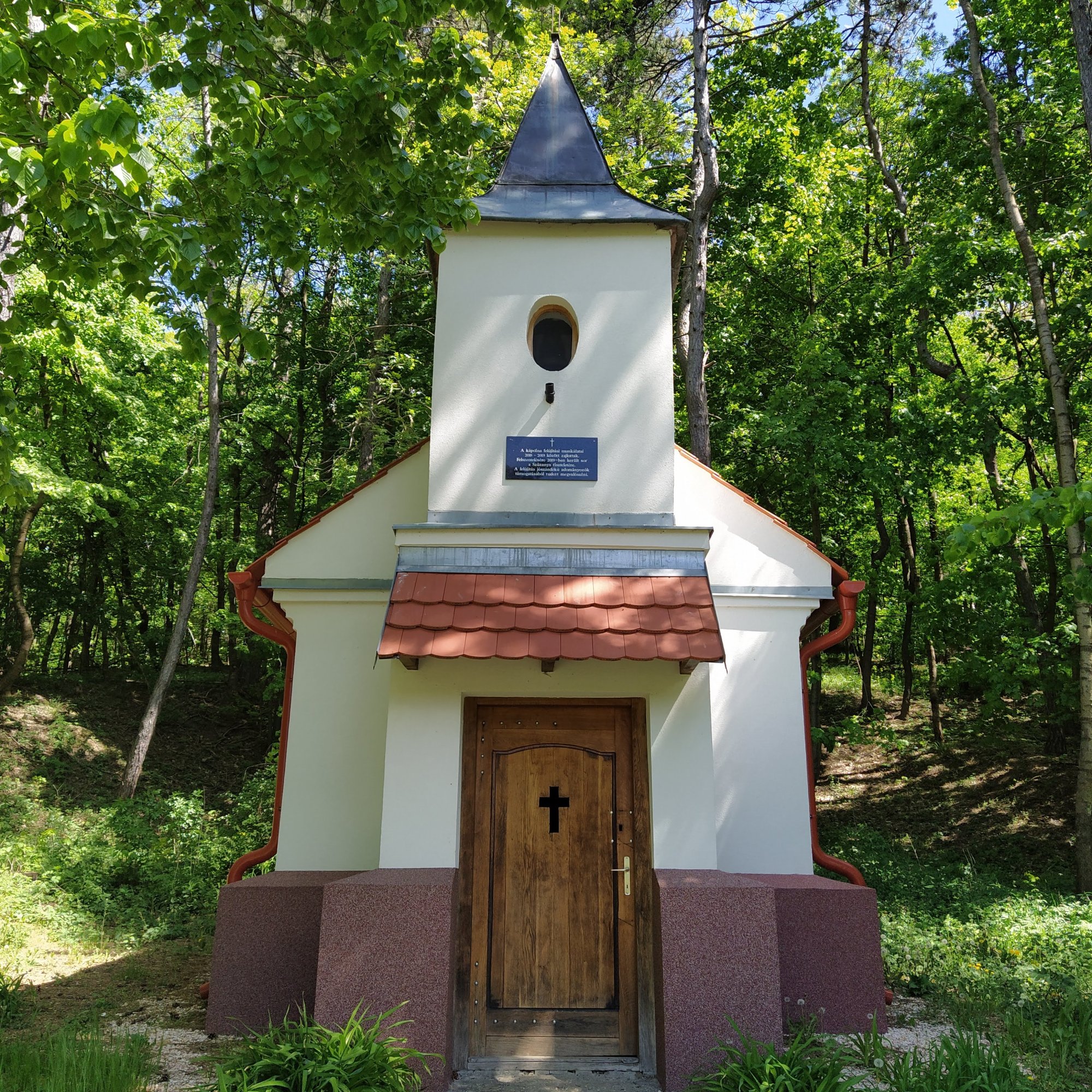
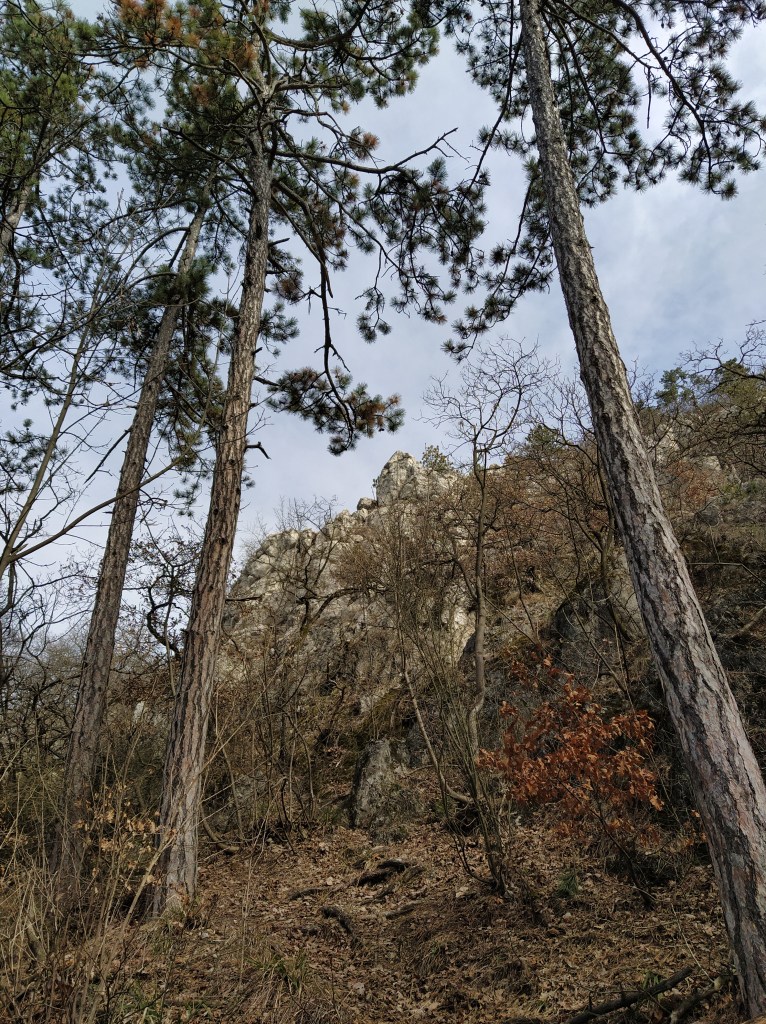
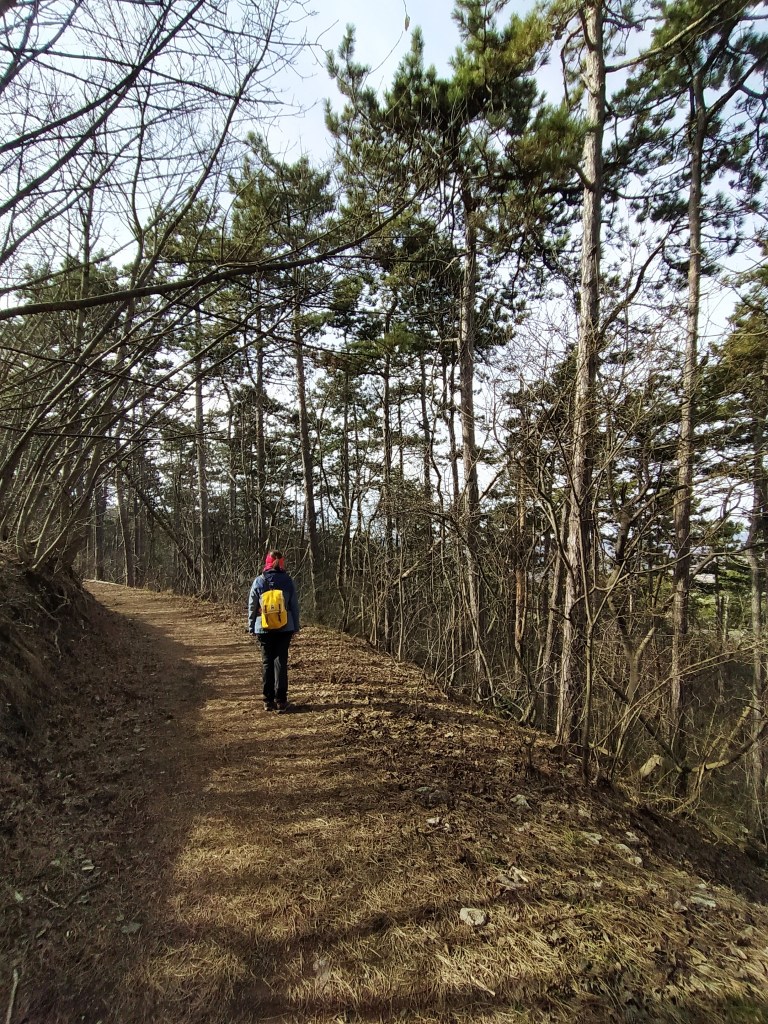
Two sandwiches and hundred photos later, we carried on with the hike and descended to the Szép Ilonka spring, which was a bit of a let down for me ( I even forgot to take a photo), especially since we came down so far into the valley only to check it out and had to climb back on the steep path . As we approached the T-shaped junction again (where we turned right to reach Vitány Castle) , we passed along a few patches of pine trees that looked a little ominous – I wouldn’t be surprised if the witch’s gingerbread house was hidden somewhere the trees – and a quaint little chapel.
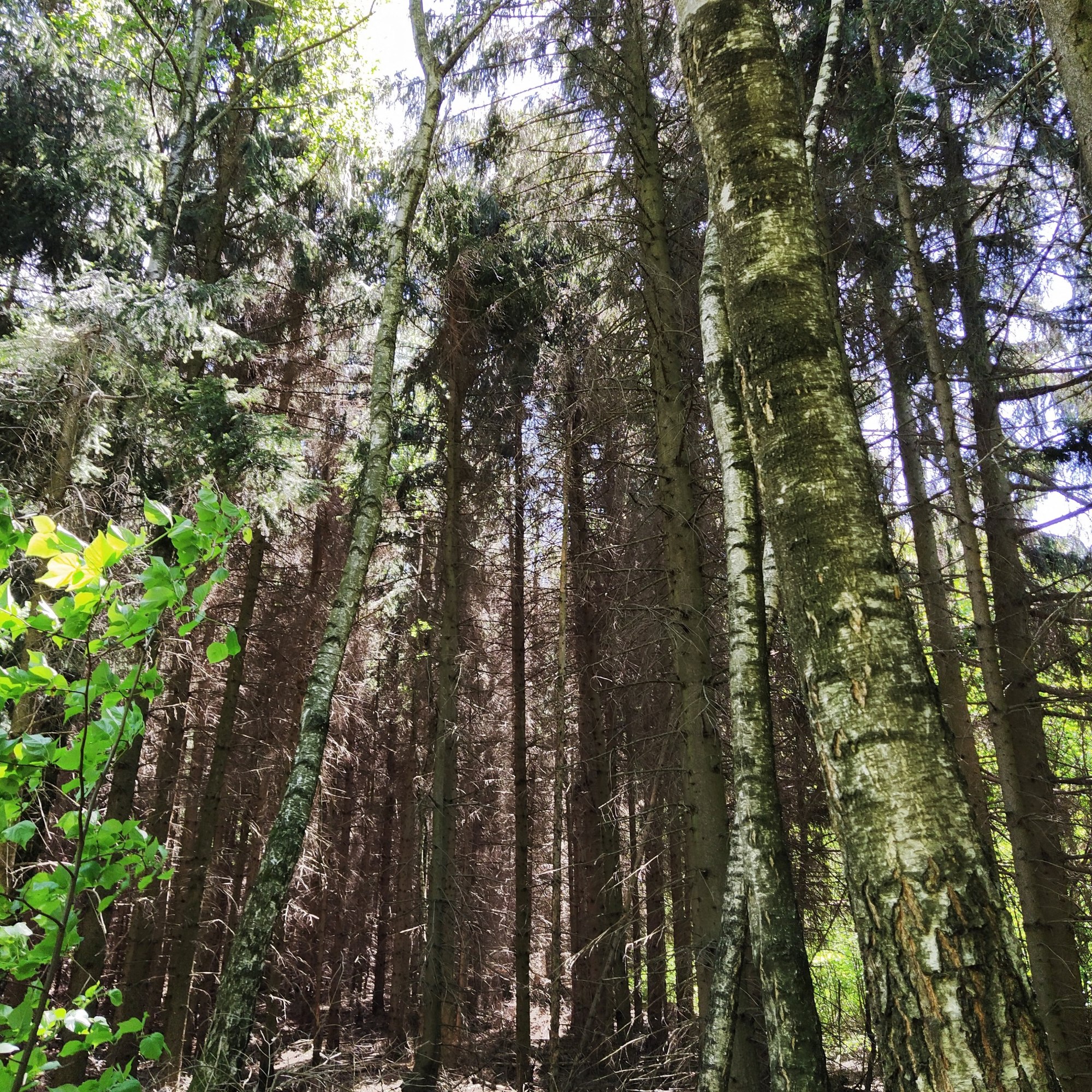
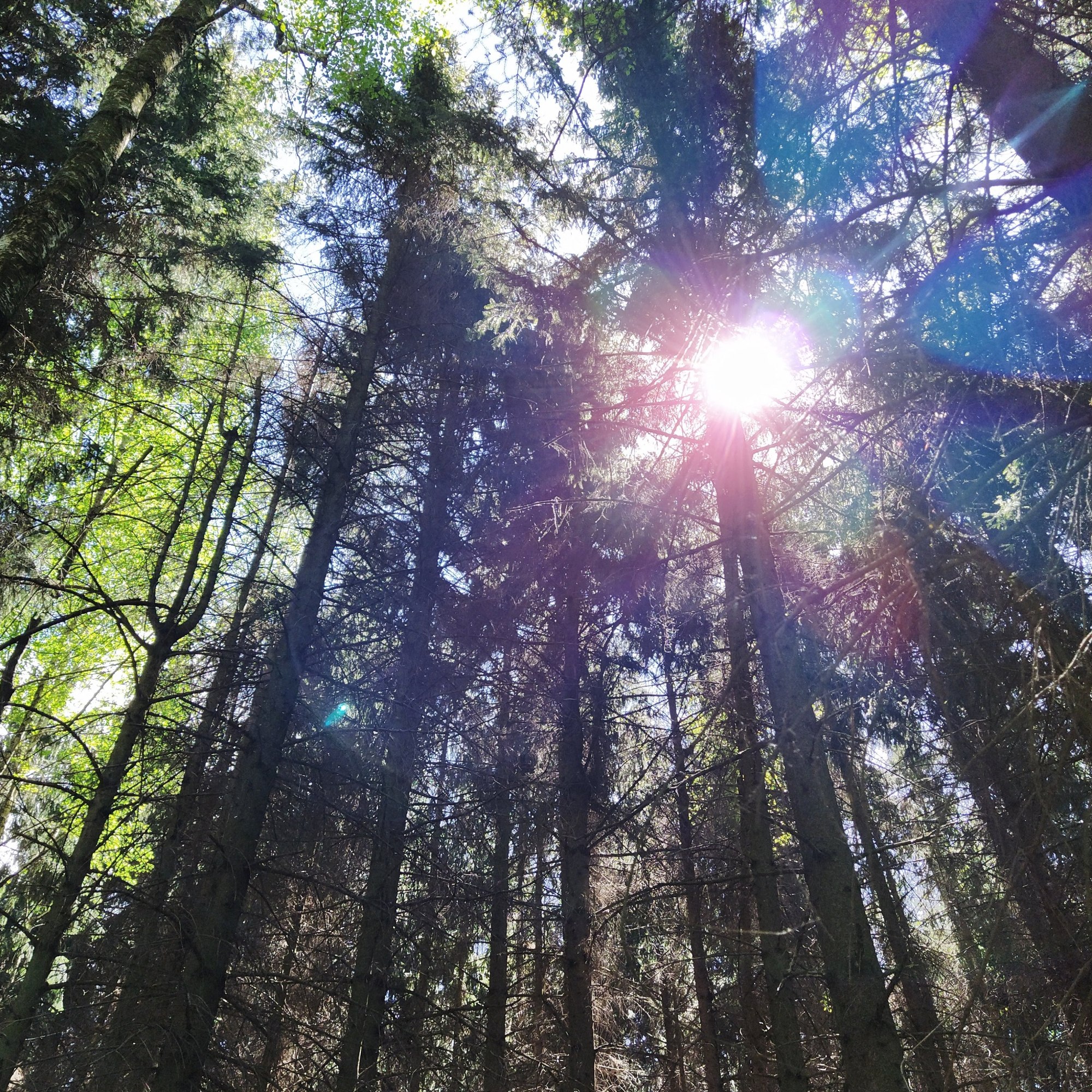
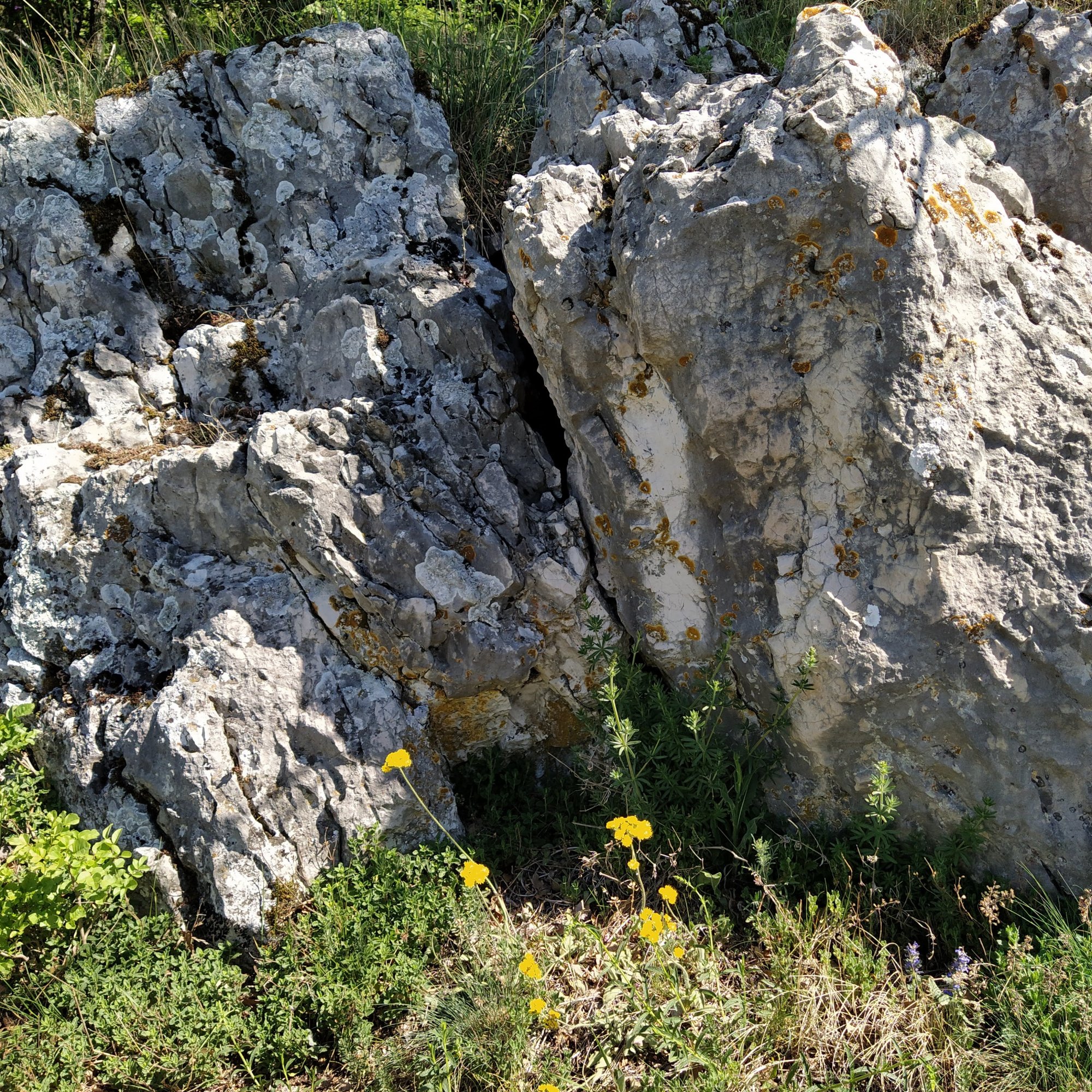
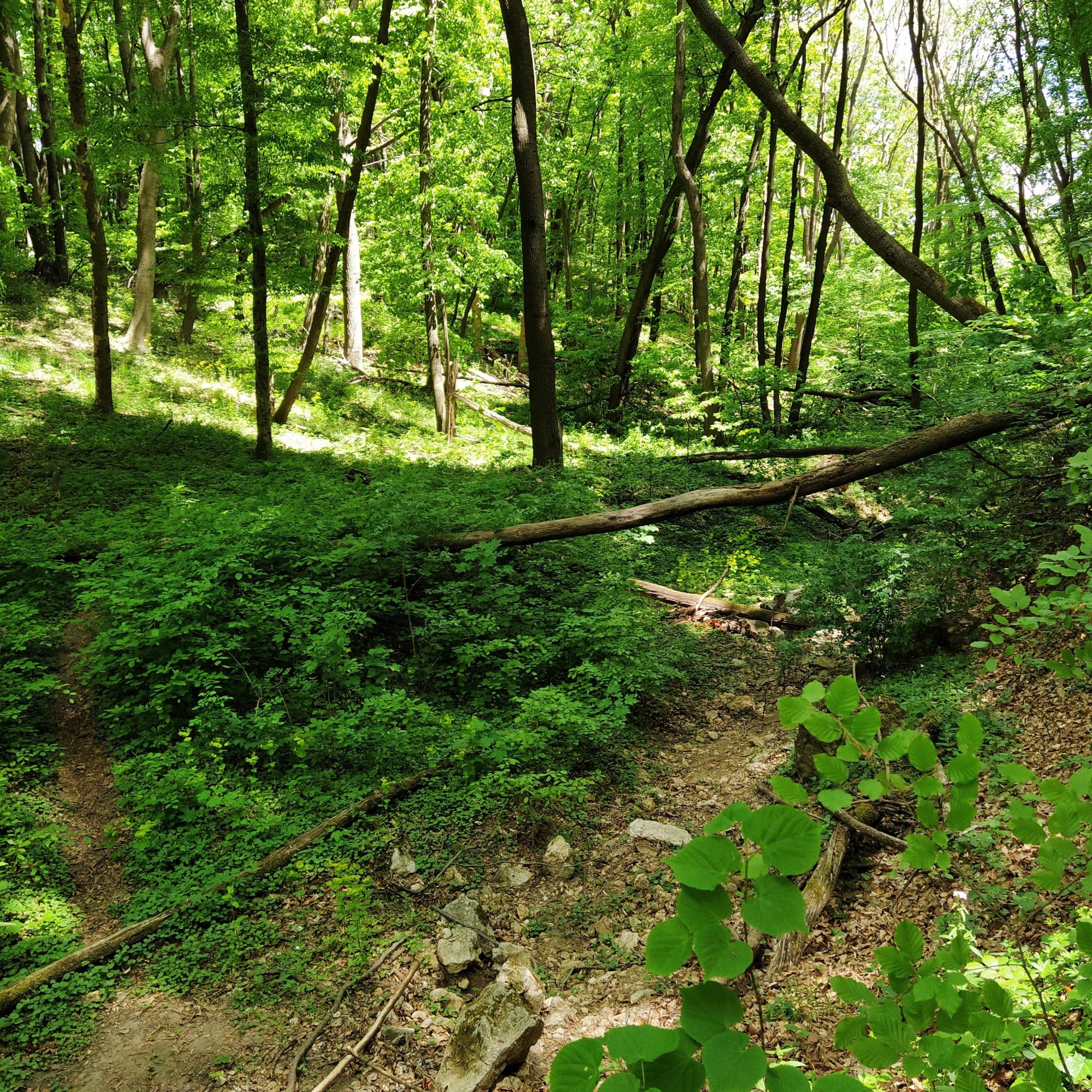
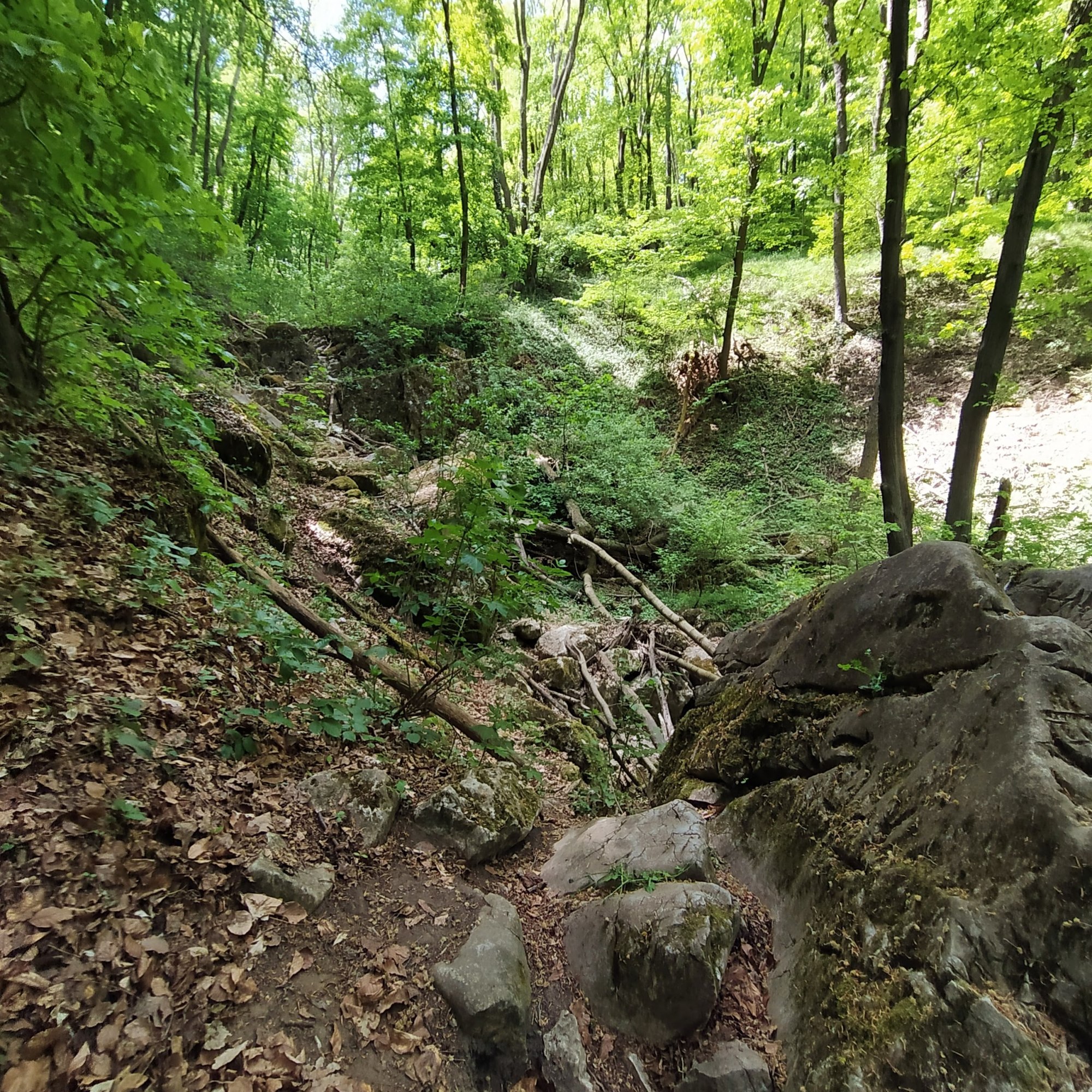
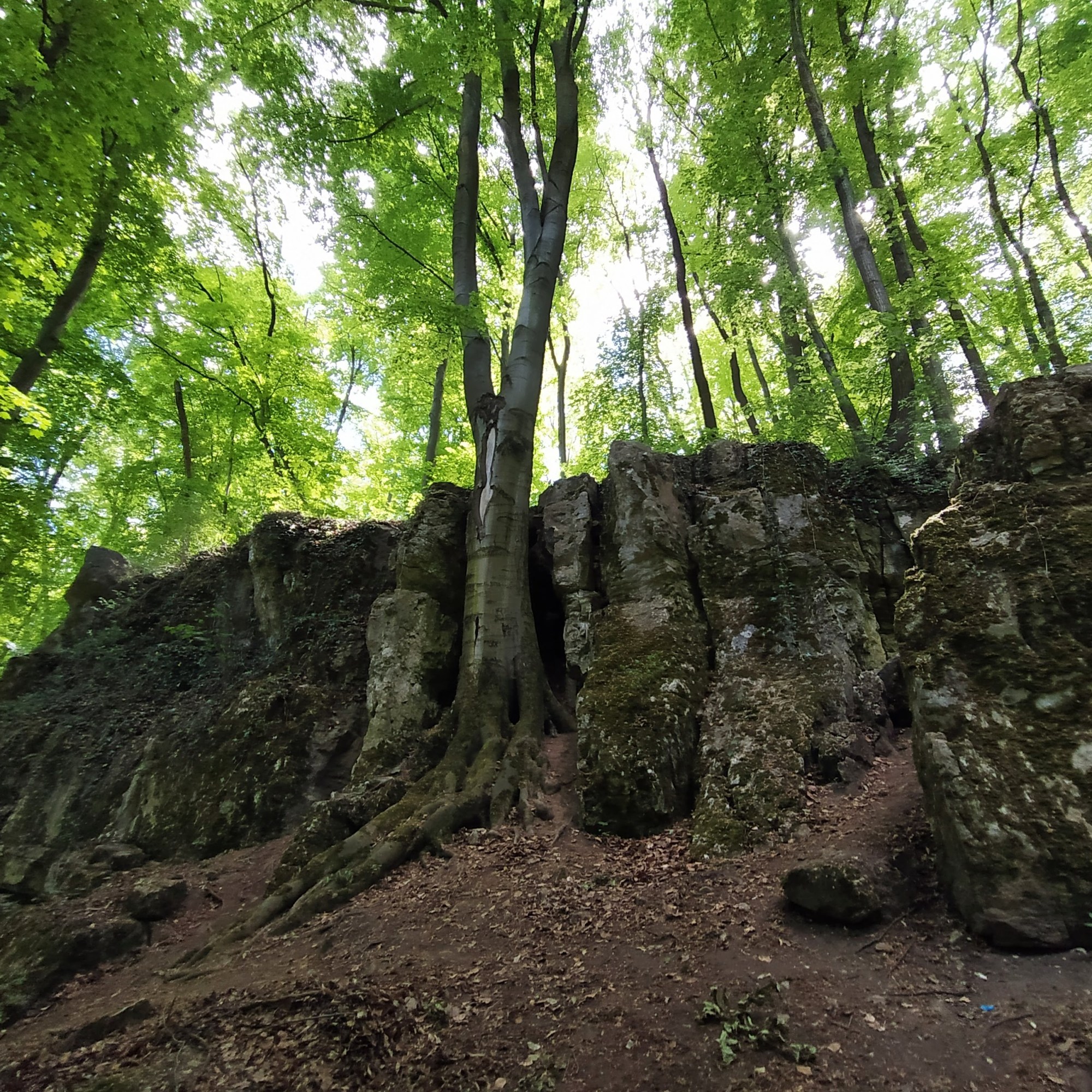
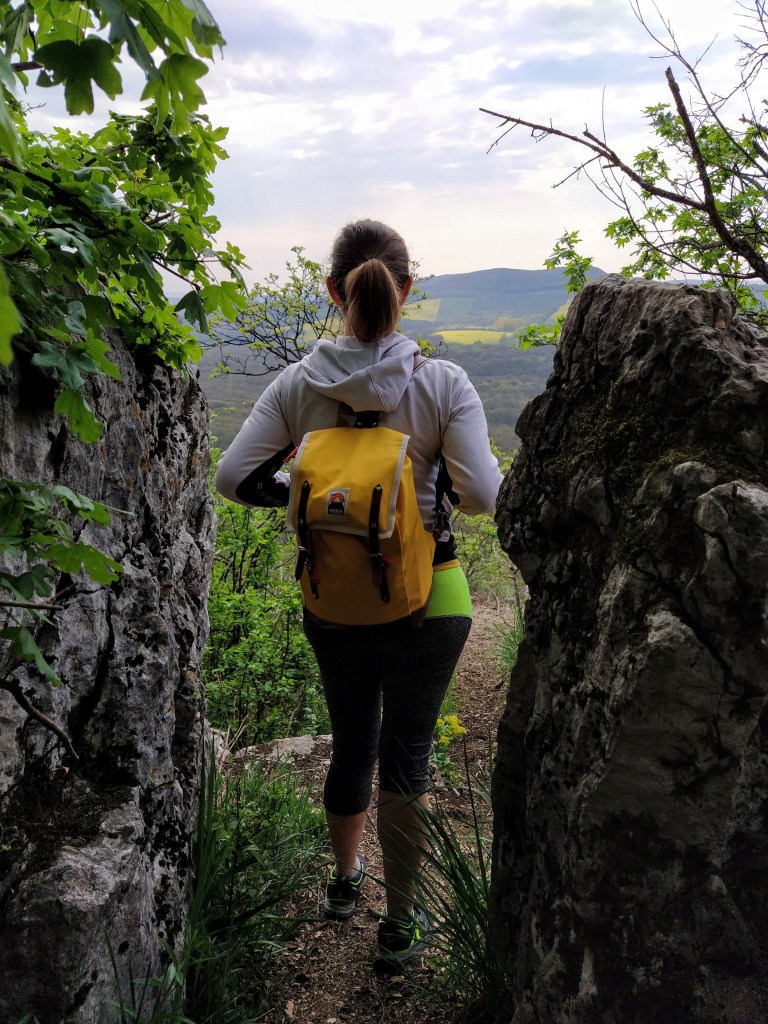
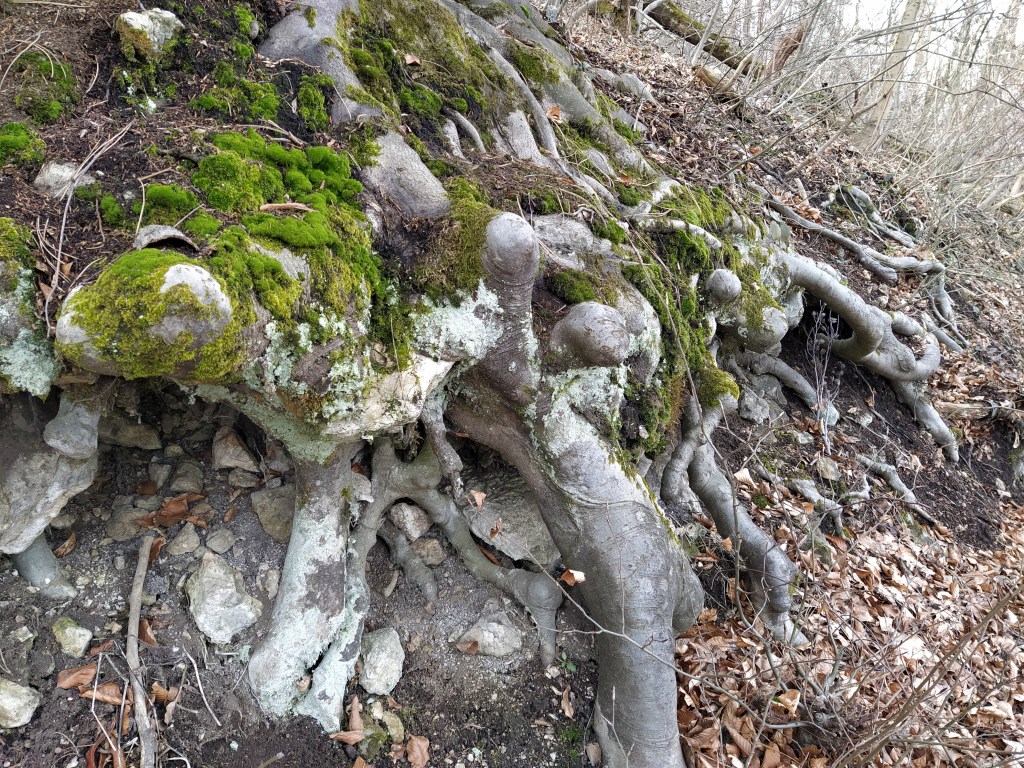
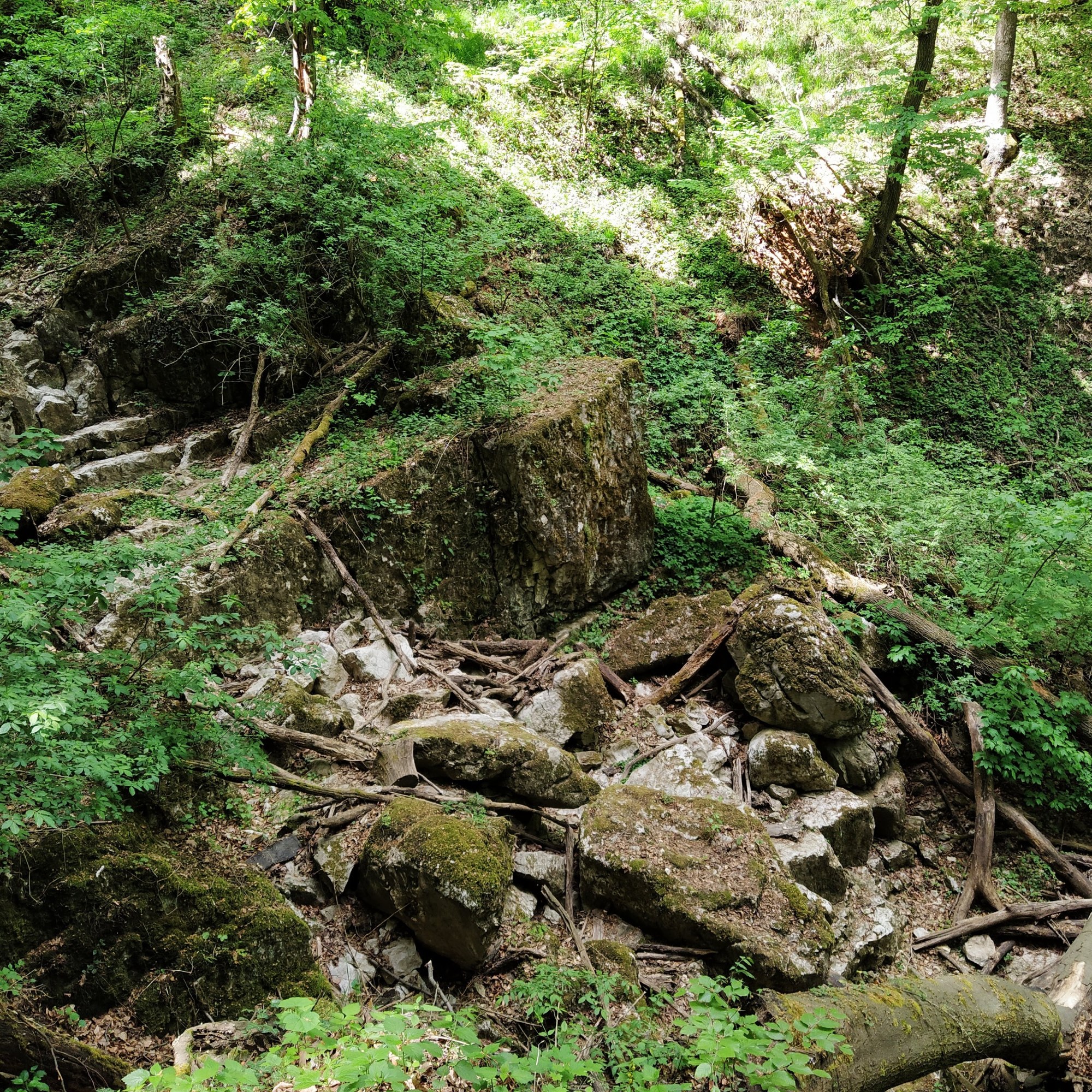
We walked along the Mária Gully on a narrow path and our progress made slower by fallen trees blocking the way, the trench below us became deeper and deeper. Halfway through great, white limestone steps can be found where once upon a time water rushed along but sadly it’s dry as a desert nowadays. Next to the limestones, when we looked up to our right we saw a moss covered grey rock wall with ivy snaking around, looking like an entrance to an ancient Inca city. Maybe the rift in the wall would have taken us to El Dorado, but it looked a little too narrow for a person my size, we will go back and try to go through once my beach body is ready… so never. 
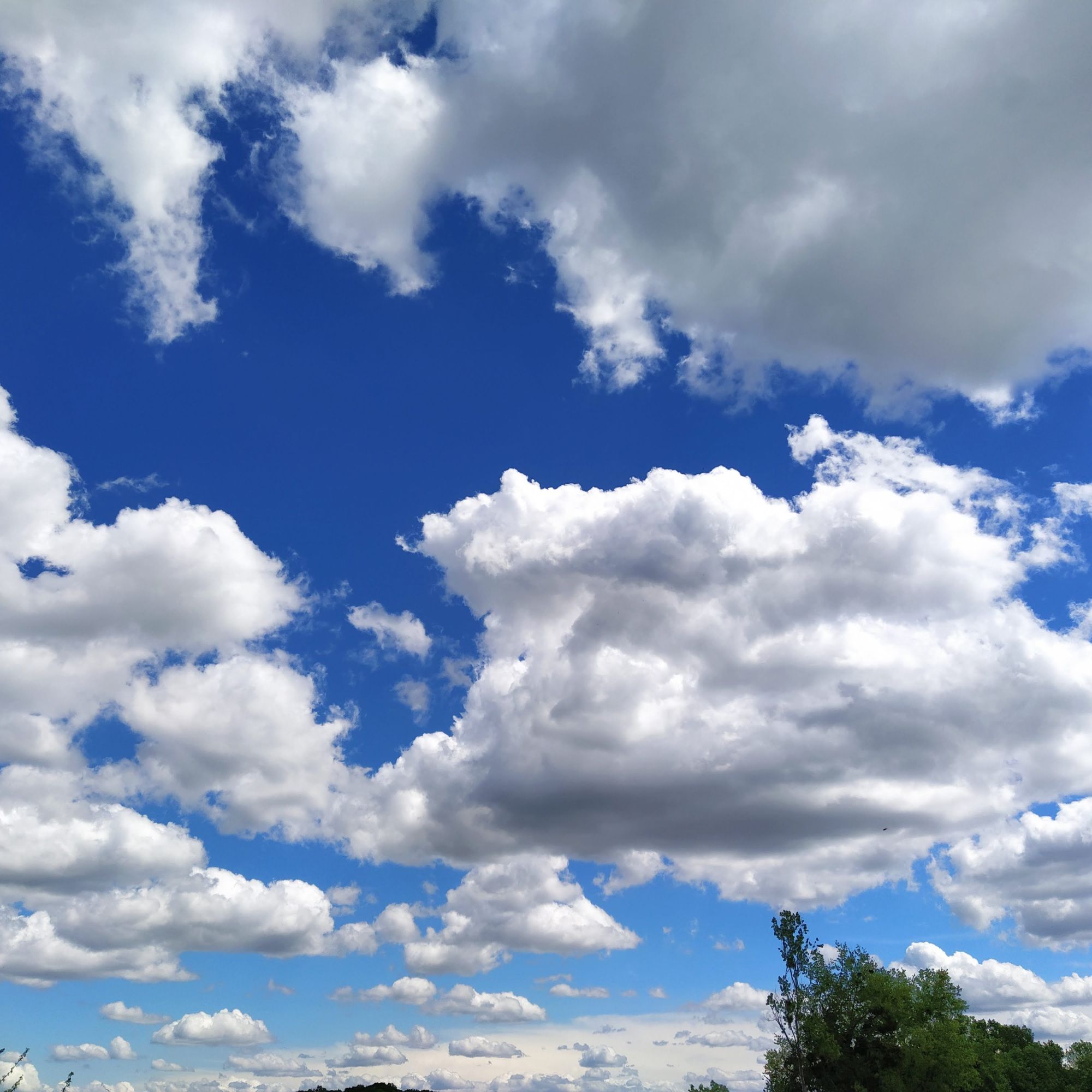
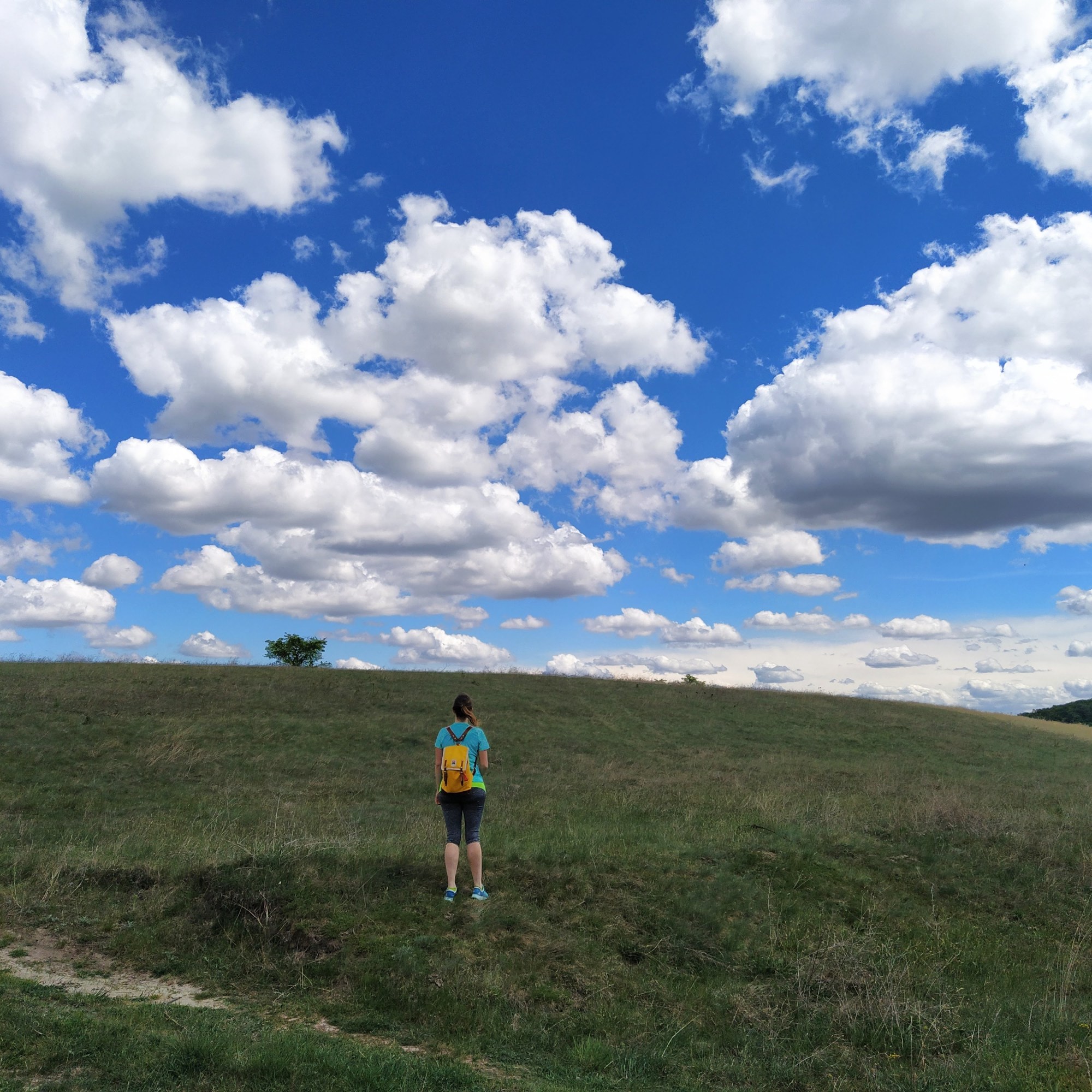
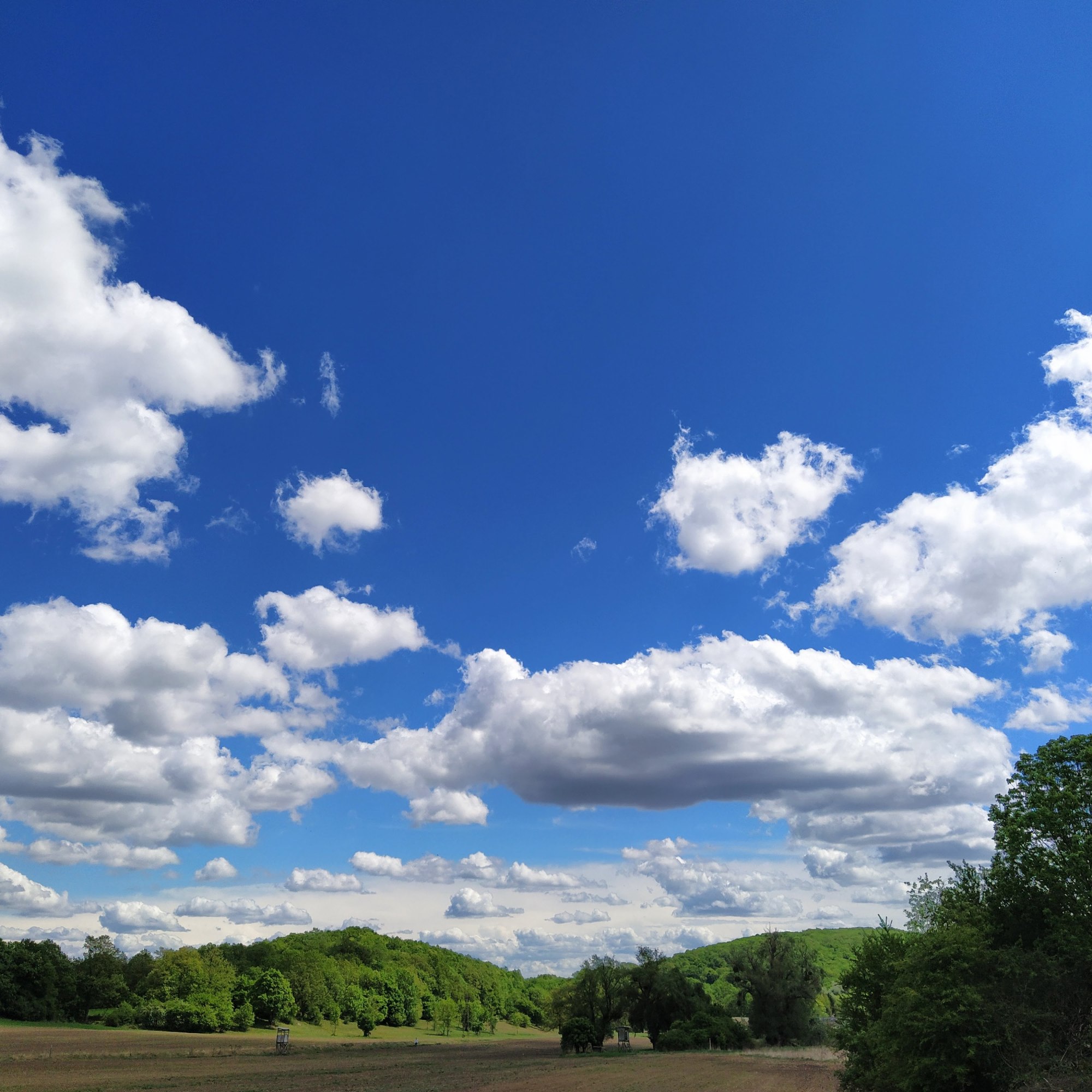
We slowly left the gorge and arrived back to the tourist house and made our way back to the car … but first I made a ‘few’ photos of the lovely fleecy clouds sailing across the blue sky. In Hungarian, we call them lamb clouds because they are so fluffy and white like lambs, although they remind me of yummy candies that would taste like marshmallows. With that whimsical parting thought, see you in the next post.
Pes-kő-barlang: A cave with a view

Details of the walk:

Distance: 5 kilometres
Route:http://out.ac/ozjdr (GPX and KML formats are available)
How to get there: By public transport: bus 8406 from Tatabánya
By car: Parking next to the road between Vértestolna and Tarján

We did a short outing ( 4,8 kilometres so I wouldn’t even call it a hike )to discover a hidden spot tucked away in the countryside.Our destination was a cave hidden in the Gerecse mountain, around a 1 hour car ride from Budapest. You might wonder, why drive for an hour for a short walk when the prize at the end is only a cave. Keep reading and you will see that this is no ordinary cave.
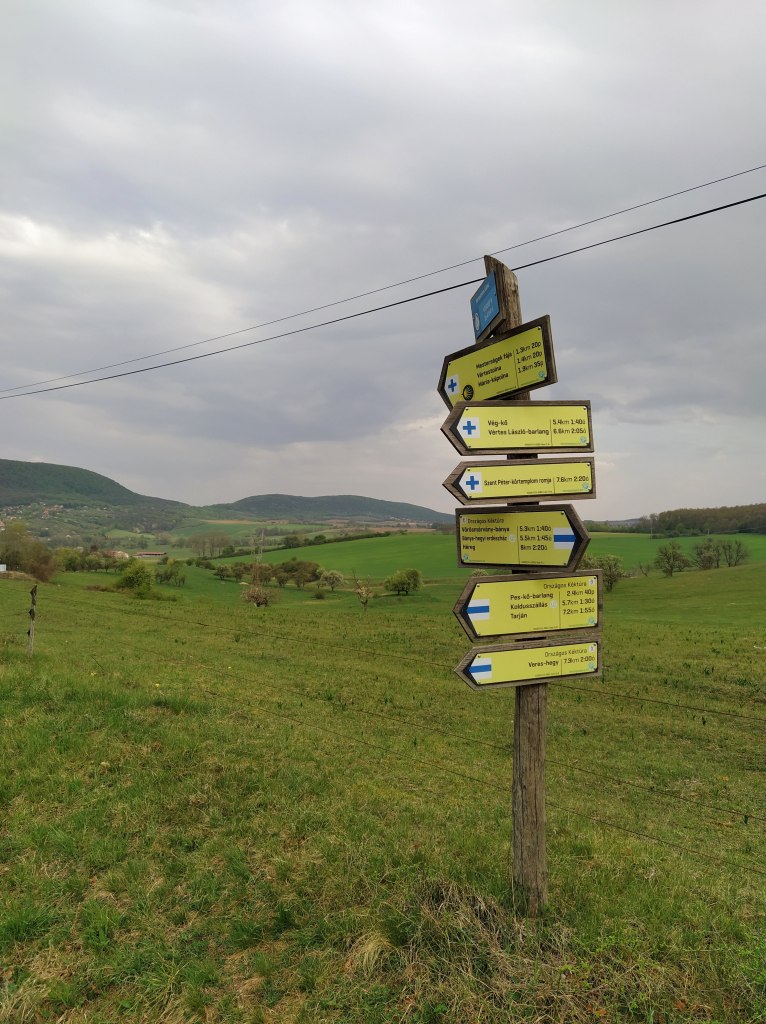
We left our car (a.k.a the Small Red Fireball) next to the road between the villages of Tarján and Vértestolna. The spot is hard to miss as it’s an intersection for several hiking routes so watch out for the yellow path signs.

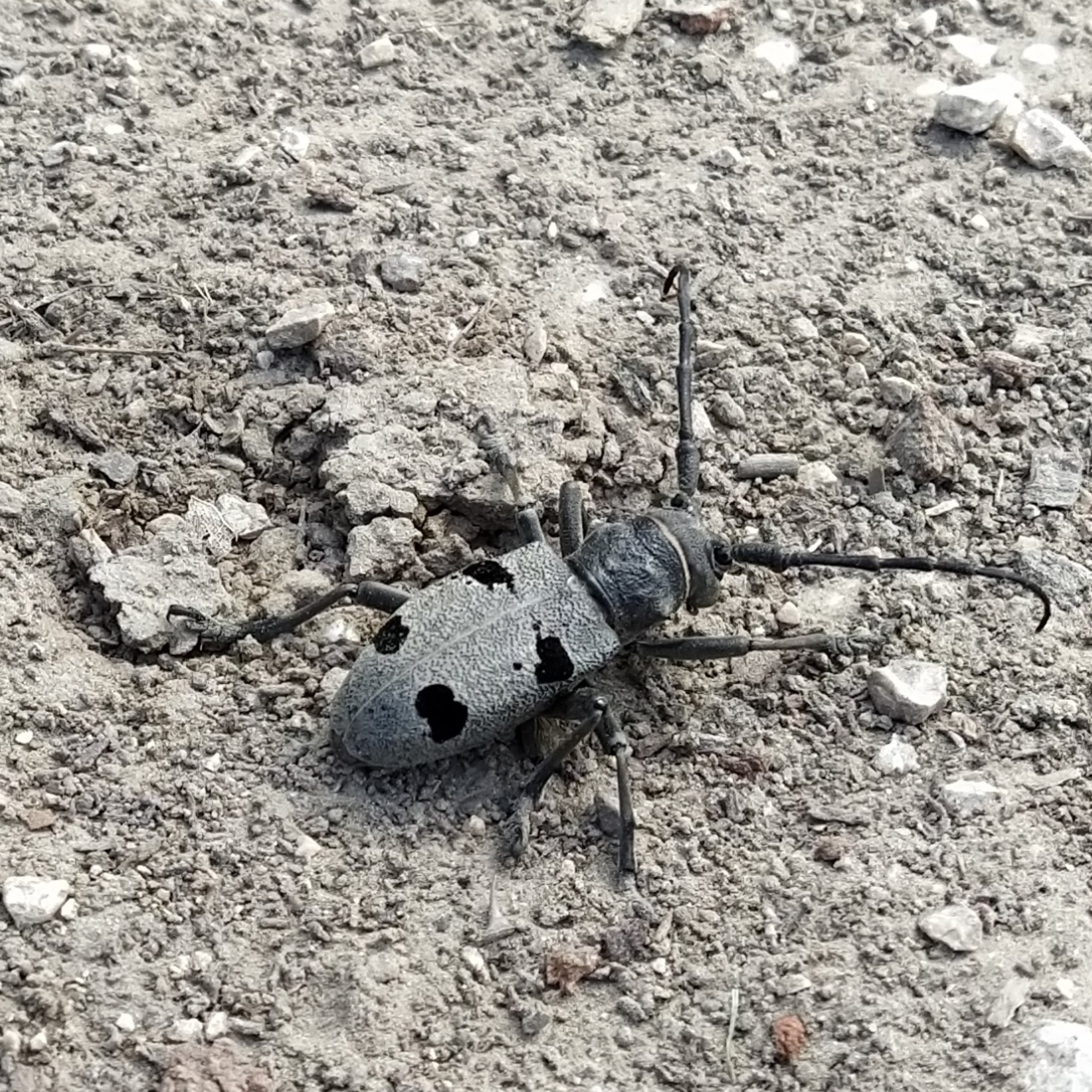
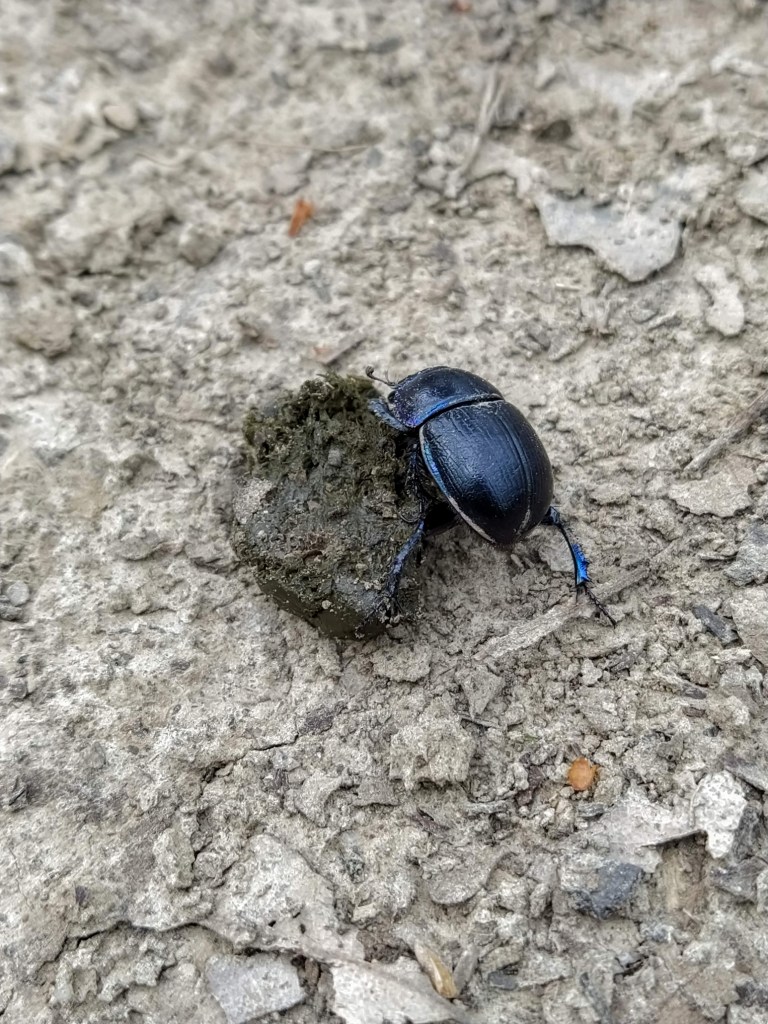
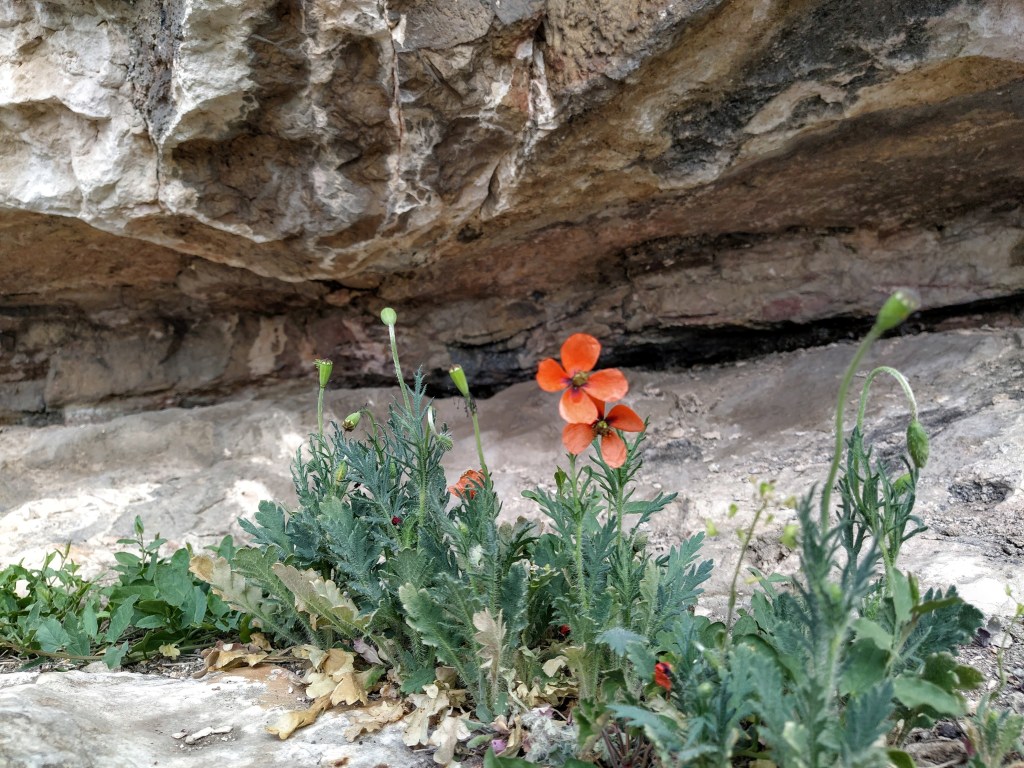
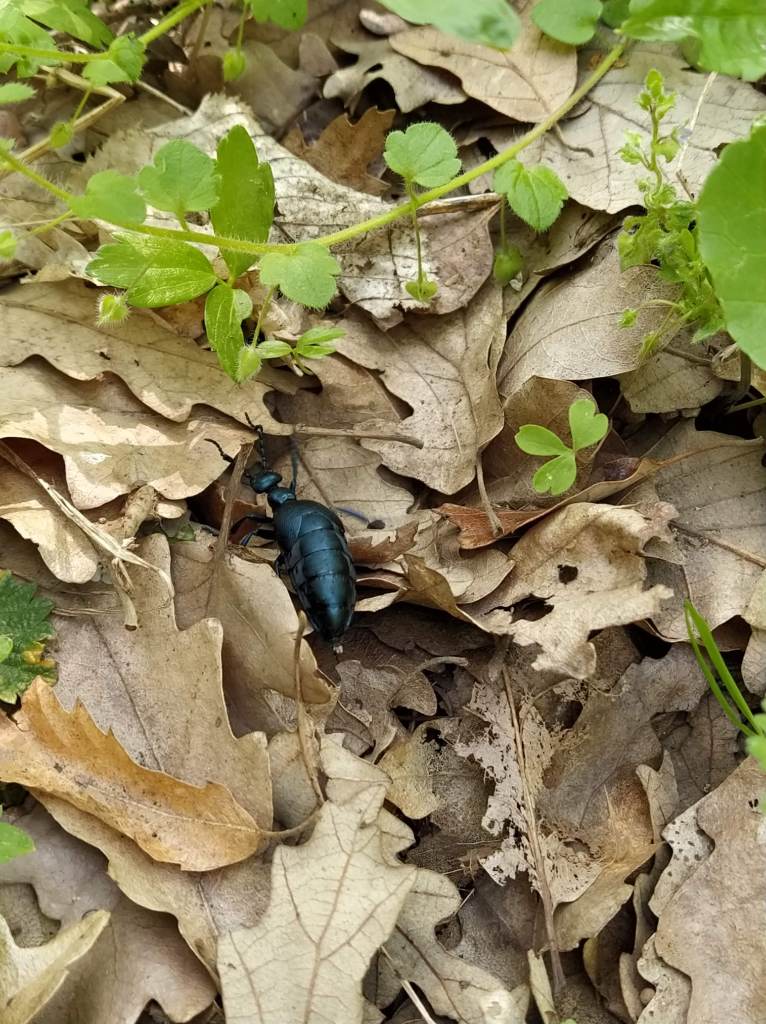
The path leading to the cave is not an official hiking route but someone sprayed an omega sing on two trees at the intersections to show the way ( plus we’re living in a modern, digital age so we had the GPX route on our phone). As we walked along the wide dirt path, I was like a child wandering around a candy shop, every nook of the place held a new discovery: a cute little flower,a rabbit hiding among the trees, a dung beetle labouring tirelessly.


The trees recently donned their brand new, 2020 dresses, the young leaves had that lush, green colour that we only see during spring. The whole forest was alive with sounds- not men-made ones as we were the only ones there – birds were eager to show off their repertoire, bees and all kinds off flying things were buzzing.
We left the dirt road after a clearing with two hunting stands at each side and walked deeper into the forest on a narrow and somewhat overgrown path.
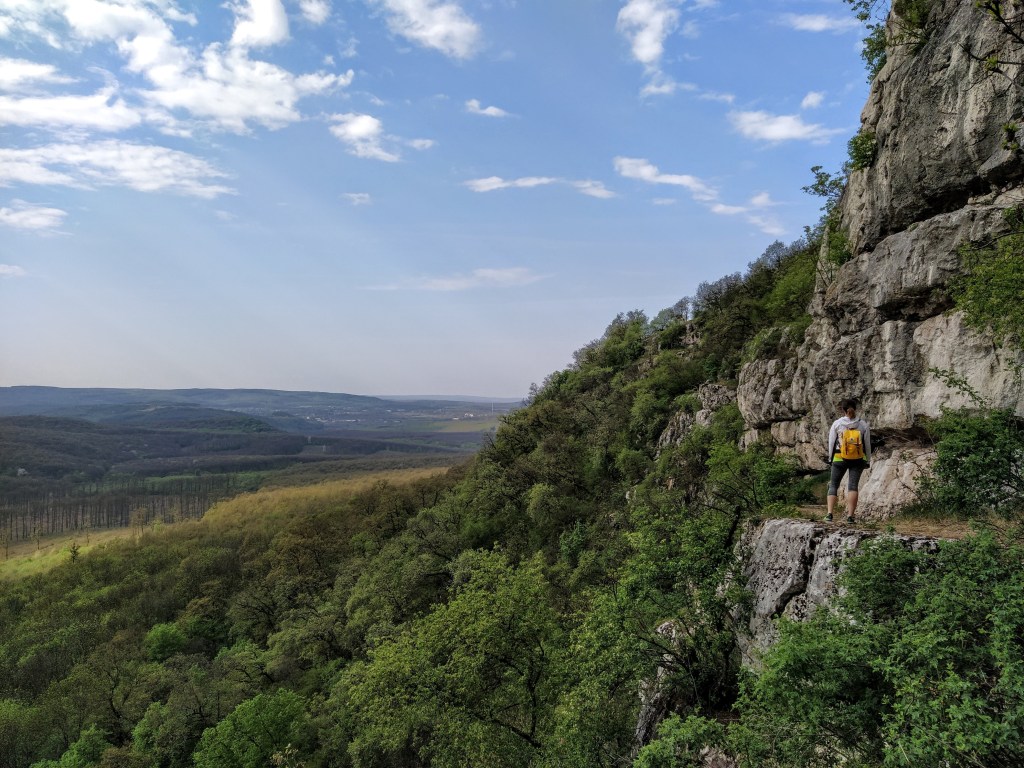
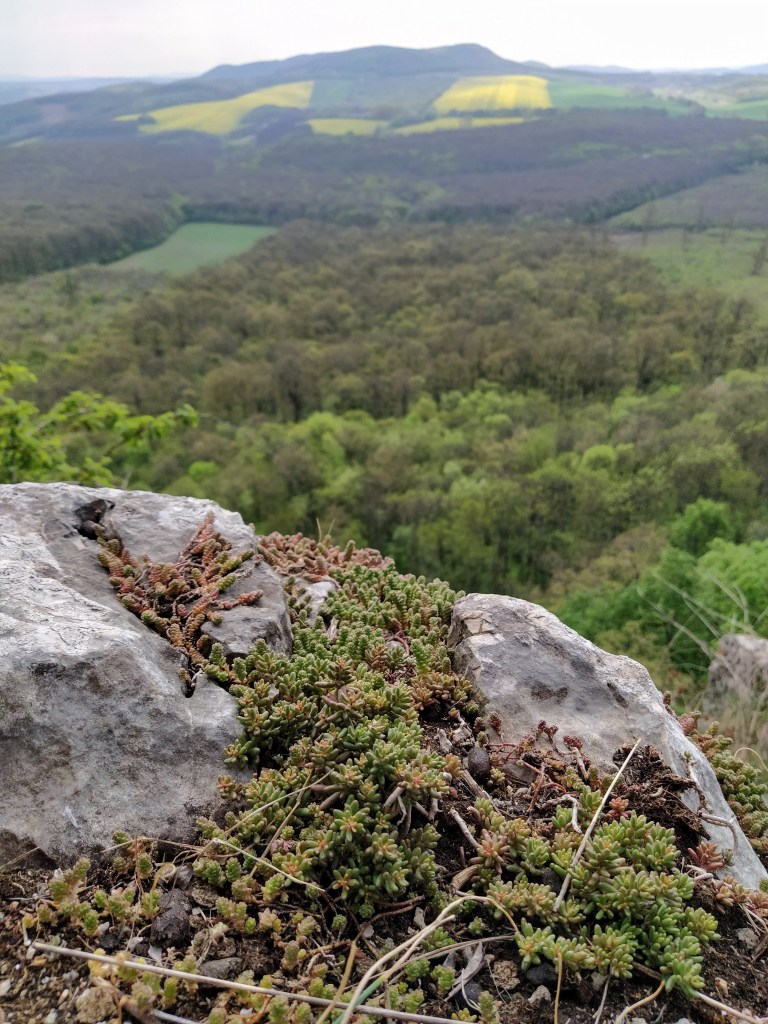
Among the trees we could already see the fields stretching in the distance so we knew that we’re close to our destination. A narrow stone corridor led us to the edge of mountain and suddenly I didn’t know where to look. In the distance we could see the mountains of the Vértes and emerald fields stretched before our feet.


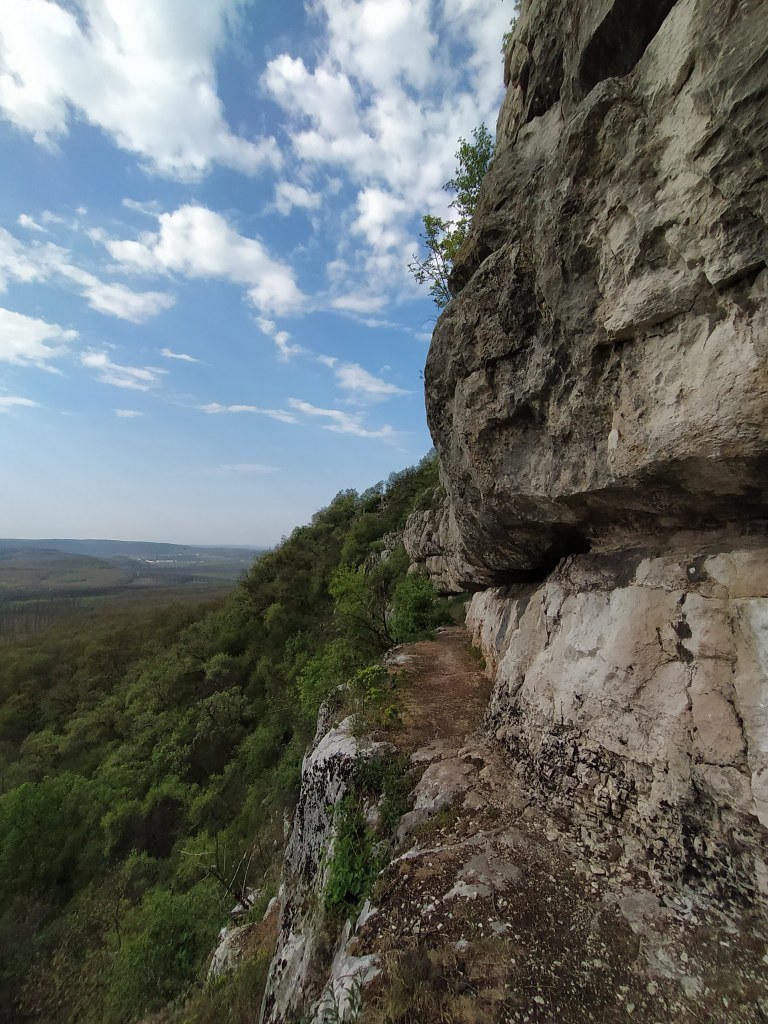
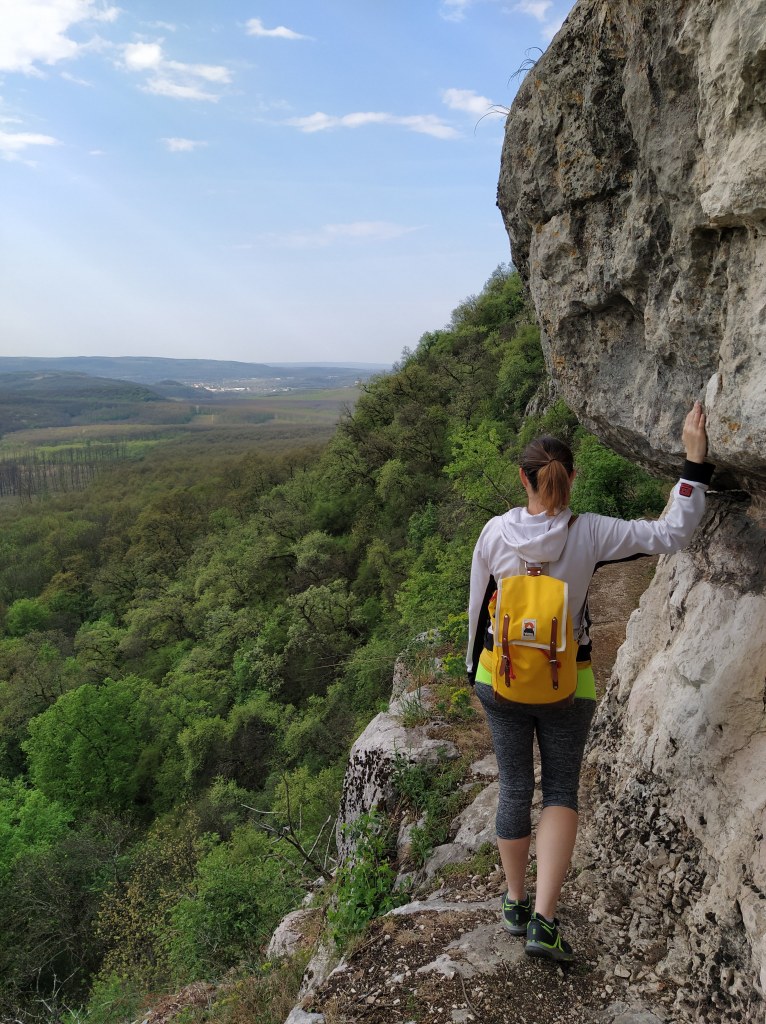
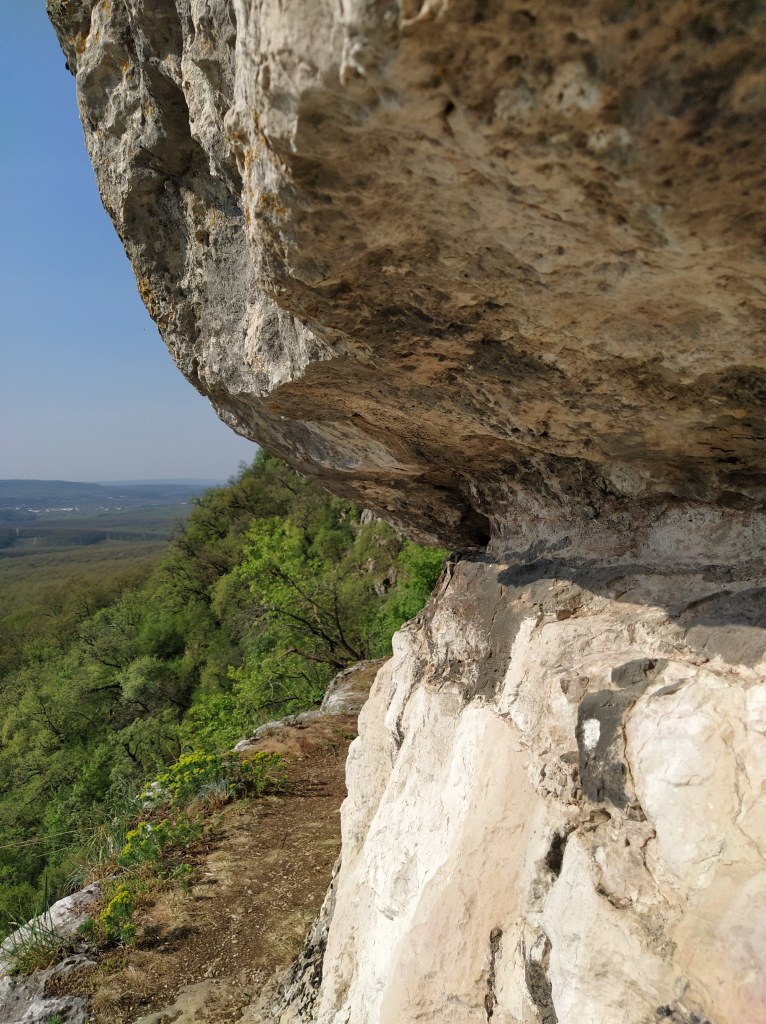
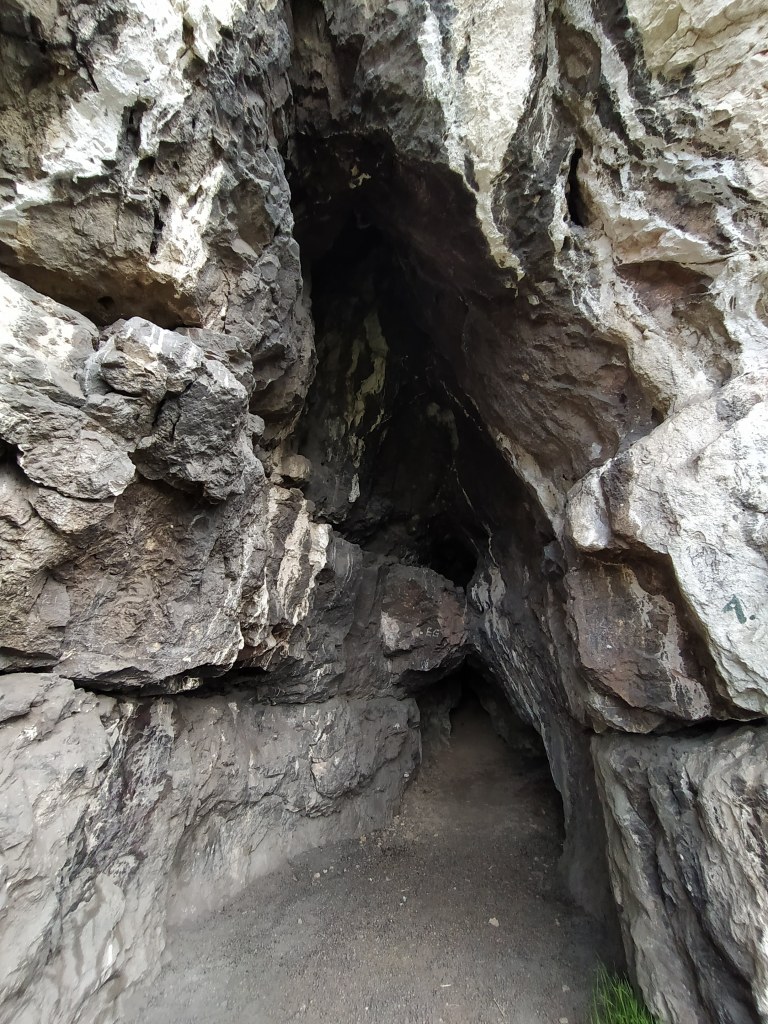
Now, without further ado let me introduce you the Pes-kő-barlang (Pes Stone Cave) situated in limestone wall of the Gerecse and reachable via a narrow stone ledge. At around 350 metres, the height is not staggering on paper but when looking down from the edge it seemed much more so we we walked cautiously toward the cave.

Someone was obviously living there or judging by the amount of little, brown “stones” all over the place and the strong animal smell, multiple someones. Therefore to avoid any awkward encounters, we didn’t venture deeper.

We spent around 45 minutes at the ledge to allow ourselves enough time to take in all the view and to take a few hundred pictures ( you can never have enough photos in my opinion, although my Google Drive would beg to differ but I try to exclude such negativity from my life), then we went back to the car on the same route.

National Blue Trail –  Hike and the City

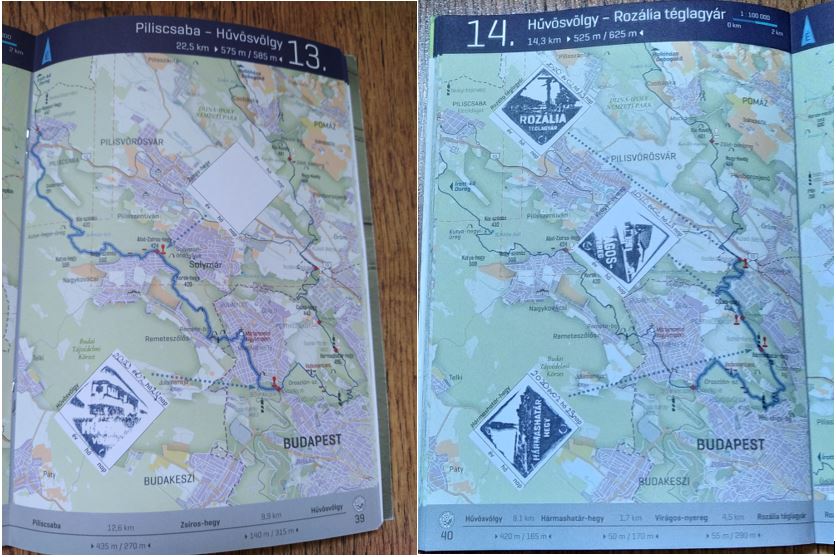
We finally started the Blue Trail (Országos Kéktúra), which is a rather well known hiking route in Hungary. Before I dive into our hike, I’d like to write briefly about the Blue Trail itself. In a nutshell, a path of 1168.7 kilometres runs through the northern part of the country, the main aim is to better acquaint the hungarian countryside, the local sights and of course to entice people to spend more time outdoors. Divided into 27 parts, the hikers collect stamps along the way in the dedicated Blue Trail notebook as a proof of achivement. Each stamp is different, the image depicts the place where it is placed.
Let me tell you, stamping is really satisfying and the collector in me rejoiced everytime we added a new one.

As we just started this “quest”, we chose the shortest leg (only 14.3 kilometers) which is also the closest to where we live in Budapest. A wise decision as we are still in couch potato mode after the winter months of eating and sleeping.

Blue Trail sign on a rock

Itinerary

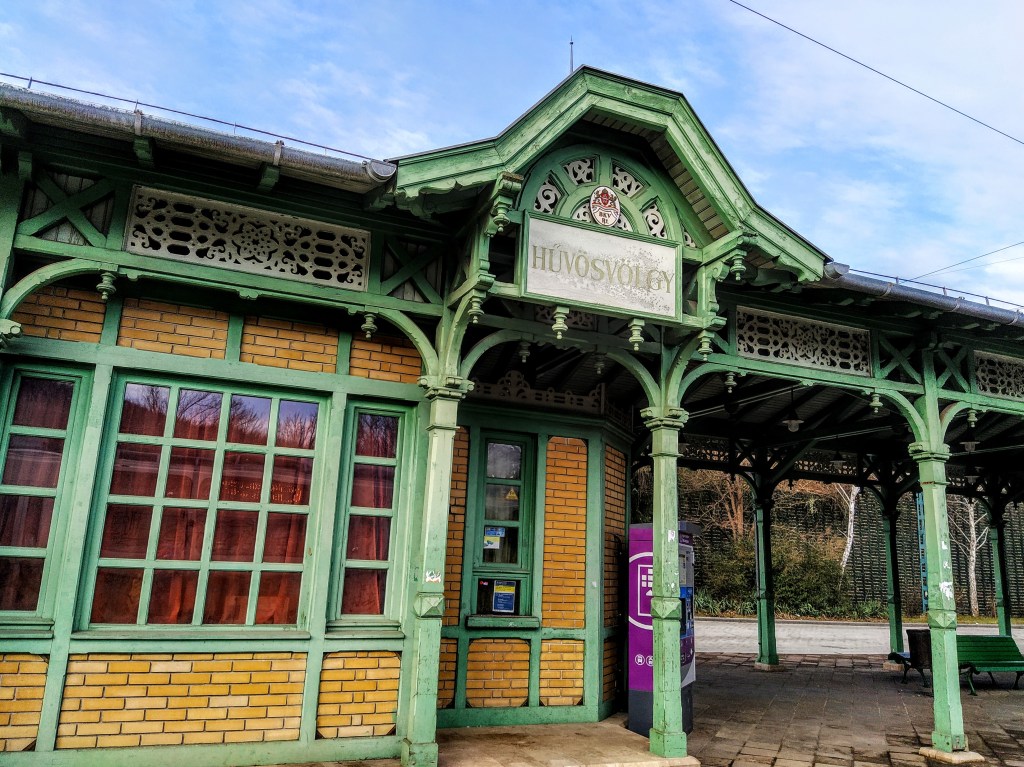
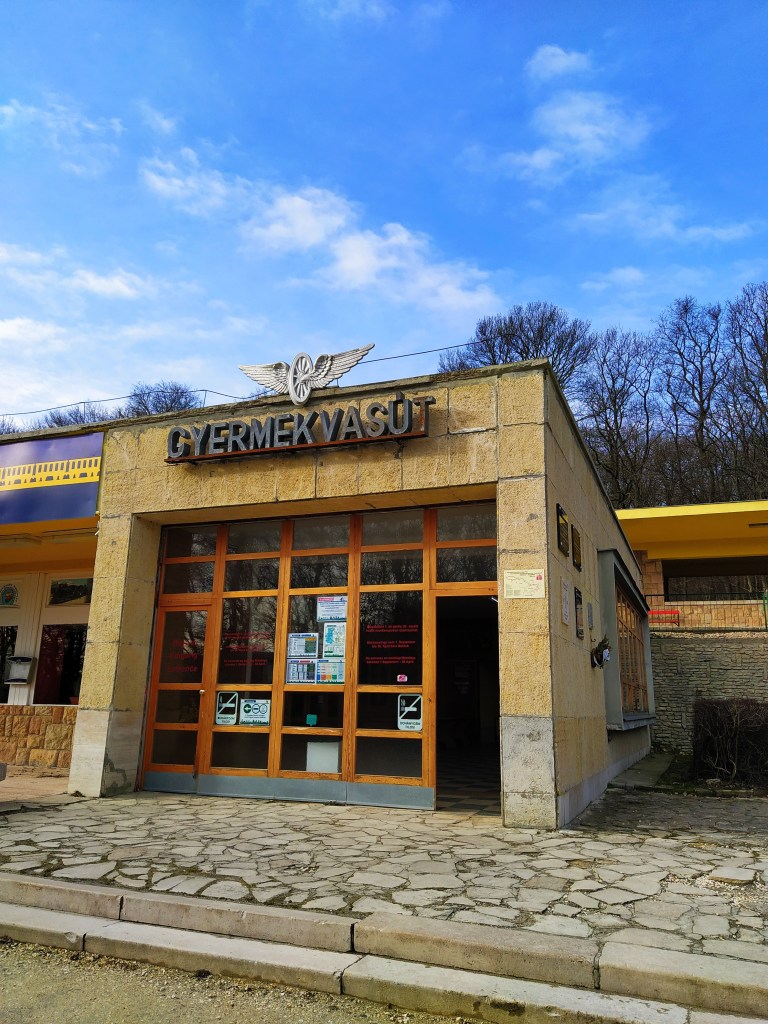
This blog post will be different from the previous ones as the blue routes are so well marked, I see no point on telling the exact directions, but rather an account of my experiences.The part of the trail that we completed, goes from Hűvösvölgy( Budapest) to the Rozália brick factory at Üröm.We started from the station of the Children’s Railway and immediately collected our first stamp and you know what they say, you never forget your first one.


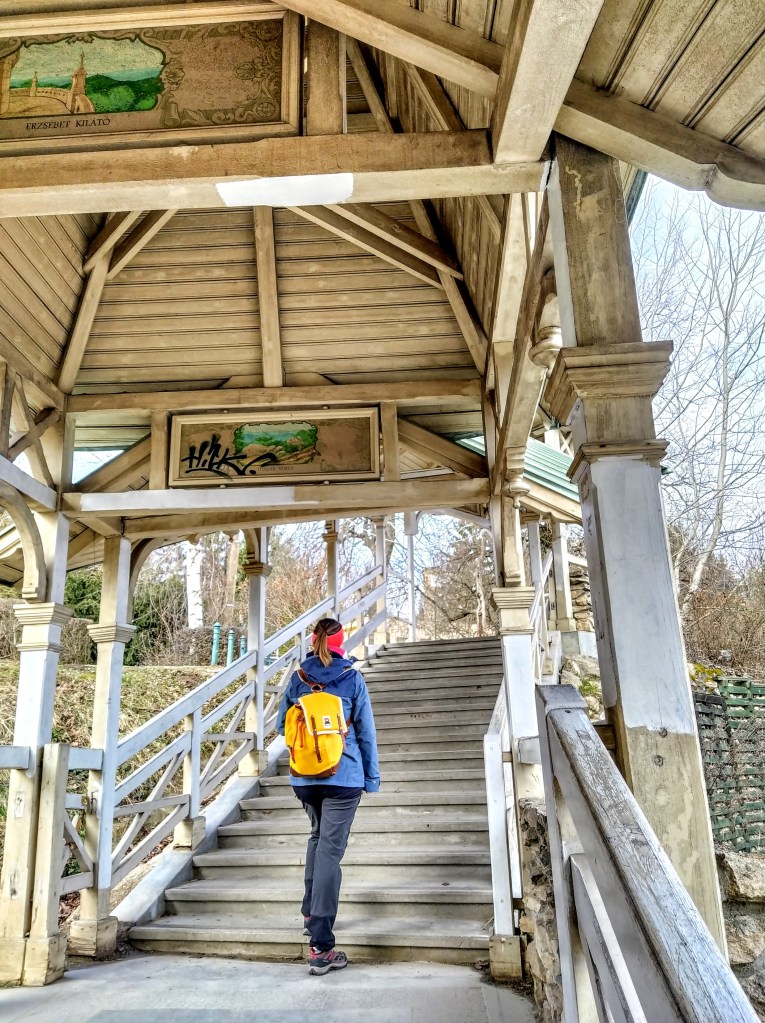
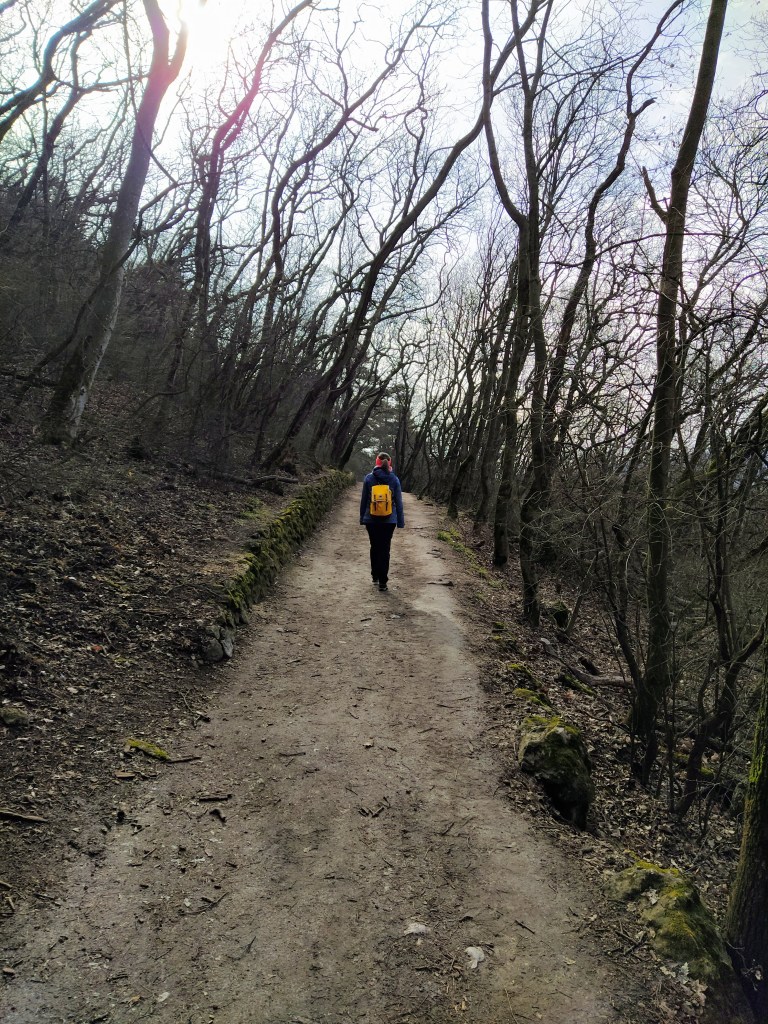
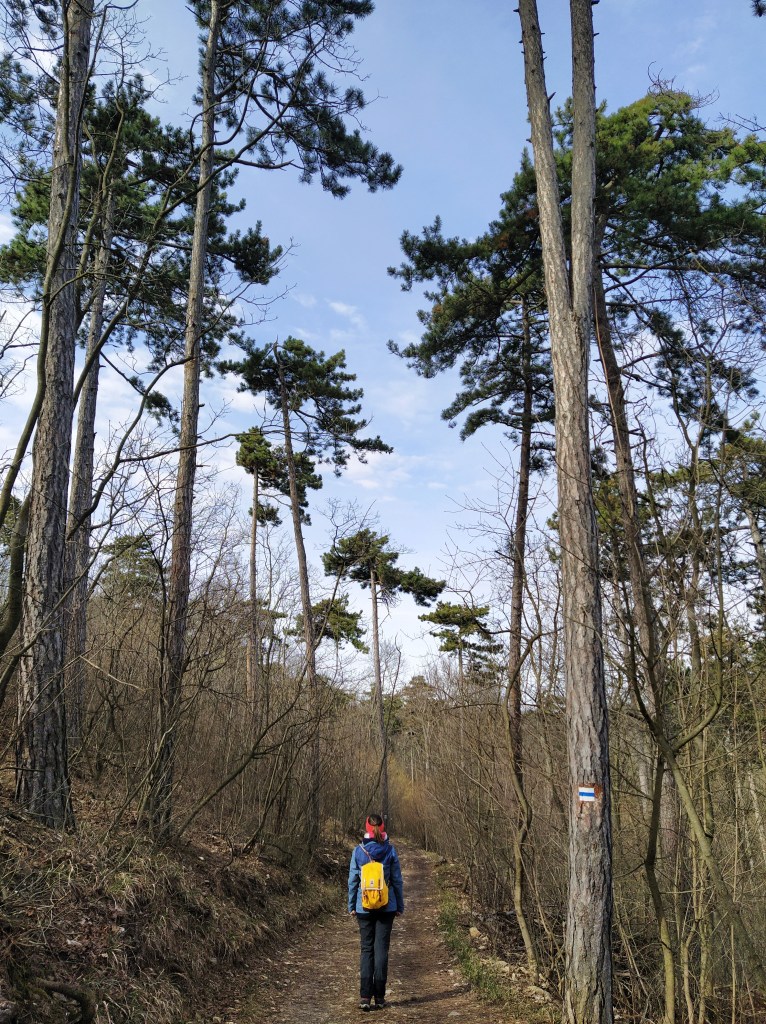
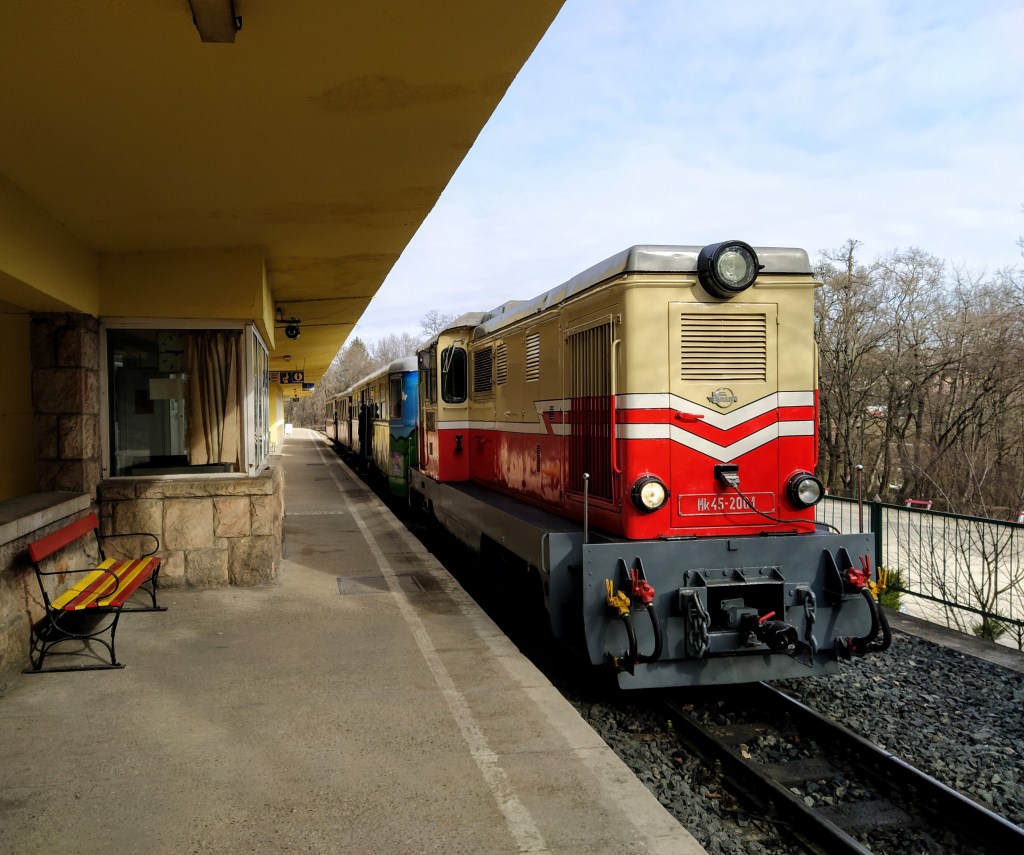
After watching the cute, old train leaving the station , we started the hike by crossing the road and then off we went into the forest. I immediately felt better, nature really is a balm for the soul. A few birds were already calling for spring with their song, a woodpecker was working away on a tree somewhere, the plants already started to sprout. 

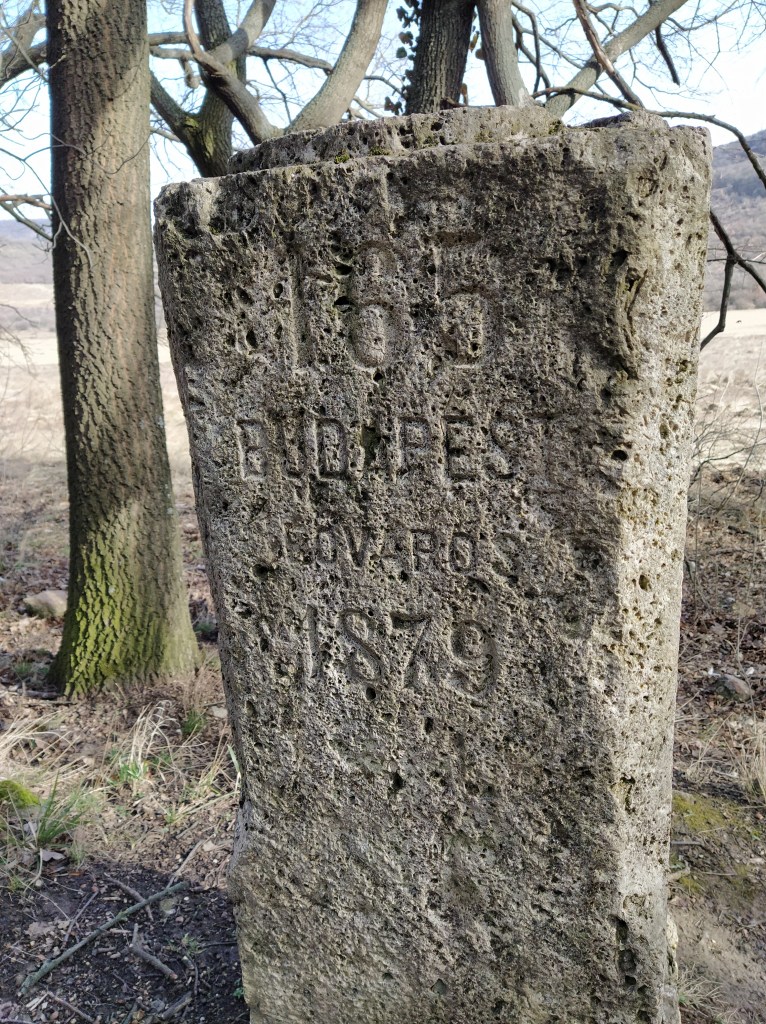
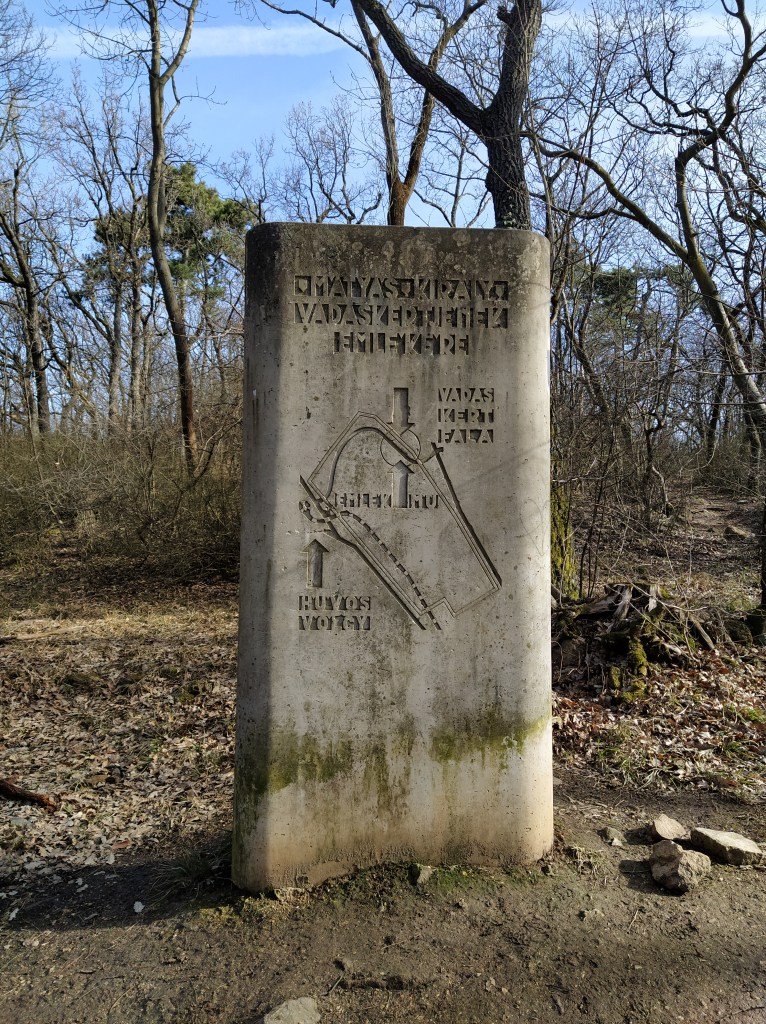
The path went along the edge of the glider airport, that morning the vast field was not used by gliders but dogs and their humans. At the edge of the field, we found a city border marker back from 1879 and a little bit further on another marker telling that the wildlife park of King Matthias used to be here. 

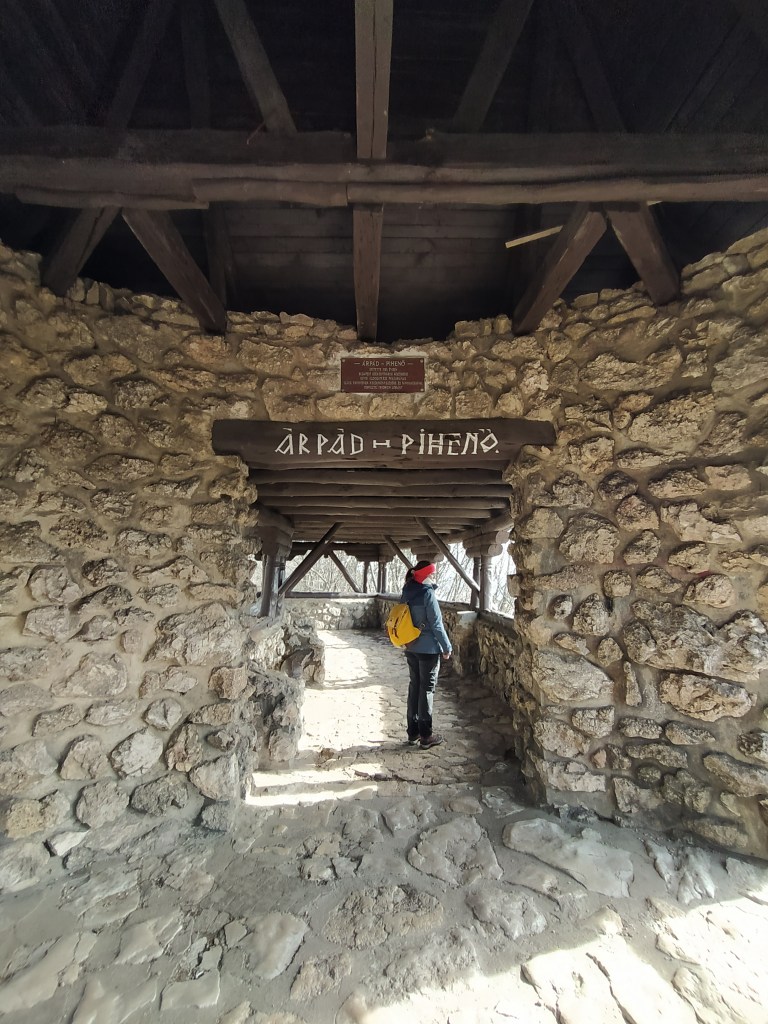
Our next stop was the Árpád viewpoint, from where we enjoyed the beautiful view of the city.  The viewpoint, which has a  Transylvanian vibe was built on 1929 and it’s a popular hiking destination in Budapest as it’s reachable with an easy walk and view is quite something. I couldn’t find anywhere the reason for naming it Árpád, as neither the designer, nor the sponsor was called thus. Then in a Wikipedia article I happened upon the information that supposedly the tomb of chieftain Árpád is at the base of the mountain. So, we will go with this one.

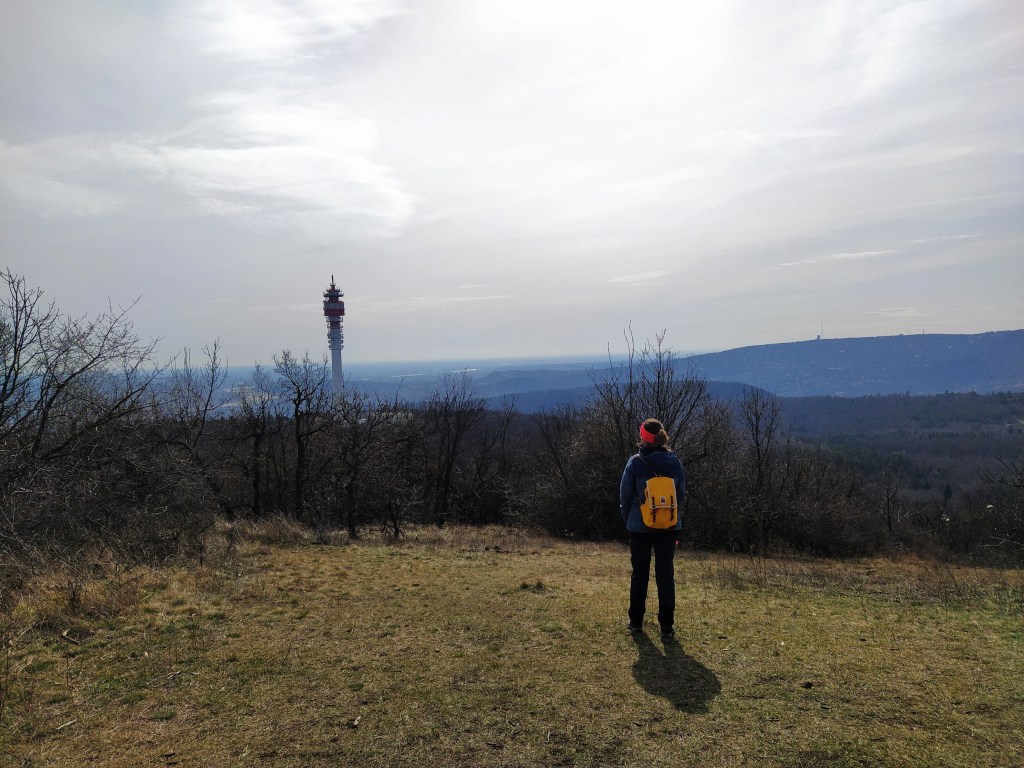
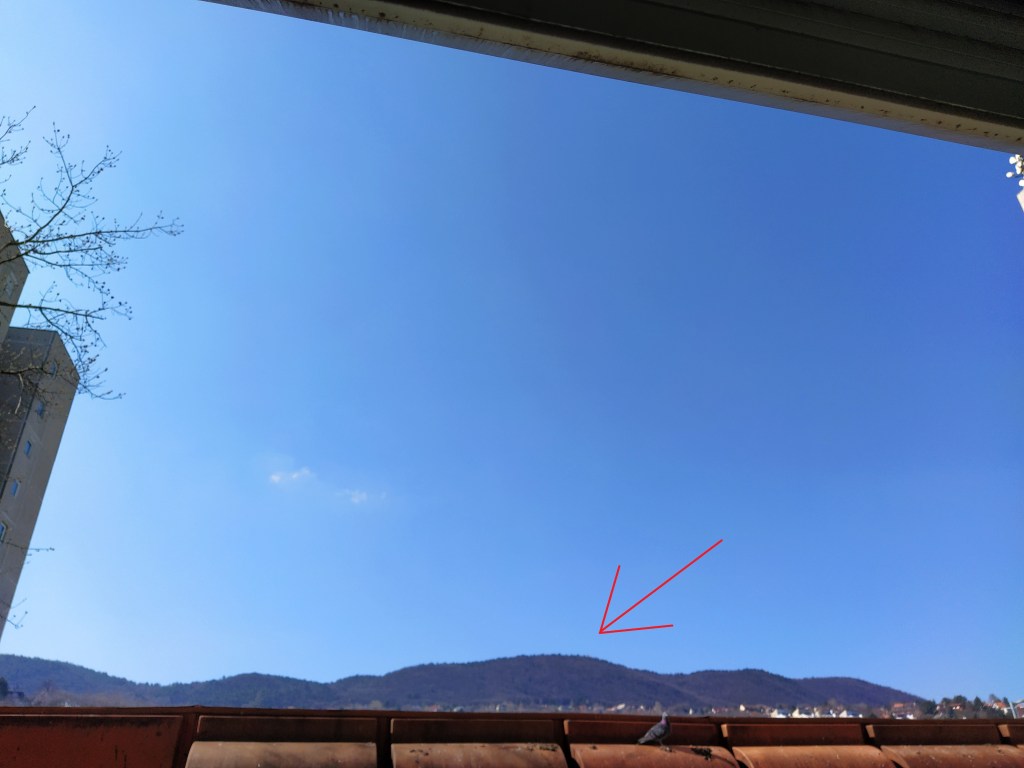
The next part of the hike was really exciting to me as we climbed up to the Hármashatár mountain (although I feel a bit silly calling these mountains as the highest point is 495 meters, so maybe very high hills?) and I got a closer look on the radio tower, the one I have been watching from my appartment’s window for the last 5 years. It feels good to know what’s up there plus now I have a tale to tell to whoever comes over.

The literal translation of Hármashatár is triple border as until 1873, the mountain top was the common border of Buda, Óbuda and Pesthidegkút.
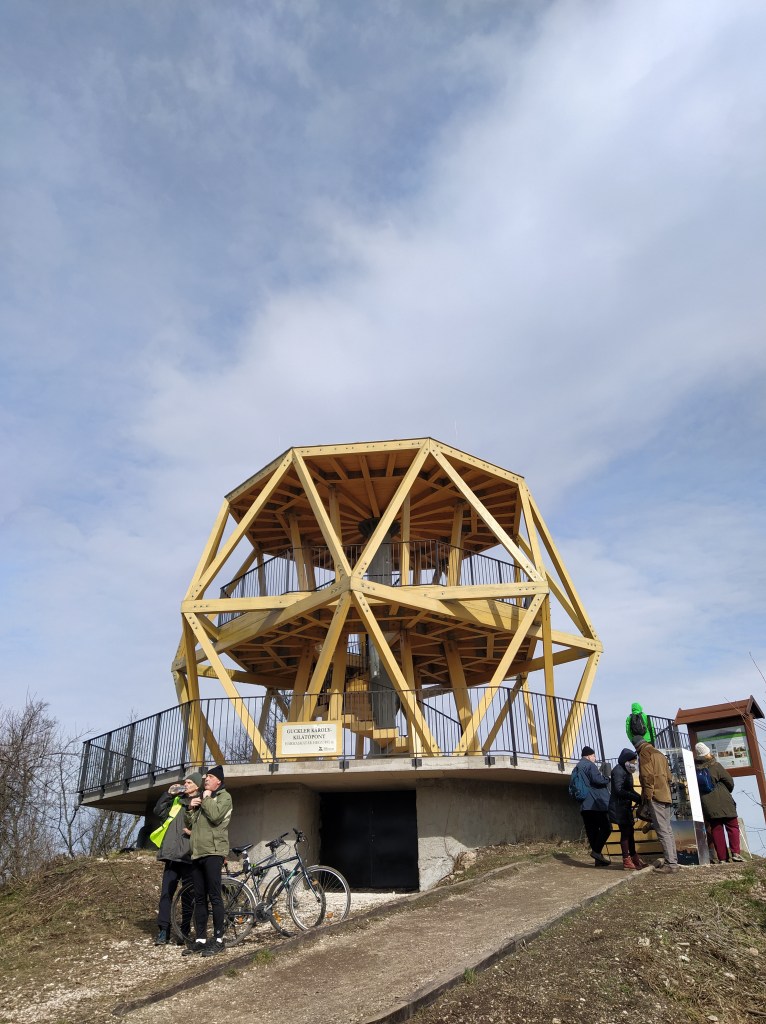
Up on the top can be found another viewpoint in the shape of octagon, named after Glucker Károly. Another bird’s eye view of the city, a different part this time, a one closer to home as we watched the district where we live from above.


In the last part of our hike, we first went down and then up to Csúcs-hegy (Peak mountain) I would have preferred to skip to going down and then up again after climbing up to Hármashatár mountain, but without climbing up, you can’t enjoy the view (I’m such a wise woman).

It felt exhilarating to leave the four walls and to stretch out our limbs,  even though we’re sadly out of shape. My legs felt like they were made of metal by the end and I was craving something sugary.The weird thing is that a year ago I wasn’t really into hiking and now I’m hooked and addicted to them. If we skip several weekends,  I start to become edgy and not so nice to live with.  Thankfully, we have 1154 kilometres of trail to complete, so we won’t get bored.

See you at the next leg of the Blue Trail and don’t forget: Feeling Blue? Hike the Blue!

Stamps in the Blue Trail notebook
The stamps we collected during the 14th part of the Trail

Spartacus trail, an iconic path at the Danube bend

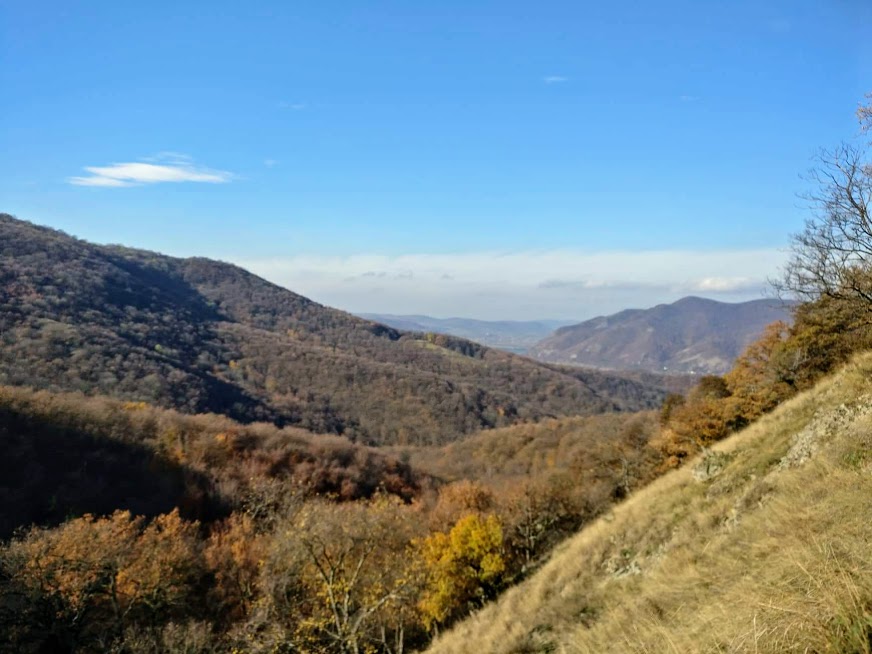
Glimpse of the Danube between the Visegrádi mountains and the Börzsöny

A trail with a badass name but luckily for us it does not require any hardcore hiking skills to complete.The route is not unknown to Hungarians as it’s one of the most emblematic path for hikers in the Pilis area but not as overcrowded as the other popular ones in the region.
The name presumably comes from the 60s when the Local Industrial Cooperatives Spartacus Tourist Association wanted to open up the trail for hikers except the hunters did not accede and it’s only open for the public since 2015.

Details of the walk

Distance: 14 kilometres
Elevation: 290 metres
Route: http://out.ac/eoBEp (GPX and KML formats are available)
How to get there: By public transport bus 870 from Szentendre to Pilisszentlászló

I was really looking forward to complete this roundtrip but apparently I’m no favourite with weather Gods as it was raining a lot, therefore we had to postpone the hike, which made me a grumpy cat. Finally, after almost 2 weeks of not so nice weather, we set out for Pilisszentlászló on a Sunday morning. I was all dressed up in my new autumn hiking gear because what better way to break in new hiking shoes than during a more than 10 kilometres long walk. What I smartly forgot to take into consideration is that the trails might be a teeny-tiny muddy after so much rain/such a deluge. What can I say, my determination to carry out what I planned and my wish to parade around in my new footwear blinded me. Result: extremely muddy boots and extra workout to walk in them. Although I don’t complain because it totally worth it.

Itinerary

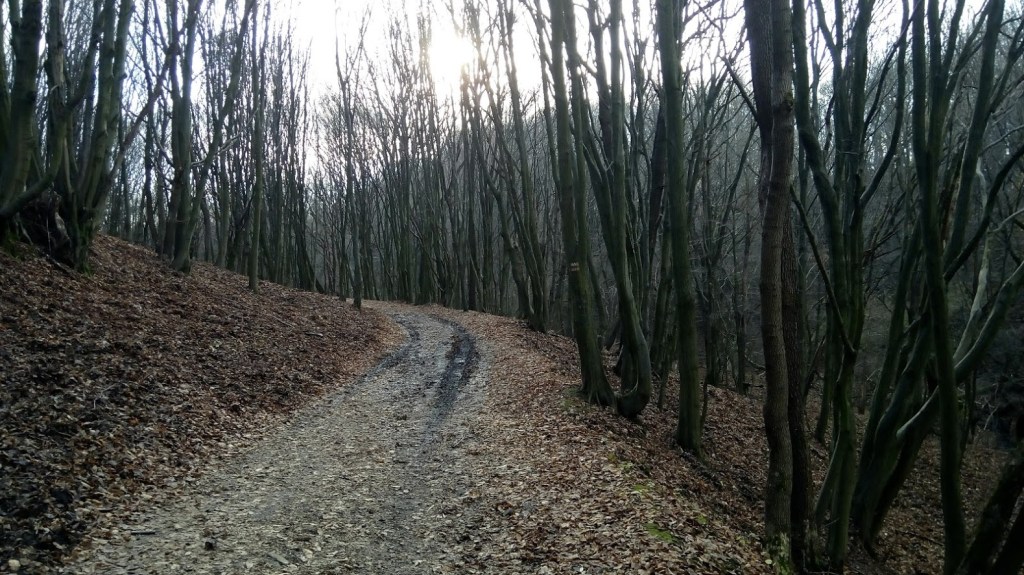
We started our journey by following the green sign from the car park at the edge of Pilisszentlászló. The road passed by meadows with the peaks of Pilis in the background and slowly reached the forest on a wide dirt road.

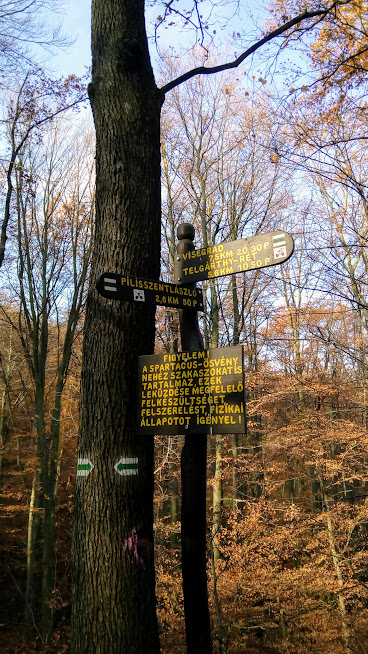
You can’t miss the start of the famous path, as a warning sign tries to frighten away the less determined hikers. ‘ Attention! The Spartacus trail contains difficult parts, to complete these, adequate preparation, equipment and physical state are required!’ Don’t let the sign deter you, a nice pair of hiking boots is more than enough to tackle the path.

Warning sign at the start of the Spartacus trail
Warning sign at the start of the trail

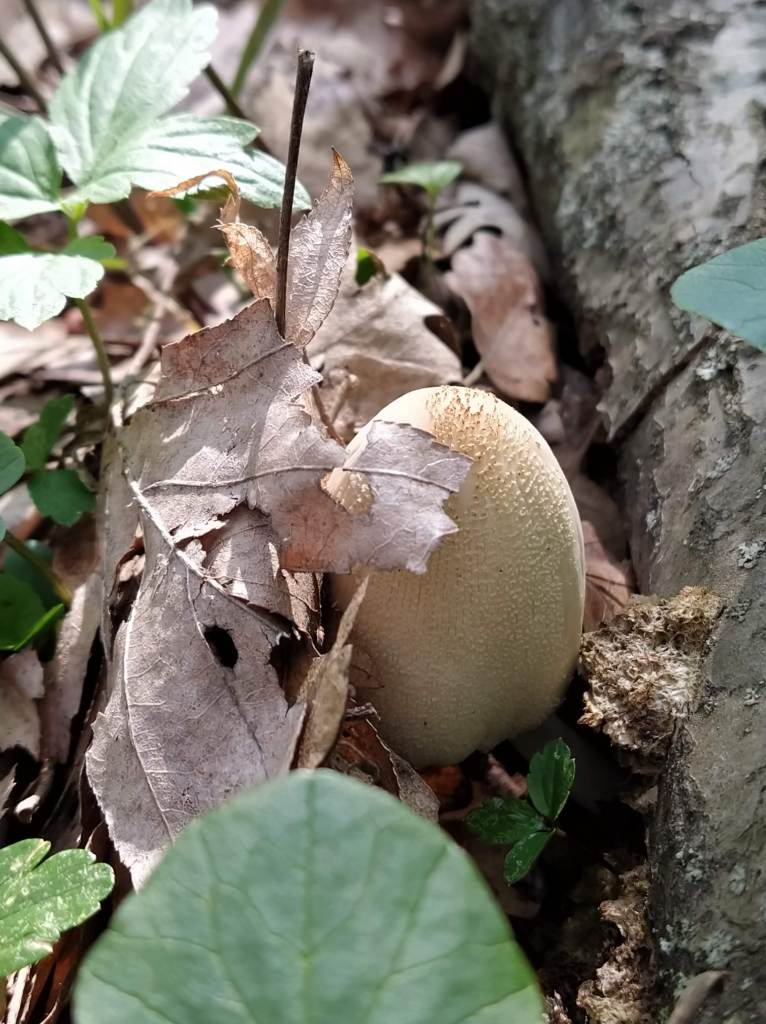
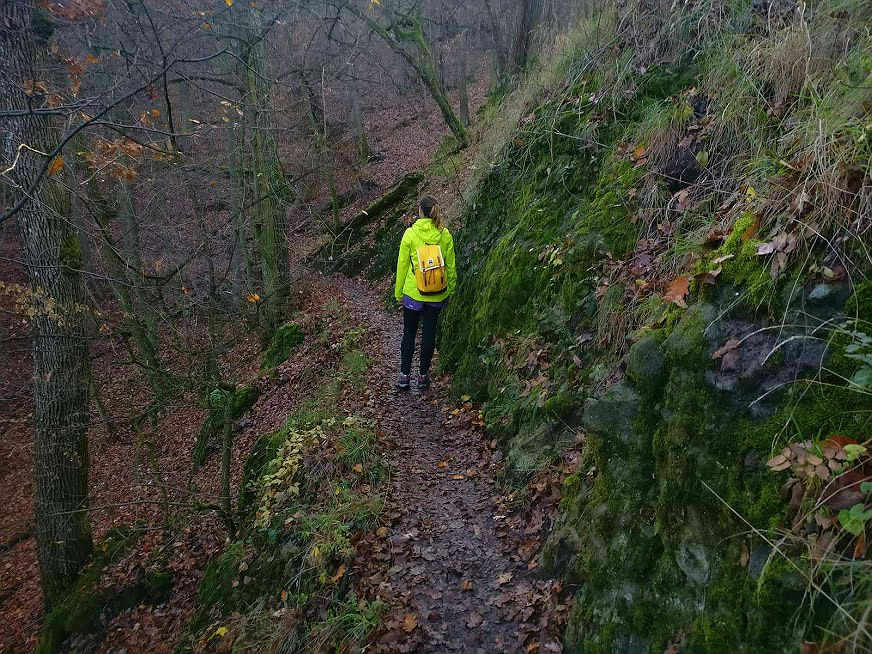
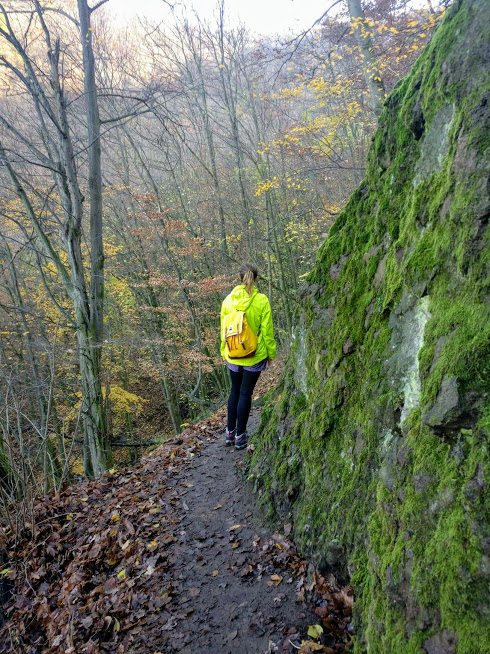
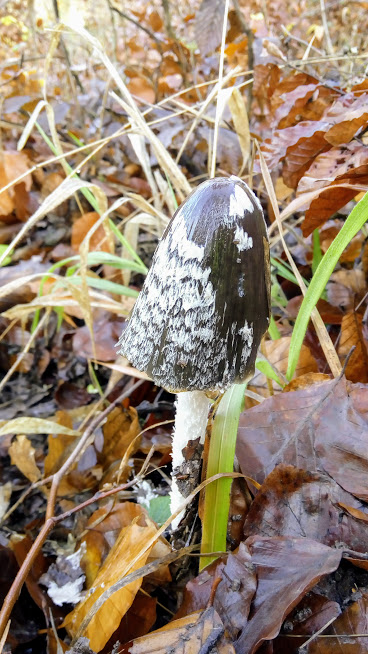
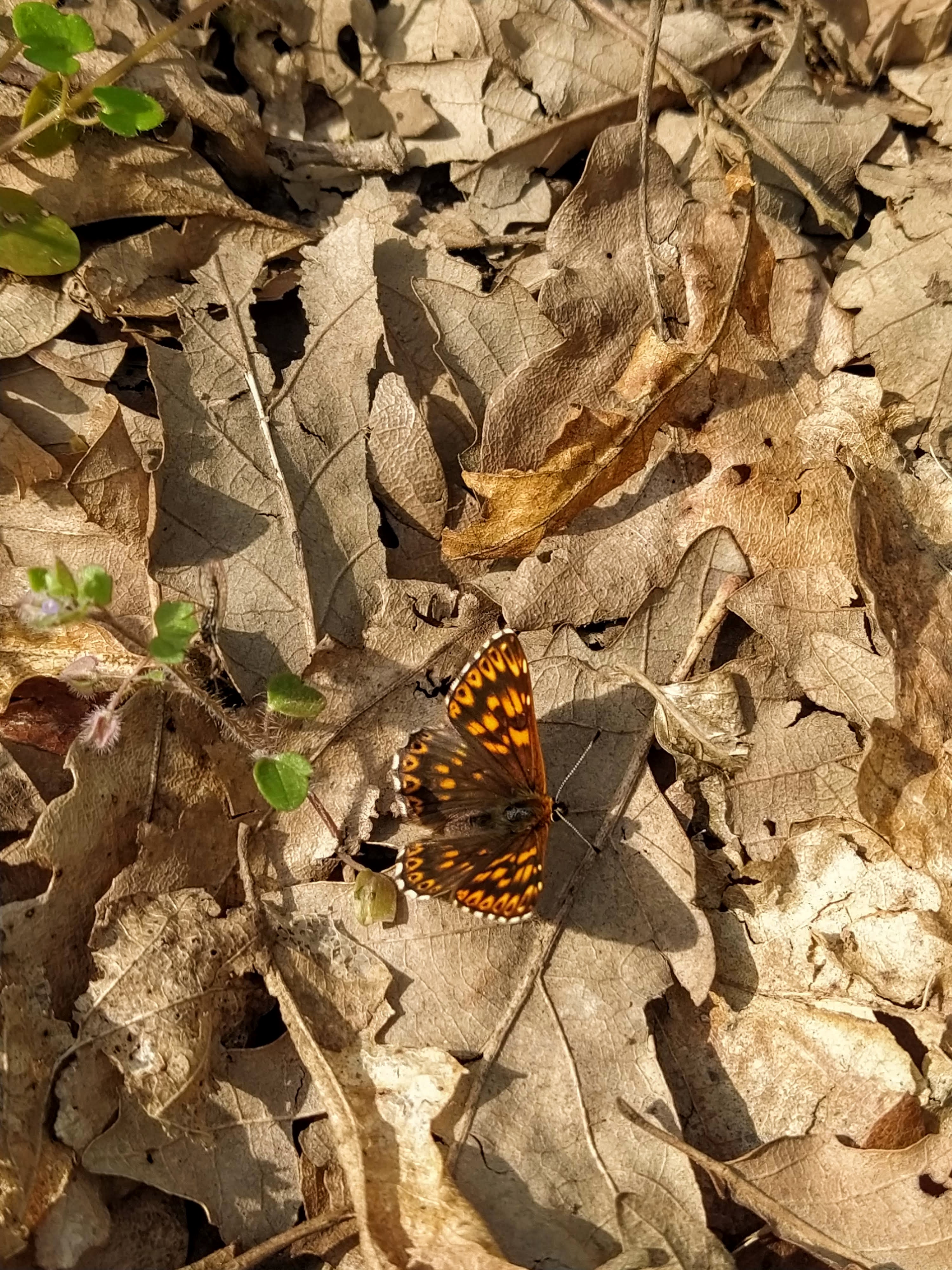
The narrow, one man route winds around the steep mountain sides, while giving a marvelous view to the valleys and mountains around with a glimpse to the Danube-bend. Thanks to the previous rainy period the fallen leaves had that special, spicy autumn smell wafting around and all kinds of mushrooms popped up. The mushrooms brought out the nature photographer in me and in return the grumpiness in my boyfriend as I kept stopping to immortalize them through close up photos. The mushroom gallery is at the end of the blog post.

After passing the viewpont to the river, the trail lead us back deeper in the forest and a little later we reached the Jenő kunyhó, a small wooden hut nesting between the grey trunks of the tall beech trees, the dark color of the wood contrasting with the yellow carpet of the fallen leaves. Once again, I felt like in a fairy tale, the hut could have easily belonged to the seven gnomes.The cabin is now deserted but it’s still has some furniture and a cute little stove.

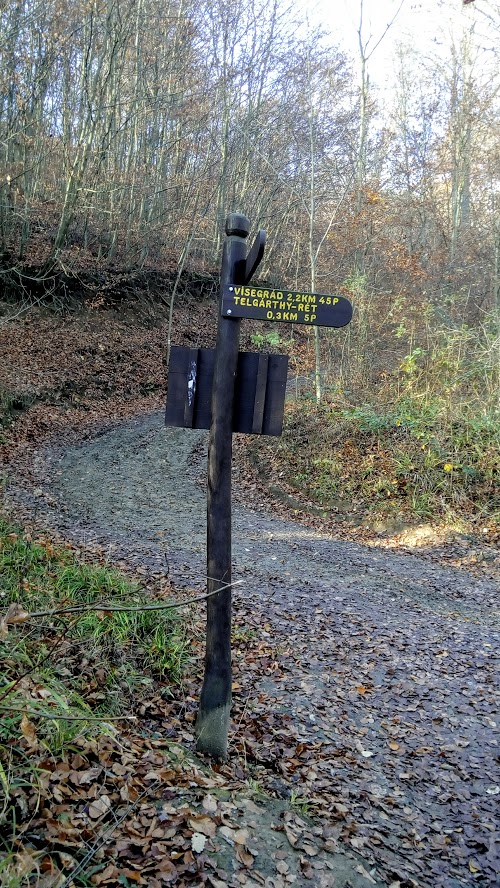
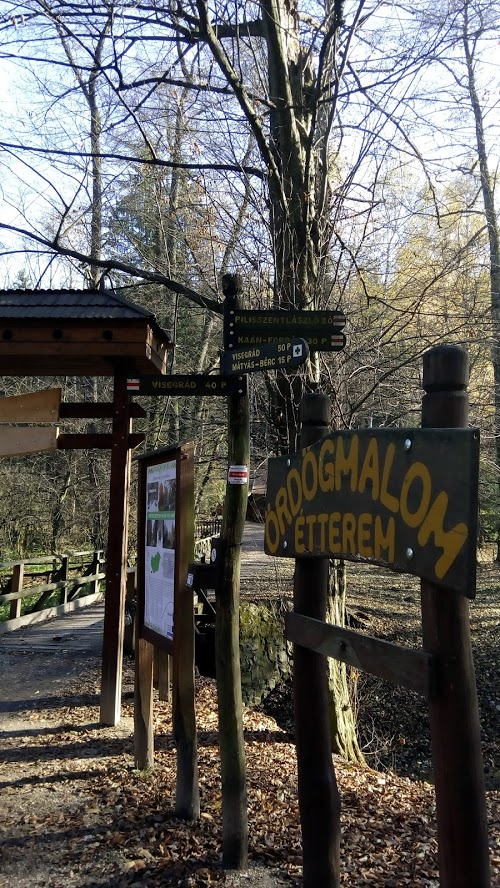
The green trail descends slowly into Apát-kúti valley and eventually ends at the Bertényi Miklós botanical garden. This time we skipped on visiting since the second half of the round trip was still ahead us but we will come back to check it out. Right next to the garden, you can find Telgárthy-rét a nice stretch of green, a lovely spot for picnics and a little further down, the more adventurous ones can even catch their own fish for the said picnic at the hunting lodge.

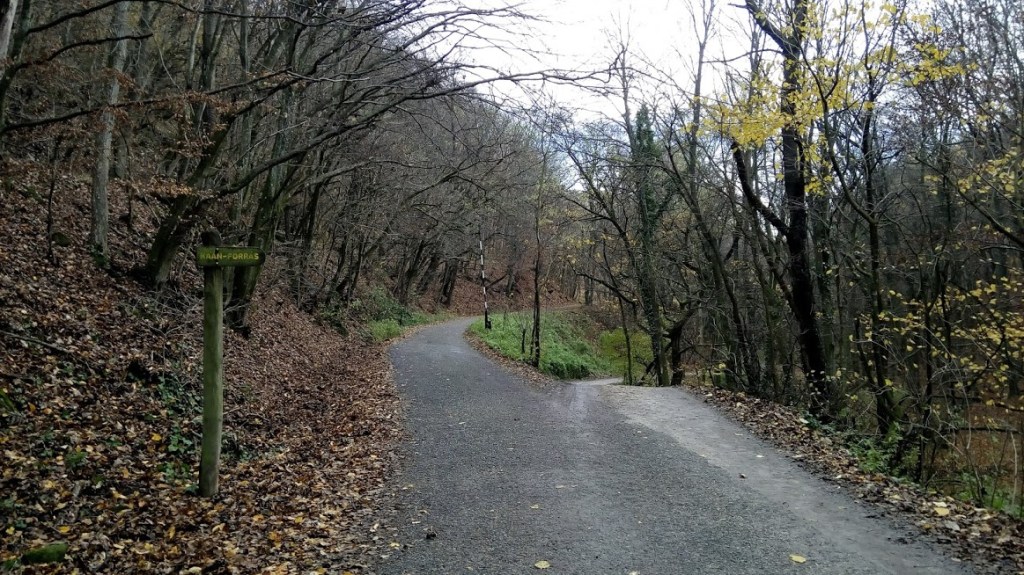
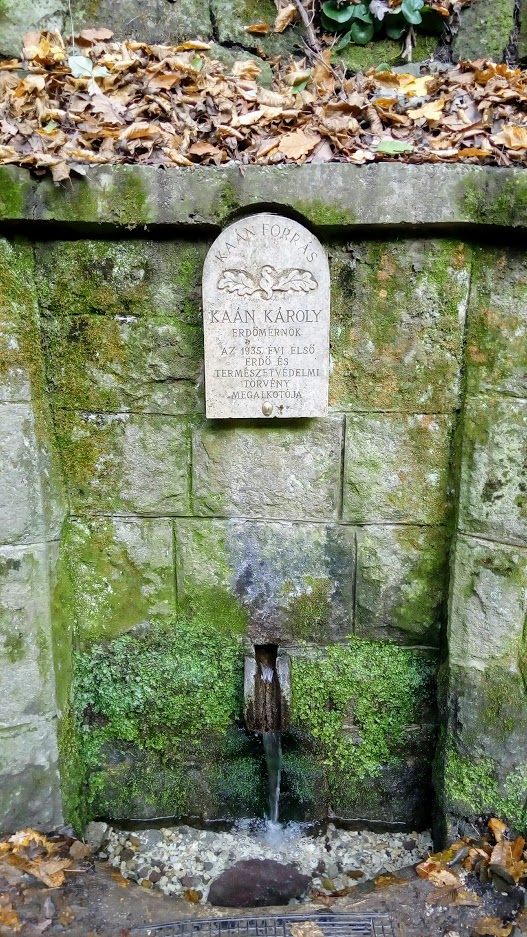
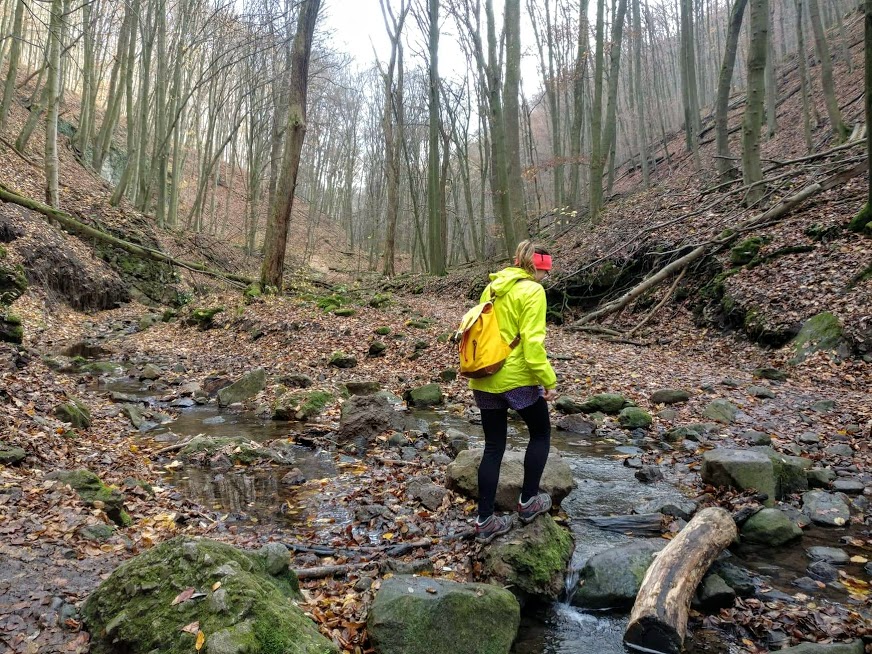
We passed these by and continued our walk following the red sign. The first few hundred meters are on an asphalt road, at a barrier the red path leads us to the side of the stream. Just follow the sign to Kaán-forrás (Kaán spring) and if needed refill your water bottles for the rest of walk. Basically, from now we only followed the path along the stream that lead us deeper and deeper into Apát-kúti valley.We walked along moss covered rocks and tall trees creaking in the wind. The path can be walked comfortably with the exception of the stream crossing, which can be challenging but it only adds to the sense of challenge.


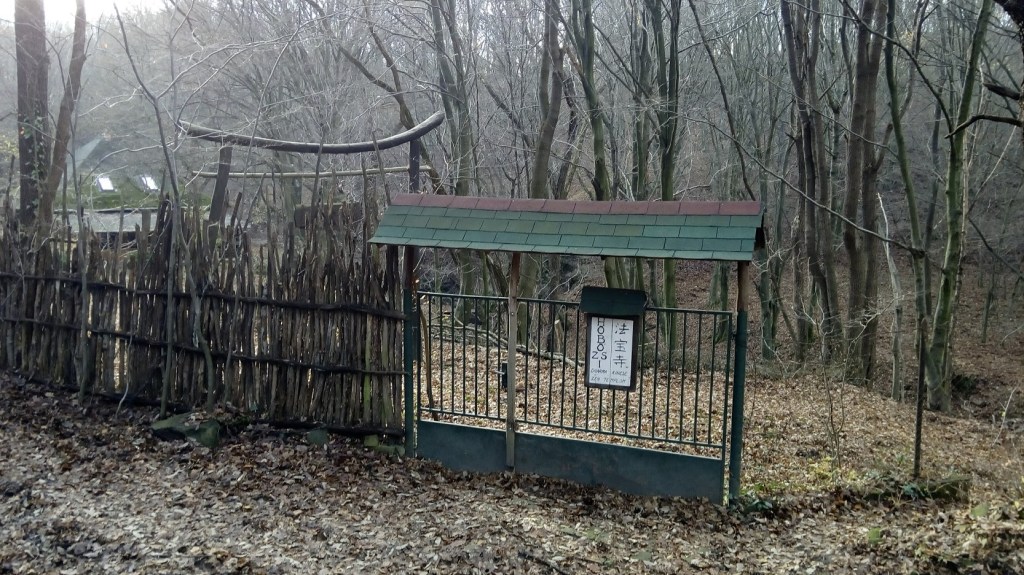
At the end of the roundtrip, before the trail took us back to Pilisszentlászló, we even passed a Zen Temple, called Dharma’s Treasure. To be honest, a buddhist temple felt out of place, but I guess the forest does have a zen vibe to it.
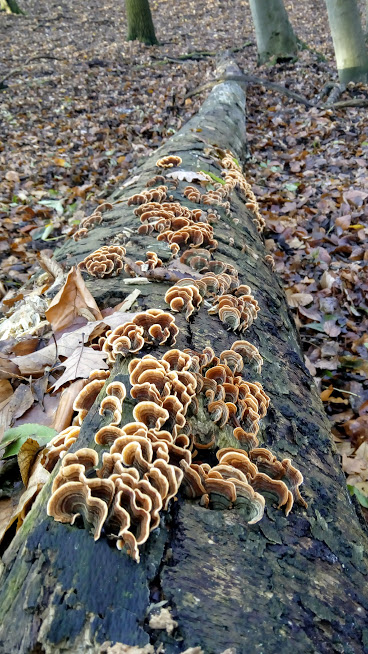
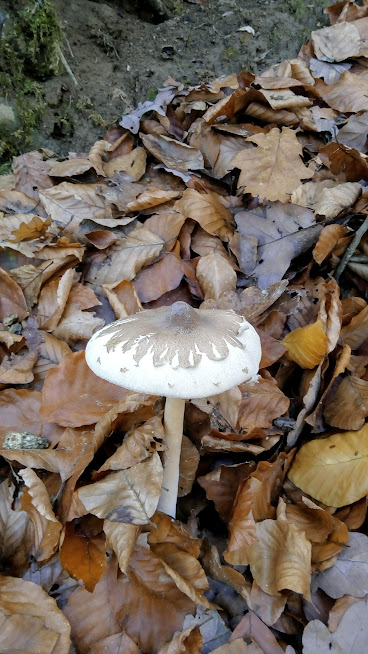
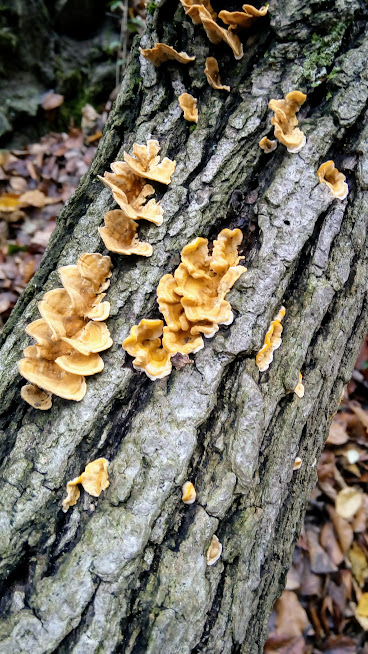
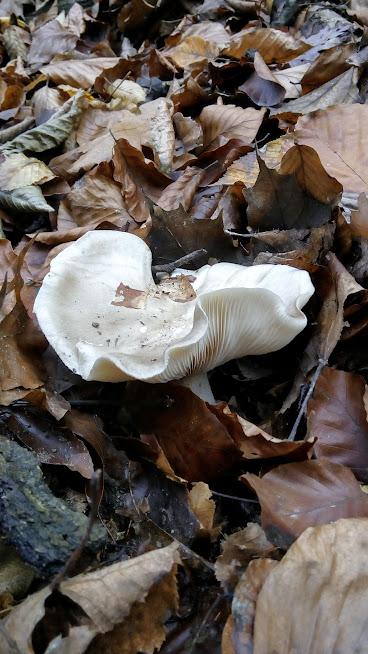
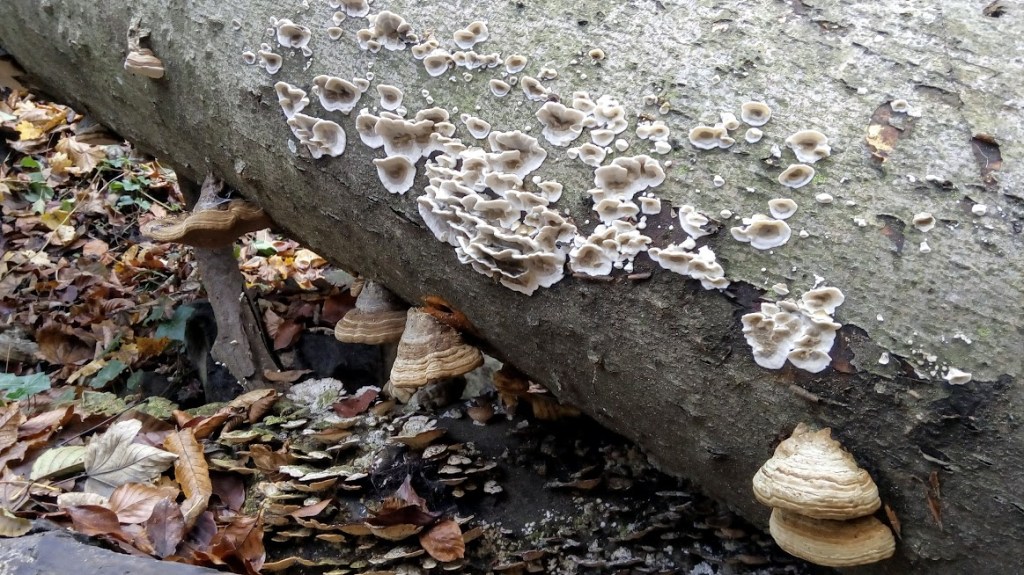
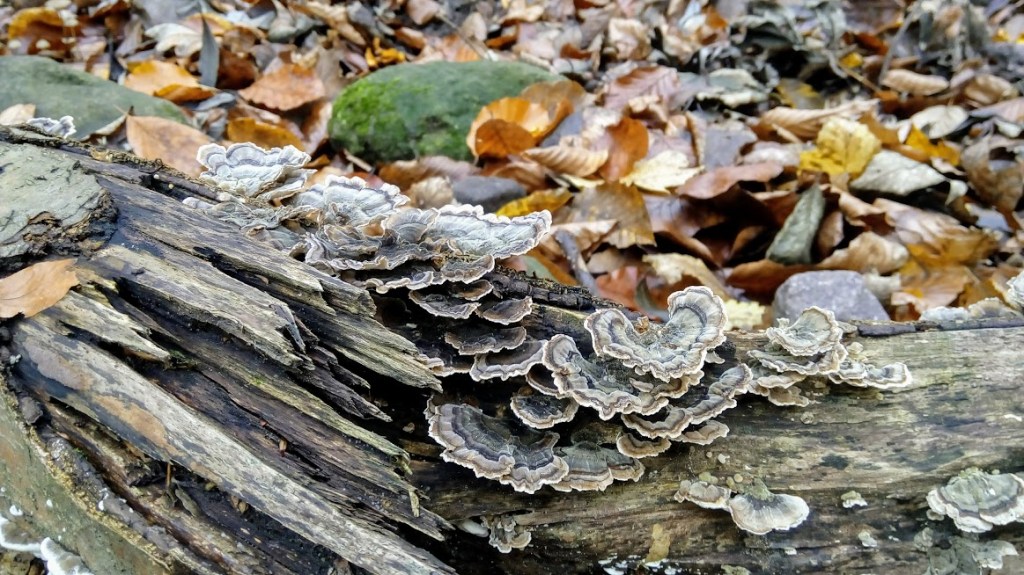
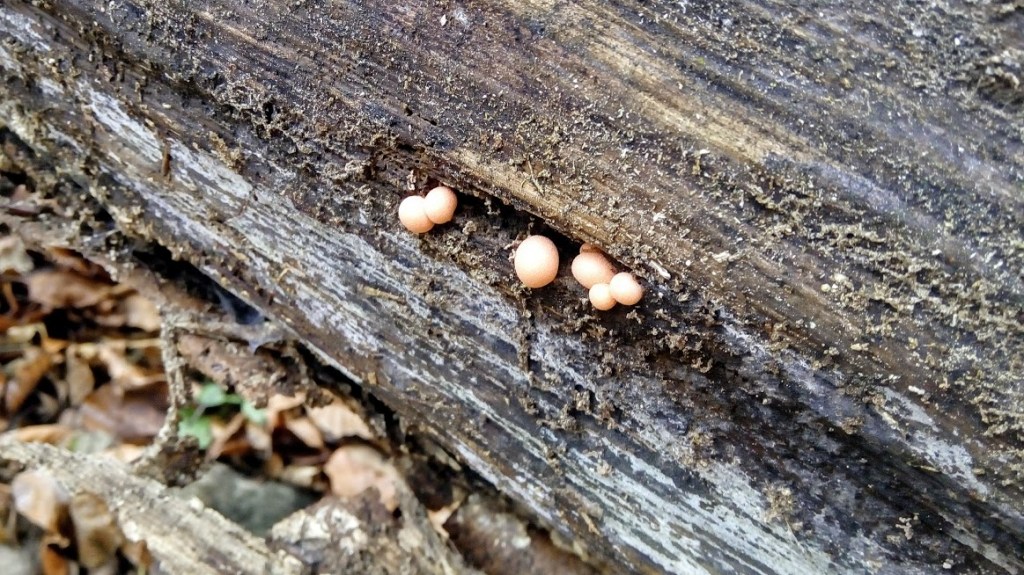
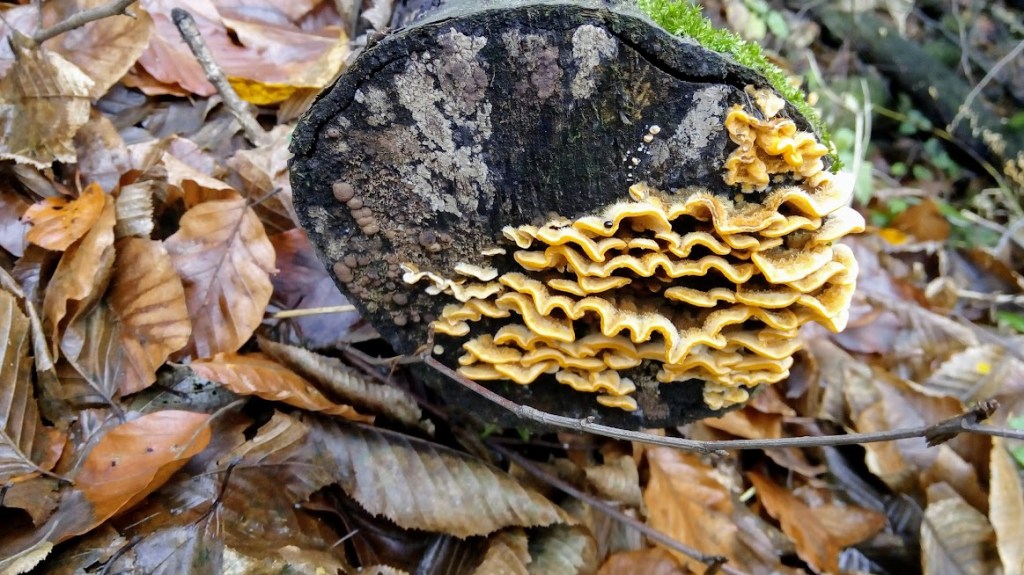
The promised mushroom compilation for those who are interested:

Finally, this is just a suggestion on how to explore the area, there are many other options, so I suggest everyone to get out from between the four walls and explore at your leisure.